Get Full Government Meeting Transcripts, Videos, & Alerts Forever!
Get email alerts on the Pardons Commission topic
No spam. Unsubscribe anytime.
Panel hears bill to create a state pardons commission; advocates say process is needed to address racial disparities
Summary
Representative Morales introduced House Bill 5379 to create a nine-member advisory commission to evaluate pardons and recommend nominees to the governor. Supporters including the ACLU and civil-rights leaders urged the committee to adopt the bill, citing decades without pardons for living people and racial disparities in incarceration rates.
Representative Michelle Morales introduced House Bill 5379 to create a state commission on pardons that would develop application and hearing procedures and recommend individuals for gubernatorial pardon under Article IX, Section 13 of the Rhode Island Constitution.
Morales said Rhode Island has not issued a pardon for a living person in decades and called for an advisory body that would screen applications, develop procedures and forward recommended nominees to the governor, who would still need to follow constitutional requirements including the advice and consent of the Senate.
Stephen Brown of the ACLU of Rhode Island told the committee the organization “strongly support[s]” the bill and recommended adding an interest-of-justice standard to capture rare cases warranting review. Jim Vincent, a civil-rights activist and former leader of the Urban League and NAACP Providence branch, described the bill as a step toward addressing racial disparities in incarceration and called for a transparent, accessible process for clemency petitions. Other witnesses explained eligibility criteria in the bill, including a requirement that applicants who can pursue an expungement do so before applying for a pardon; in cases where expungement is unavailable but the person has served their sentence, they could be eligible for a pardon petition.
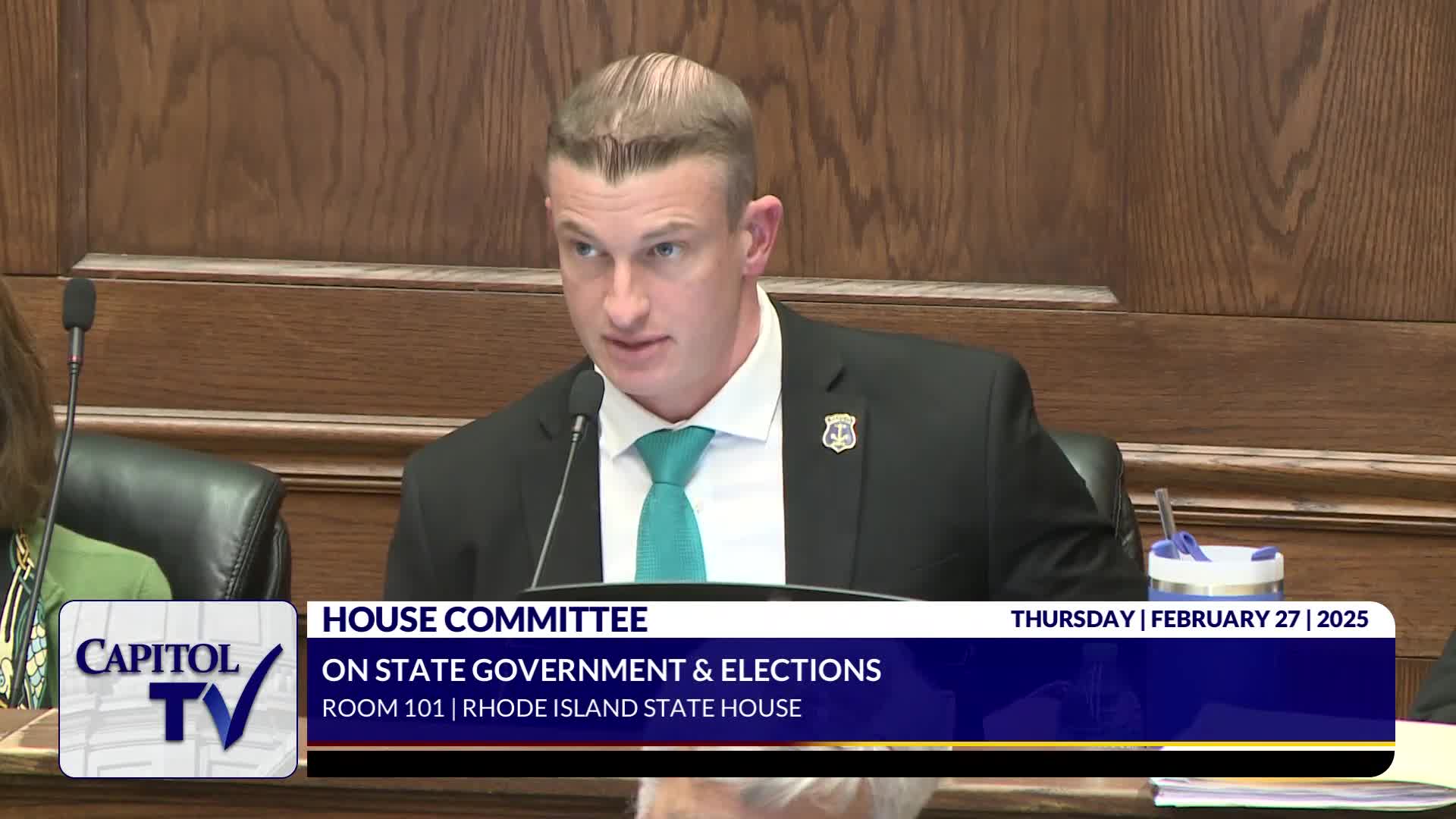
Representative Knight suggested adding an interest-of-justice criterion to allow exceptional cases — such as cases affected by newly available evidence — to reach the governor. Representative Breen questioned whether the statute would conflict with the constitution’s grant of pardon power to the governor; Morales and a witness clarified that the commission would be advisory and would not remove the governor’s exclusive constitutional power to grant pardons with Senate consent.
The committee completed testimony on HB5379; no committee vote was recorded during the hearing. Written testimony and the bill text are available on the committee website.