Get Full Government Meeting Transcripts, Videos, & Alerts Forever!
Get email alerts on the Religious Freedom Rfra topic
No spam. Unsubscribe anytime.
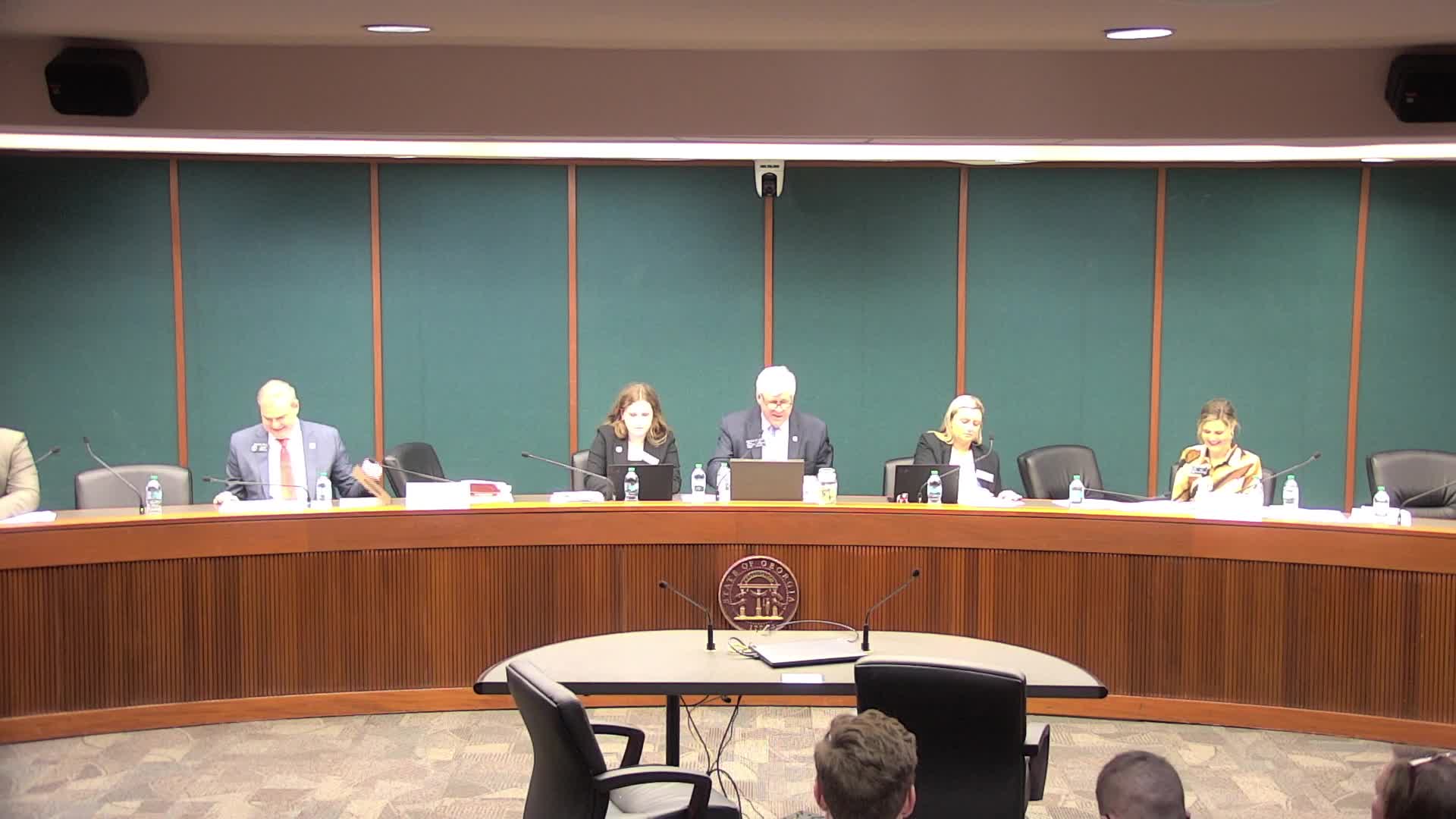
Senate committee approves state RFRA after hours of testimony and failed amendments
Summary
SB36 would enact a state Religious Freedom Restoration Act mirroring the federal law; supporters said it restores free-exercise protections, opponents said it would enable discrimination and litigation. Committee approved the bill after several failed amendments.
A Georgia Senate committee approved Senate Bill 36, which would enact a state Religious Freedom Restoration Act (RFRA) mirroring the federal law, after extensive testimony from faith leaders, civil-rights groups and policy advocates and several failed amendment attempts.
Sponsor testimony and supporting witnesses said the bill mirrors the 1993 federal RFRA and would require courts to apply strict scrutiny when a government action substantially burdens a person’s exercise of religion. Supporters argued the measure restores religious-liberty protections for state and local action after the U.S. Supreme Court limited the federal RFRA’s reach in 1997. The bill is carried as LC 442920.
Senator Sutzler (bill sponsor) displayed data showing 38 states with RFRA-style protections and told the committee the bill mirrors federal language and includes two small changes requested by the governor: (1) a provision protecting judges from suits in their official capacities (consistent with federal RFRA language) and (2) a clarification that the bill does not affect the establishment clause. The sponsor cited a letter from 11 law professors endorsing the approach and noted the measure was substantially similar to a bill that passed the Senate in a previous session.
Proponents included religious organizations and officials who described the bill as a means to ensure that state and local governments apply the same compelling-interest standard that the federal RFRA provides for federal action. Mike Griffin of the Georgia Baptist Mission Board told the committee the bill “restores the original intent of the first amendment” and quoted President Bill Clinton on protecting religious liberty. Chelsea Thompson of Frontline summarized the bill as one that “would protect our citizens from illegitimate state and local government intrusion by mirroring the federal RFRA law.”
Opponents said the bill could be used to justify discrimination and to prompt costly litigation. Nneka Ewanu, staff attorney at the ACLU of Georgia, testified the bill “is not about freedom of religion. It's about the freedom to discriminate,” and warned the measure could be invoked to challenge employment, nondiscrimination, health and safety, and other neutral laws. Faith leaders from religious minority and inclusive congregations, including Rabbi Michael Bernstein and Reverend Matthew Daniel O’Rear, urged the committee to reject the bill, saying it could be used to harm marginalized groups and undermine longstanding local nondiscrimination protections.
Committee members debated two large substitute amendments and several narrower proposals. Leader Jones offered a substitute that combined RFRA language with a statewide nondiscrimination framework; the sponsor and others opposed that approach as too expansive to consider in committee without extended study, and the substitute failed on a roll call. Senator Parent offered two narrower amendments to preserve local nondiscrimination ordinances and to add an anti-frivolous-litigation provision modeled on federal RFRA case law; both amendments failed on committee voice votes. The sponsor argued the underlying bill was “tested language” used in many states and that the RFRA standard in practice reduces litigation by prompting earlier government engagement.
The committee approved the bill on a motion from Leader Gooch, seconded by Senator Kauser. The chair recorded the committee vote as seven in favor and three opposed and announced the motion carried. The bill now moves forward in the Senate process.
Supporters said they will continue outreach; opponents signaled plans to pursue amendments or advocacy in later stages.