Get Full Government Meeting Transcripts, Videos, & Alerts Forever!
Get email alerts on the Election Administration topic
No spam. Unsubscribe anytime.
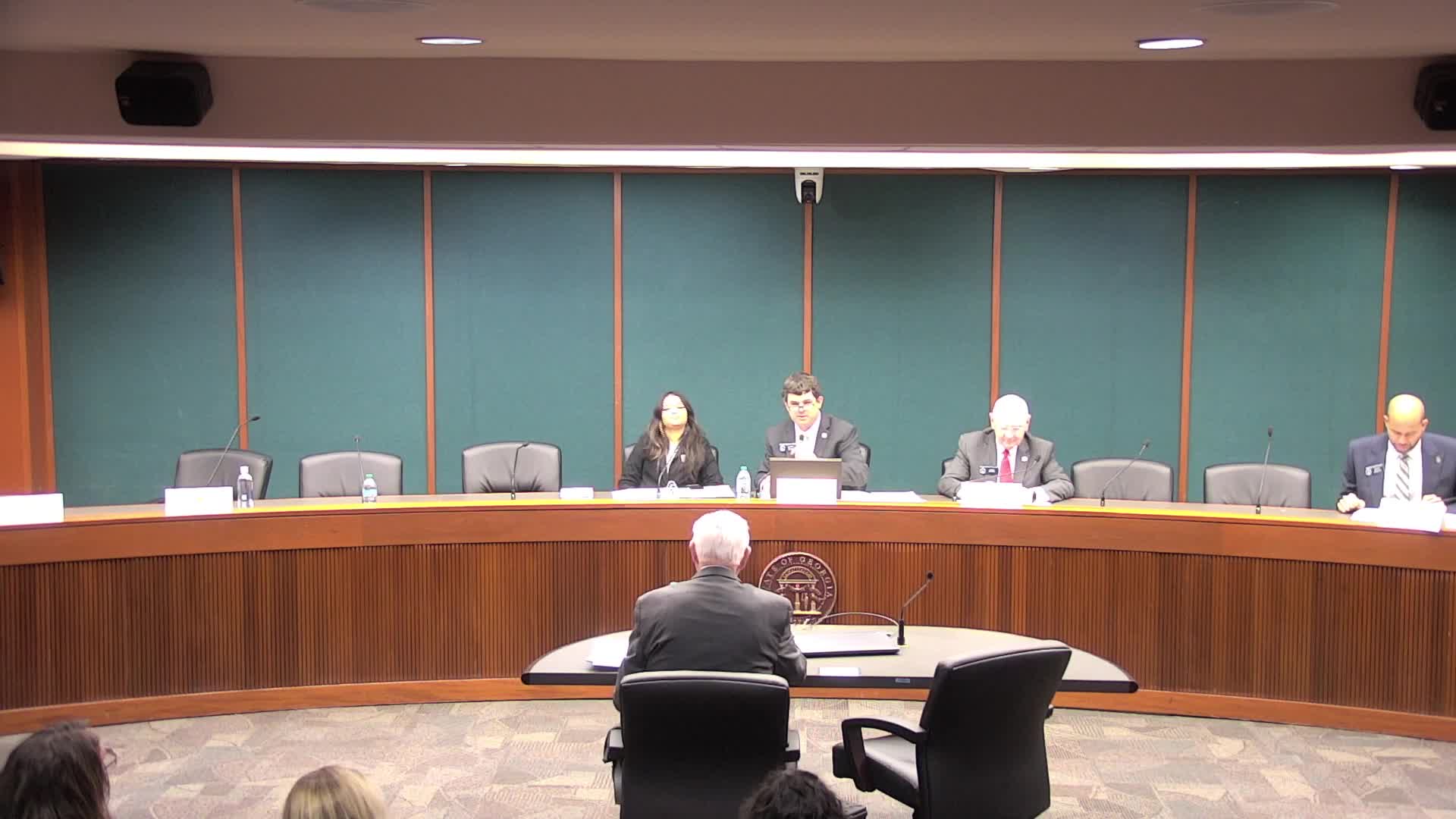
Senate committee hears bill to let voters request absentee (paper) ballots in person
Summary
Senator Burns, sponsor of Senate Bill 214 (LC 473286), told a Georgia Senate hearing that the bill would let a registered voter who presents at a polling place during early voting or on election day request an absentee ballot to mark and deposit instead of using the electronic ballot‑marking device.
Senator Burns, sponsor of Senate Bill 214 (LC 473286), told a Georgia Senate hearing that the bill would let a registered voter who presents at a polling place during early voting or on election day request an absentee ballot to mark and deposit instead of using the electronic ballot‑marking device. "What this bill would do would be to allow an elector to request to vote an absentee ballot when they show up in person to to cast their vote," Burns said, describing the change as an additional option that would not amend other aspects of state law.
The bill would let a voter, after check‑in and identification, receive the same physical absentee ballot used for mail absentee voting; that ballot would then be placed into a secured container and handled and tabulated in the same manner the bill ties to existing absentee procedures. "An absentee on request ballot is on the same physical type of ballot that is used for absentee ballots pursuant to an existing code section," Burns said during the hearing. The sponsor also noted current law requires an absentee ballot request be submitted 11 days before election day if it is to be mailed and returned by mail, and said this measure would remove that timing constraint for in‑person requests.
Why the proposal matters: supporters said the change would provide an option for voters who do not trust or are uncomfortable using ballot‑marking devices (BMDs). Tamara Favrito of Voter GA said the bill would allow in‑person voters to cast hand‑marked paper ballots and argued such ballots are "legal, verifiable, secure" votes. Several public commenters said they distrust the QR code and electronic chain of custody in current systems and urged the committee to expand in‑person paper options.
Operational and fiscal concerns: county election officials, election‑administration advocates and nonprofit groups emphasized implementation questions and costs. Tate Ball, director of elections, Cobb County, said Cobb had nearly "2,500 ballot styles" during recent elections and that printing or otherwise providing the correct ballot at each early voting location raises operational complexity. Ball described the system he used in Arlington County, Va., where ballots were printed on demand and voters scanned their own ballots to verify they were read correctly. "There is a way to do it well," Ball said, but added that Georgia's larger counties would need ballot‑on‑demand printing and clear workflows to avoid delays and errors.
Financial estimates and equipment: witnesses disagreed on equipment costs and requirements. Rachel Lastinger of the ACLU of Georgia warned that most Georgia counties do not have ballot‑on‑demand printers and that the special printers and security paper needed can be expensive; she said counties the ACLU consulted estimated the bill could at least double election costs in some jurisdictions. "All counties we have spoken to, both rural and metro, believe that this would at least double their current election cost," Lastinger said. By contrast, Janice Johnson of the State Elections Board said affordable ballot‑on‑demand printers exist and described options she said could be used to support the proposal.
Chain of custody and curing: committee members and witnesses discussed how ballots would be secured and how the existing ballot curing and vote review processes would apply. Rachel Lastinger clarified a legal deadline: "If an absentee ballot is at the precinct at 7PM, then they're not — they're not at the board of elections by 7PM and legally cannot be counted," she said, emphasizing that the bill as drafted must align with statutory receipt and counting deadlines. Several election officials said ballots that are not placed in an oath envelope would complicate curing because a naked paper ballot placed in a box is not easily linked to an elector for cure purposes; Tate Ball and others explained current vote‑review and duplication panels used during tabulation rely on chain‑of‑custody and party‑appointed reviewers.
Security controls and tabulation location: witnesses debated whether ballots cast under the proposal should be tabulated at the precinct or transported sealed to a central tabulation facility. Some committee members and witnesses said sealed containers and numbered seals are standard and manageable; others emphasized the need for logs, dual custody and law enforcement or other secure transport to maintain chain of custody.
Public comment and viewpoints: public commenters were mixed. Cindy Battles, policy director at the People's Agenda, opposed the bill as drafted on cost and logistical grounds; she also raised concern that the bill's language could be interpreted to reintroduce drop‑box style receptacles. Advocates for hand‑marked ballots — including Tamara Favrito and several members of pro‑paper‑ballot groups — supported offering an in‑person paper option, saying it would improve voter confidence. Several citizens and advocates, including Steven Elshire (Athens) and Victoria Cruz (Oconee County), said they support paper options because they distrust the machine QR workflow.
Next steps: the meeting was a hearing only; committee members asked for additional input and technical adjustments. Senator Burns closed by saying the committee sought public and county election official feedback before drafting final statutory language. No vote or formal committee action was taken at the hearing.
Ending: The committee kept the record open for public testimony and feedback; sponsors and county officials signaled willingness to work on operational details such as ballot‑on‑demand printing, curing procedures and chain‑of‑custody logs in subsequent drafting sessions.