Get Full Government Meeting Transcripts, Videos, & Alerts Forever!
Get email alerts on the Criminal Competency Evaluations topic
No spam. Unsubscribe anytime.
Senate committee advances bill shortening competency-evaluation timelines, adds initial hearing
Summary
A Georgia Senate committee advanced SB132, which would require an initial court hearing when competency to stand trial is raised and shorten evaluation and restoration deadlines for certain non-serious misdemeanors; prosecutors may object to automatic dismissal.
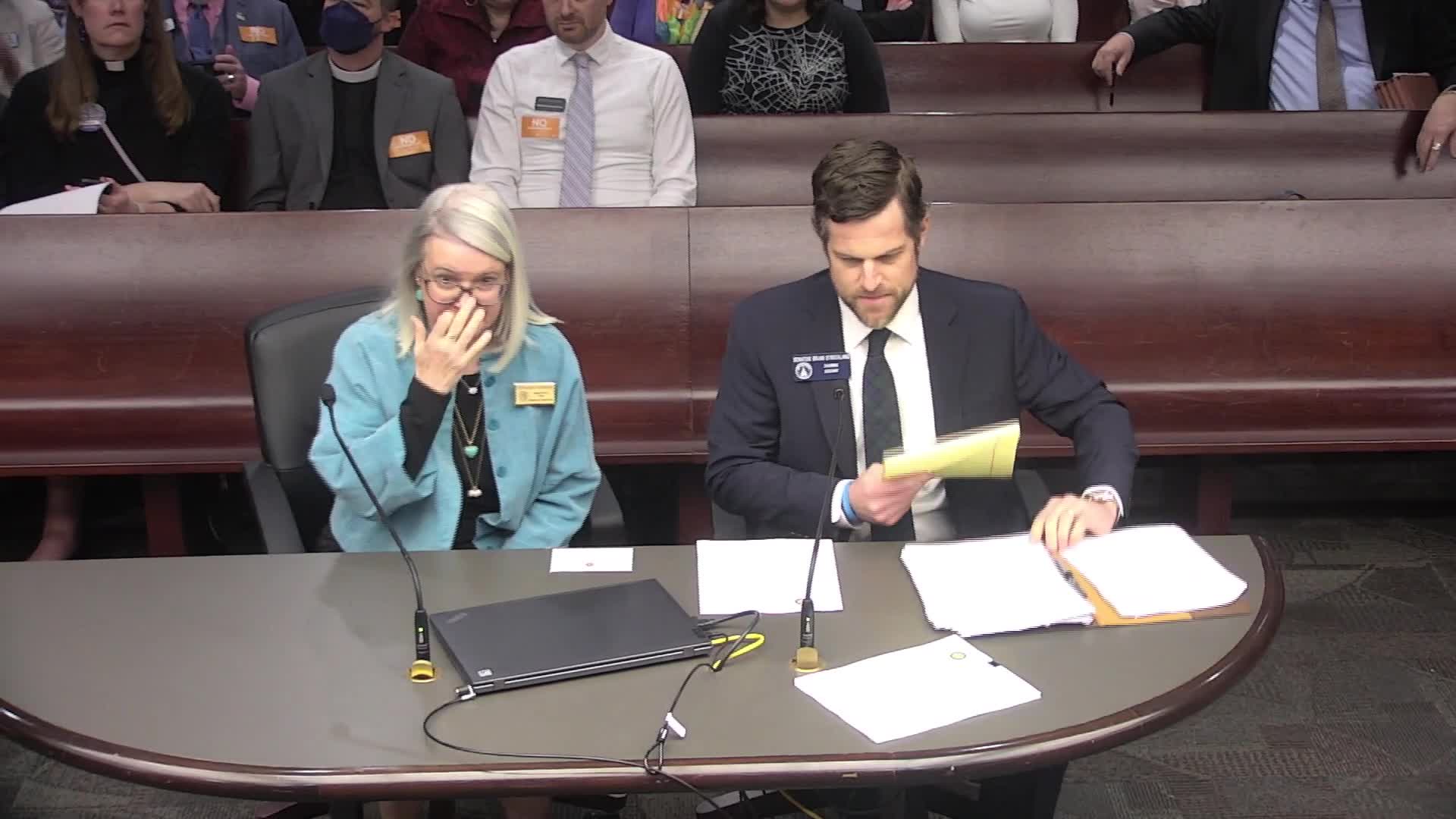
At a Georgia Senate committee meeting, lawmakers advanced Senate Bill 132, which would require a judge to hold an initial hearing when competency to stand trial is raised and shorten evaluation and restoration deadlines for certain non-serious misdemeanors.
Supporters say the measure aims to reduce the time people spend in jail waiting for competency evaluations and restoration treatment, where long DBHDD wait lists can leave defendants incarcerated for months. The bill is carried as LC 492240S.
The bill requires an initial court hearing when a question of competency is raised so a judge can determine whether a Department of Behavioral Health and Developmental Disabilities (DBHDD) evaluation is necessary. It shortens the statutory evaluation clock for certain non-serious misdemeanor cases from 90 days to 45 days and reduces the restoration period from a 9-month jurisdictional limit to 120 days for those misdemeanors. If a defendant is not restored in that period, the bill provides for dismissal of the misdemeanor charge unless a prosecutor objects and files a motion asking the court to continue jurisdiction for restoration.
Senator Strickland, presenting the bill, said the measure grew from the Behavioral Health Reform and Innovation Commission and DBHDD work and noted lengthy waits for restoration placements. He told the committee the aim was to “streamline the process and to figure out if there were other alternatives,” adding that sometimes medication in jail can avoid the transfer to a restoration hospital but that, once in the restoration process, it can be difficult to reverse.
Coweta County District Attorney Herb Cranford, who served on the commission, told the committee DBHDD staff had reported that “70 plus percent of those come back as competent by after the initial evaluation,” arguing that early judicial review could prevent unnecessary placements and delays.
Defense attorneys on the panel endorsed faster resolution for defendants who sit for long periods but raised a separate concern about the bill’s initial-hearing requirement. Maisie Lynn Guertin of the Georgia Association of Criminal Defense Lawyers and private-practice attorney Carlos Rodriguez warned that requiring a hearing at the point an ex parte defense investigation or request is filed could force privileged information into the public record and delay sending a case to DBHDD. Guertin said defense practice often relies on ex parte motions for independent evaluations and that involving the state at that stage could conflict with existing case law protecting confidentiality.
The committee moved the bill forward on a motion by Senator Watson, seconded by Senator Steele. The committee recorded the motion as approved and the transcript indicates the chair said the vote “appears to be unanimous.”
If enacted, the bill would change how courts and DBHDD handle competency questions for many misdemeanor cases and add a prosecutor objection process to the automatic-dismissal provision for those cases not restored within the shortened timeline.
Supporters and opponents told the committee they would continue work on draft language; the sponsor said he had committed to further discussions about protections for privileged information raised by prosecutors and defense counsel.