Get Full Government Meeting Transcripts, Videos, & Alerts Forever!
Get email alerts on the Judicial Administration topic
No spam. Unsubscribe anytime.
Panel considers bill allowing counties in large circuits to fund up to five judicial officers
Summary
The House Judiciary Committee reviewed House Bill 482, which would permit counties in superior court circuits with 15 or more judges to provide funding for up to five judicial officers, who would meet the same qualifications as sitting judges and be selected by the circuit chief judge.
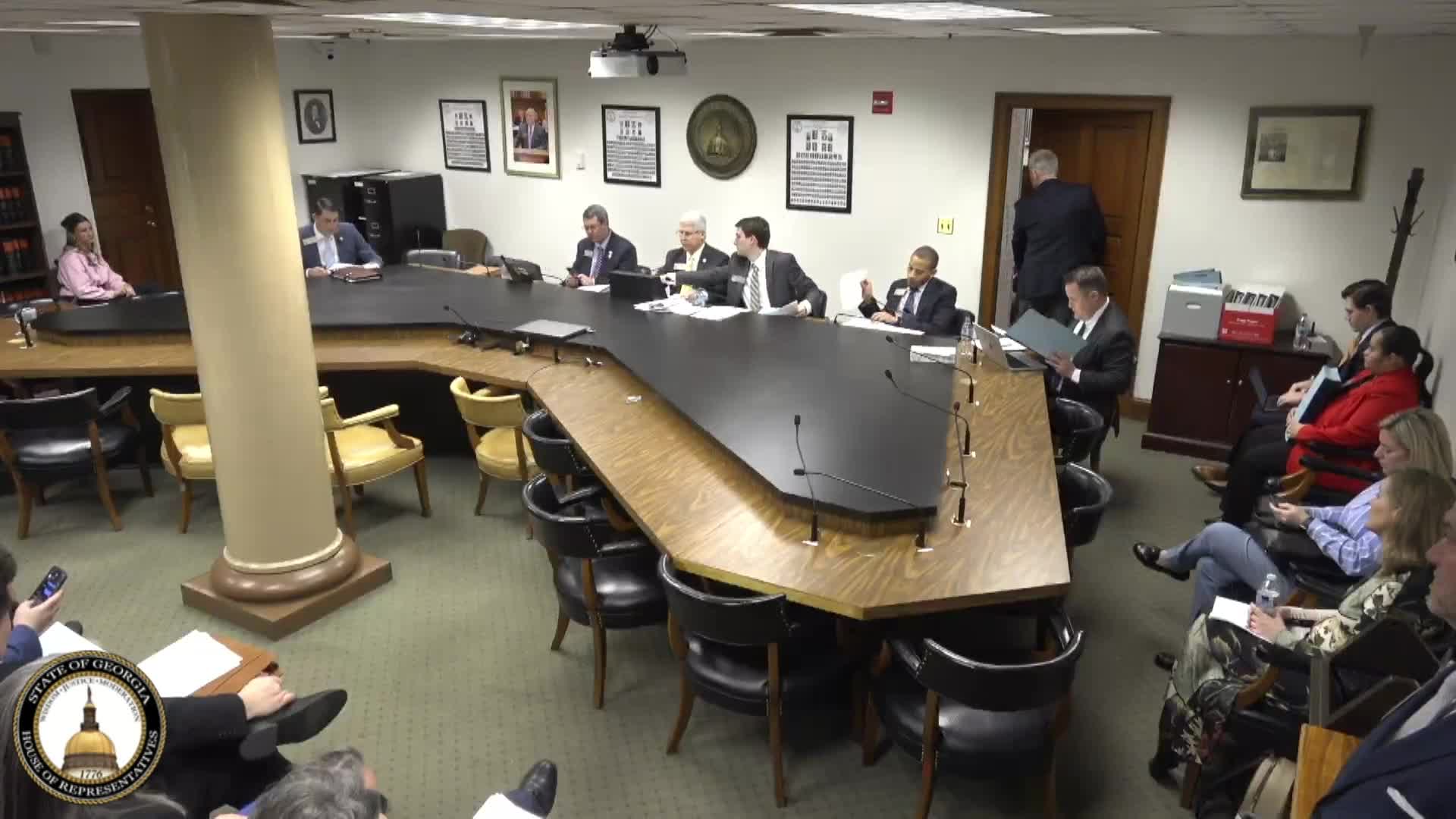
At a meeting of the Georgia House Judiciary Committee on Feb. 25, 2025, members heard discussion of House Bill 482, a proposal that would authorize counties located in superior court circuits with 15 or more judges to provide funding for up to five judicial officers to assist in those circuits.
Proponents said the judicial officers would be attorneys who meet the same qualifications as sitting judges and would be selected by the circuit’s chief judge. The bill’s presenter said the positions would help the courts move pro se and lower-complexity cases through the system so sitting judges can focus on more complex matters.
Judge Eaton, who joined the presenter during the committee hearing, said judicial officers are already used on family law dockets in some circuits and that extending the practice could increase efficiency. "Our judicial officers tend to handle more of the pro se cases. It allows us to get into more of the complex cases as they get to us," Eaton said during the discussion. Judge Kelly Ellerbee and court administrator David Summerlin also attended and spoke in support.
Committee members asked procedural questions about how the positions would be funded and selected; a committee member clarified that if the bill passes the General Assembly, counties would have to secure the funding through their local commissions. The presenter said the bill is intended to maintain judicial qualifications and clarify which case types the officers may hear.
A motion to advance the measure was made and seconded during the meeting; the transcript does not record a final committee vote on the bill in the portions provided.
If enacted as written, the bill would leave selection authority with the chief judge and require the judicial officers to meet the same qualifications as sitting judges. Supporters told the committee the measure aims to reduce case backlogs by reallocating lower-complexity dockets to the judicial officers while preserving judges’ time for complex civil and criminal matters.