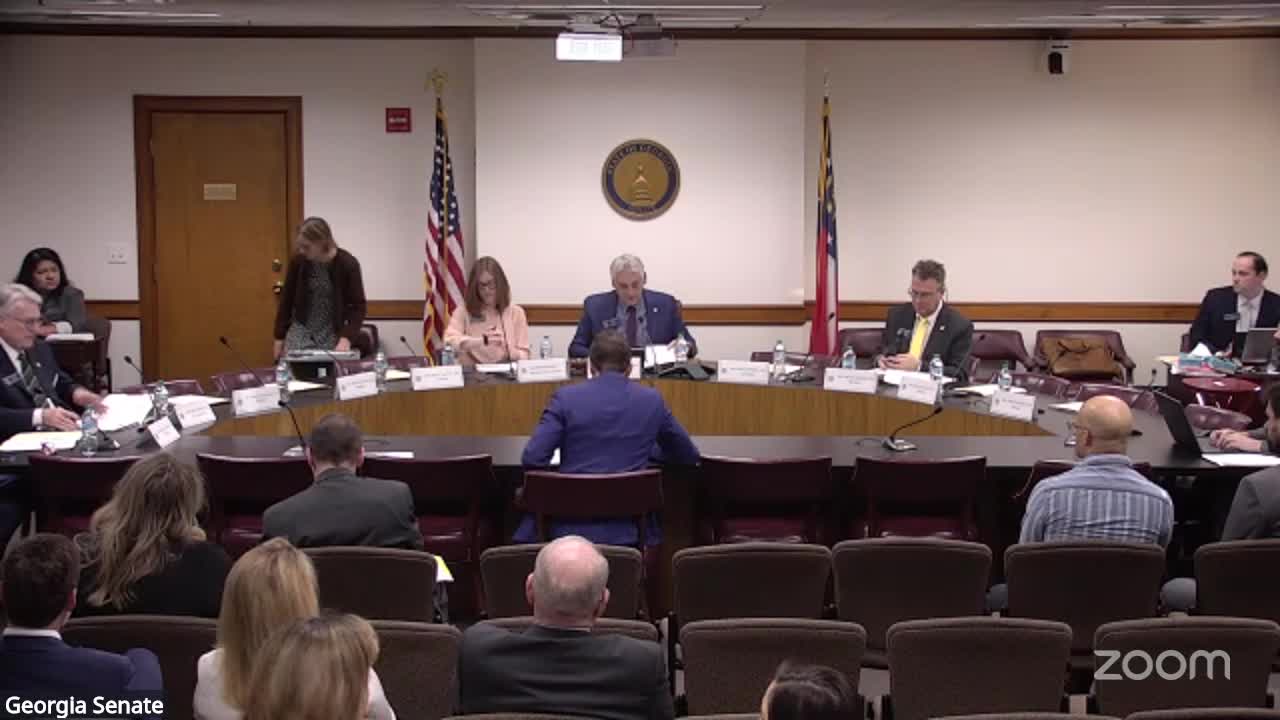
Georgia senators hold hearing on bills to let state invest in Bitcoin
Loading...
Summary
A Georgia Senate committee held a hearing on two companion bills that would allow the state to include Bitcoin in permitted investments for state funds. Supporters urged early adoption and economic opportunity; the deputy state treasurer and witnesses flagged volatility, statutory limits and custody/security issues. No vote was taken.
Senator Dozle, chairman of the Georgia State Senate Banking Committee, opened a hearing on Senate Bill 178 and a closely similar bill, Senate Bill 228, that would add Bitcoin to the list of instruments the state treasury may invest in.
The bills would explicitly permit the state treasury or related state investment boards to hold Bitcoin, with one bill capping the allocation at 5% and both inserting security and custody standards into law. The committee treated the session as a hearing only; no committee vote or final action was taken.
Supporters told the committee that Bitcoin has matured into a widely traded, scarce digital asset and that several private investors, asset managers and jurisdictions are already including Bitcoin in portfolios. Steven Delorme, a product designer and Atlanta resident, said "Bitcoin is a money. It's a protocol, and it's a network," and added that many Georgia voters already hold Bitcoin privately. Damon Russell, a television producer who has followed Bitcoin markets, and other witnesses said the state could attract miners and related businesses by formally recognizing the asset.
Scott Austin, deputy treasurer and chief investment officer for the Office of the State Treasury (OST), told the committee that OST manages tens of billions of dollars and described why current treasury rules limit such purchases. "What we are looking for is first and foremost, stability of the investment," Austin said, adding that the treasury's policies emphasize preservation of capital, liquidity and a marketable rate of return. He said OST "does invest about $77,000,000,000 for the state" and that roughly "$68,000,000,000 of that is our state funds," and explained those funds are governed by Title 50 and by the State Depository Board and an investment policy that expects assets to generate yield and preserve principal.
Committee members and witnesses discussed two practical policy issues the bills would raise: (1) whether Bitcoin belongs in short‑horizon treasury portfolios designed to preserve liquidity and produce interest income or instead in longer‑horizon alternative allocations such as pension funds (ERS and TRS were cited); and (2) custody and security standards for private keys. Senator Dozle noted one bill includes a 5% cap for the permitted allocation; he said that figure follows earlier alternative‑investment starts in state law but acknowledged it was an arbitrary starting point. The deputy treasurer and witnesses recommended additional work on custody, including cold‑storage practices, and on whether existing board policies would allow the purchases.
Several witnesses cited industry precedents and private‑sector activity: Doug Leonhardt, speaking as an individual and currently working at Intercontinental Exchange, described private exchanges’ work; speakers referenced BlackRock and Fidelity as major institutional investors that have moved into Bitcoin ETFs. Testimony also noted that Georgia already hosts substantial Bitcoin mining activity and educational programs, which supporters said could translate to economic development.
Committee members discussed next steps. The deputy treasurer and senators suggested the State Depository Board and the treasury could review whether the board would authorize such investments under current policy, and senators proposed off‑session consultations with TRS and ERS about whether pension alternative‑investment rules would need to be updated. The committee closed the hearing with no vote.
The record shows a hearing-only presentation of technical, legal and policy considerations; senators and witnesses asked for further study of statutory changes (Title 50), custody standards, and which state funds, if any, would be appropriate vehicles for Bitcoin exposure.