Get Full Government Meeting Transcripts, Videos, & Alerts Forever!
Get email alerts on the Promise Scholarship Military topic
No spam. Unsubscribe anytime.
Committee expands Georgia Promise eligibility to active-duty military children; DOE to adopt implementation rules
Summary
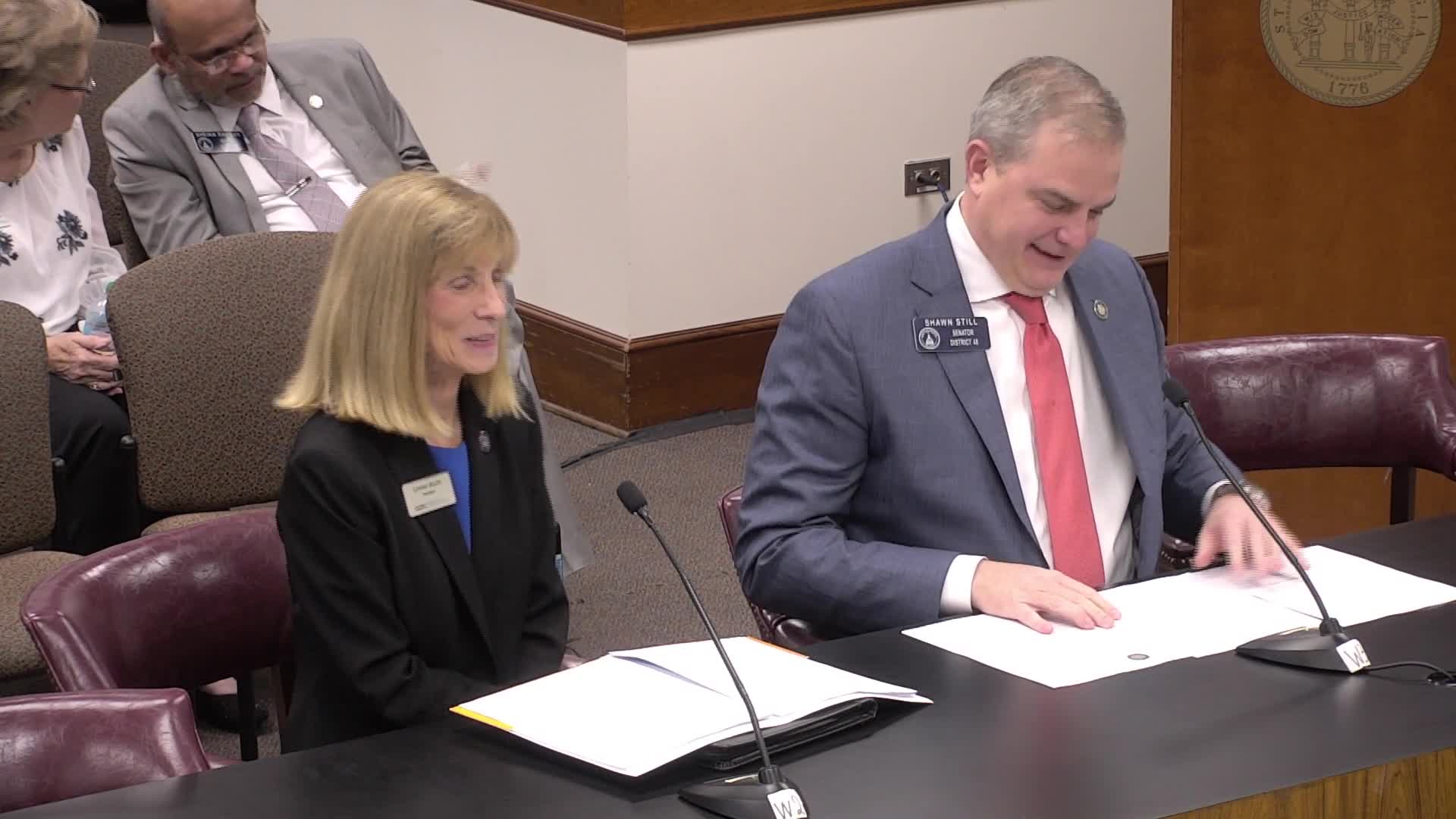
Sen. Sean and a DOE official told the committee they had crafted a bill to add active-duty military children to the Georgia Promise Scholarship priority list; the committee approved the measure.
Sen. Sean presented legislation to expand eligibility for the Georgia Promise Scholarship to include children of active-duty military personnel. "So active duty military children in the state of Georgia is only 33,000 kids," Sen. Sean said, describing the group as a relatively small pool clustered around military installations. He emphasized the bill does not add state funds to the Promise program; it simply allows state eligibility to align with forthcoming federal guidance so federal and state dollars can be coordinated for eligible active-duty children.
Lynn Riley, president of the Georgia Student Finance Commission, explained current priority rules for the Promise Scholarship. "Low income first, active military second," Riley said while describing the program's order of priority: first priority goes to students from low-income families (below 400% of the federal poverty level); if funds remain, active-duty military children would be considered next; families above 400% would follow. Riley told the committee that the bill carves out attendance-zone and prior-QBE provisions so active-duty children would be ranked after low-income families but ahead of higher-income applicants without attendance-zone eligibility.
Committee discussion focused on how the bill intersects with federal guidance and other state measures (including a recent bill on foster-family children). Senator members asked whether the DOE would be required to implement federal directives related to expanding educational choice; the sponsor and DOE representative said the bill authorizes the State Board of Education and DOE to adopt rules "as necessary to implement guidance documents from a federal agency," limited to the subject matter of expanding educational freedom and choices.
A motion to pass the bill was made and seconded; the committee recorded four members as opposed on final passage (the transcript lists "1, 2, 4 opposed"). The transcript does not list a full yes tally by name.
Why it matters: Supporters said the change prepares state policy to align with an executive-level directive and ensures active-duty military children would be included when federal assistance is authorized to follow students. Sponsors and the Student Finance Commission said the change does not increase state spending but changes eligibility priorities and delegations for rulemaking to DOE.
Next steps: The measure was approved by committee and will be forwarded according to Senate procedures. The Department of Education and the State Board of Education were directed in the bill language to adopt implementing rules as needed.