Citizen Portal

Senate digital-assets subcommittee opens with bipartisan focus on stablecoins, market-structure rules

2436651 ยท February 26, 2025

Get AI-powered insights, summaries, and transcripts

Subscribe
AI-Generated Content: All content on this page was generated by AI to highlight key points from the meeting. For complete details and context, we recommend watching the full video. so we can fix them.

Summary

Senate Banking Committee members and four witnesses at the subcommittee's inaugural hearing urged Congress to craft a federal framework for stablecoins and clearer market-structure rules, focusing on reserve design, consumer protections, AML requirements and how to resolve failed issuers.

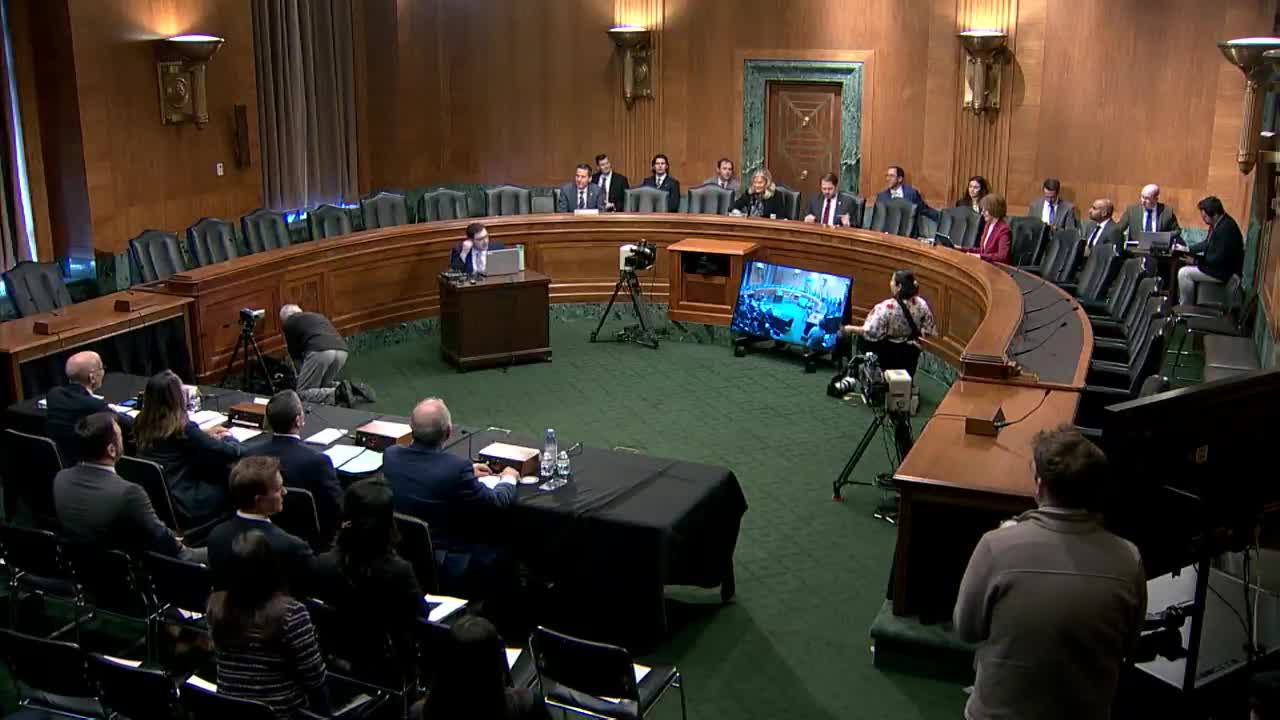
The Senate Banking Committee's new Subcommittee on Digital Assets held its inaugural hearing, where Chair Lummis and Ranking Member Gallego led a bipartisan discussion with four expert witnesses on stablecoin legislation and market-structure reform. The panel addressed reserve requirements, disclosure rules, anti-money-laundering (AML) enforcement, and options for resolving a failed stablecoin issuer.

The hearing focused on why Congress should enact clear federal rules. "I'm really grateful to Senator Scott for creating this subcommittee," said Chair Lummis, calling the session the inaugural hearing and saying lawmakers should "promote responsible innovation and protect consumers." Ranking Member Gallego said lawmakers must "strike the right balance" between innovation and safeguards, emphasizing consumer protection and the need to avoid undermining the banking system.

Witnesses urged a legislative approach that differentiates fundraising and primary-market conduct from secondary-market trading, strengthens prudential standards for stablecoin reserves, and clarifies jurisdictional lines between the SEC and the CFTC. Louis Cohen, partner at Cahill Gordon & Rindell, told the subcommittee that innovation had outpaced law and that "a clear, practical, and flexible federal statutory regime is urgently needed" to reduce confusion about when digital assets should be treated as securities versus commodity-like assets.

Jonathan Yacom, global head of policy at Kraken, pressed for a basic market-structure law for centralized intermediaries, saying nearly "90% of activity in the digital assets markets is executed via centralized intermediaries like Kraken" and urging the CFTC to have spot-market authority over centralized platforms. Zaeem Masari, chief legal officer at LightSpark, described stablecoins as potential "digital cash" and recommended 1:1 backing with high-quality liquid assets, issuer redemption rights, and segregation of reserve assets so holders can be made whole promptly in a failure.

Former CFTC chair Tim Massad supported strong prudential safeguards and enforcement, but urged caution on rewriting securities law to resolve market-structure questions. He warned that clarity alone is not sufficient: "You can have clarity with bad rules," and urged stronger bankruptcy or resolution mechanisms so holders do not wait years for recovery.

A recurring topic was anti-money-laundering and the Bank Secrecy Act. Witnesses and senators noted that once a stablecoin circulates it can move without a centralized intermediary and that BSA obligations traditionally attach to intermediaries. Massad and others said Congress should consider expanding the regulatory perimeter, technological approaches such as programmable controls, and expanded monitoring obligations for issuers.

Members pressed specific elements of bills under discussion: Chair Lummis referenced the Lummis-Gillibrand Responsible Financial Innovation Act and other market-structure proposals; several senators and witnesses discussed the Genius Act, which the chair described as making the U.S. dollar "fit for the digital age" and providing parity between state and federal stablecoin charters. Witnesses urged stronger enforcement provisions, clearer reserve rules, lower thresholds for federal oversight than the $10 billion market-cap trigger in one draft, and explicit mechanisms for speedy return of reserve assets to holders in the event of issuer failure.

Committee members and witnesses also compared international approaches, noting elements of the EU's Markets in Crypto-Assets (MiCA) framework and the U.K.'s work as informative examples. Senators repeatedly framed the debate as a tradeoff between enabling onshore innovation and preventing regulatory arbitrage that drives business offshore.

The hearing concluded with broad agreement that Congress should act to provide regulatory certainty, though witnesses and members differed on the scope and sequencing of legislation. Chair Lummis expressed hope the committee could move bipartisan bills toward enactment, stating she hopes to get legislation "to President Trump for his signature this year." The subcommittee will continue bipartisan work on stablecoin prudential standards, market-structure authority, AML perimeter questions and consumer-protection issues.

Less-critical details discussed included whether stablecoins should be allowed to pay interest (some witnesses cited European rules that prohibit interest on certain stablecoins), whether states should retain licensing authority, and the role of proof-of-reserves or comparable auditing standards for issuers.