Get Full Government Meeting Transcripts, Videos, & Alerts Forever!
Get email alerts on the School Nurses Pay topic
No spam. Unsubscribe anytime.
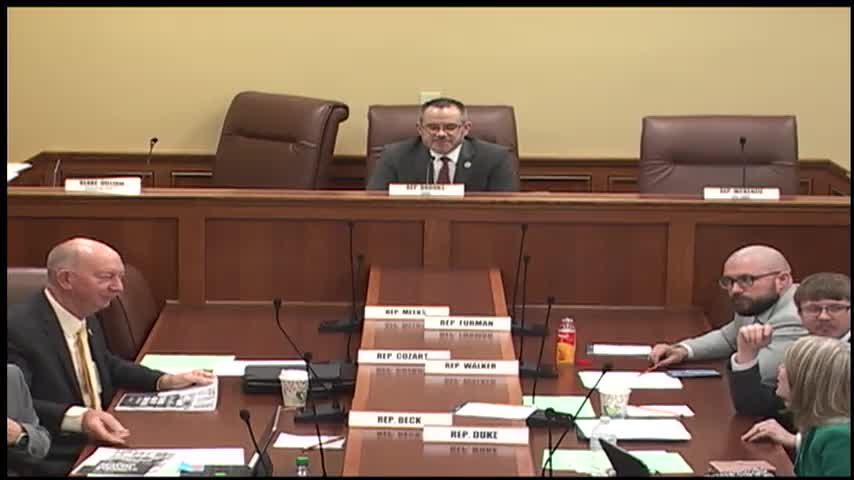
Committee hears HB 12-42 to boost school nurse pay; votes deferred because of fiscal impact
Summary
Representative Julie Mayberry presented HB 12-42, a bill proposing higher starting pay for school nurses, to the House Education Committee and the panel took testimony but deferred a vote because the measure has a general‑revenue fiscal impact.
Representative Julie Mayberry presented HB 12-42 to the House Education Committee, a proposal to raise school nurse pay with an effective date specified as the 2027–28 school year. Because the bill has a fiscal impact on general revenue, the committee received testimony and deferred any vote until leadership bundles fiscal items later in the session.
Mayberry said the bill aims to address a statewide staffing and retention problem for school nurses and gives two years to identify funding sources through the adequacy review process and other options, such as Medicaid billing or tobacco settlement funds. She asked committee members to meet in the interim to pursue funding solutions.
Jacqueline McKeown, director of health services in a local district, summarized state salary comparisons drawn from fiscal data and said school nurses in Arkansas are paid below neighboring states and below other registered nurses in state employment. Amy Fortner, president of the Arkansas School Nurse Association and a current school nurse, said vacancies have risen sharply; she told the committee school nurses “do not have scheduled appointments and never know what will walk into their office,” and that districts face a 25% vacancy rate reported in testimony.
Cynthia Hines, coordinator of health services for Pulaski County Special School District, described recruitment challenges and said her office interviewed 376 candidates and hired 130 in recent years but had only 15 of those nurses still in those roles at the time of testimony. She described the clinical complexity school nurses handle, including peritoneal dialysis, tube feedings, insulin management and other high-acuity procedures.
The committee heard data points during testimony: Representative Mayberry cited a survey finding that about 58% of superintendents reported moderate or extreme need for additional nursing funding in their districts. Witnesses said 86,558 students missed at least 10% of a school year because of health conditions (the committee packet figure cited by witnesses), a level that qualifies as chronic absenteeism and is tied to academic outcomes.
Committee members thanked presenters and asked for more detailed, apples‑to‑apples comparative salary data (for example, accounting for contract days versus 12‑month employment) before moving forward. Representative Beck and others requested clearer comparisons that account for differing contract lengths and duties. The committee did not vote; the chair said leaders will gather fiscal bills near the end of the session and that members would have additional interim meetings to pursue funding options.
Why it matters: Witnesses told lawmakers school nurses do far more than first aid — they manage chronic medical conditions, emergency care, staff training, and ensure students remain in class. Testimony framed pay as a key retention obstacle: schools reported difficulty hiring qualified nurses and some nurses leaving for higher hospital wages.
Next steps: The committee will not vote on HB 12-42 at the hearing and plans further interim work and fiscal review before any floor action.