Get Full Government Meeting Transcripts, Videos, & Alerts Forever!
Get email alerts on the Property Tax Credit Seniors topic
No spam. Unsubscribe anytime.
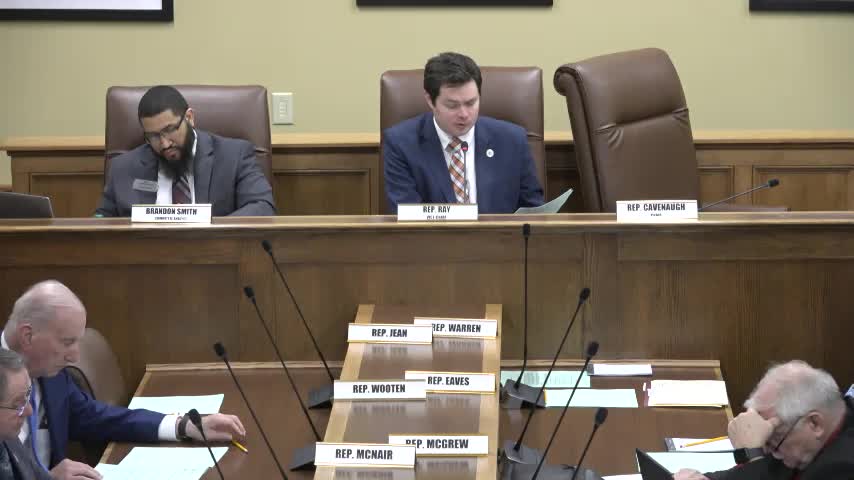
Representative Kavanaugh proposes refundable property‑tax credit for seniors; committee discusses budget and distributional effects
Summary
Representative Kavanaugh introduced House Bill 14‑38 to create a dollar‑for‑dollar refundable state tax credit for homestead property taxes, focused initially on taxpayers aged 65 and older.
Representative Kavanaugh introduced House Bill 14‑38, a proposal to provide a dollar‑for‑dollar state income tax credit for taxpayers’ homestead property taxes, with initial focus on homeowners aged 65 and older.
Kavanaugh said the idea aims to ease what many constituents describe as the burden of paying property taxes on assets they already own. Under the draft language discussed in committee, the credit would be tied to the taxpayer’s homestead and—if a taxpayer’s credit exceeded their income tax liability—would be refundable (the sponsor said a taxpayer "would get a check back from the state").
Committee members pressed on design and fiscal consequences. Kavanaugh acknowledged the plan could have a substantial fiscal impact—committee discussion cited a potential budget “hit” on the order of roughly $182 million to $200 million annually—and said the bill was intended to open a broader discussion about property tax policy in Arkansas. Members suggested possible limits such as income cutoffs, age thresholds, or tying relief to homestead credit funds. Several members warned about shifting the tax burden: lowering homestead liabilities could move costs to renters, to local governments, or require higher sales taxes or other state revenue sources; Representative Lundstrom noted landlords may pass higher property costs to tenants.
Members discussed related policy options, including removing schools from the property‑tax funding base and replacing that revenue with sales tax, or using existing homestead relief funds. Representative Wooten and others referenced school finance litigation (Lakeview) and the structural difficulty of replacing locally levied property tax revenue. Representative McGrew and others raised questions about whether the credit would apply to income‑producing property (sponsor said the bill applies to a taxpayer’s homestead, not rental or commercial property).
No committee vote on HB14‑38 was recorded in the transcript. Kavanaugh said the bill is intended to start a conversation and that he welcomed further study and possible interim work on income limits, revenue offsets and implementation details. The committee adjourned without taking action on the bill.