Get Full Government Meeting Transcripts, Videos, & Alerts Forever!
Get email alerts on the Ami Days topic
No spam. Unsubscribe anytime.
House education committee approves amendment letting districts use three AMI days after seven in-person makeups
Summary
The House Education Committee adopted an amendment and passed HB 13-70 as amended to allow school districts to use three Alternative Methods of Instruction (AMI) days after making up the first seven emergency closures in person. Supporters said AMI allows “real-time” makeup work; the Department of Education warned in-person instruction is vital.
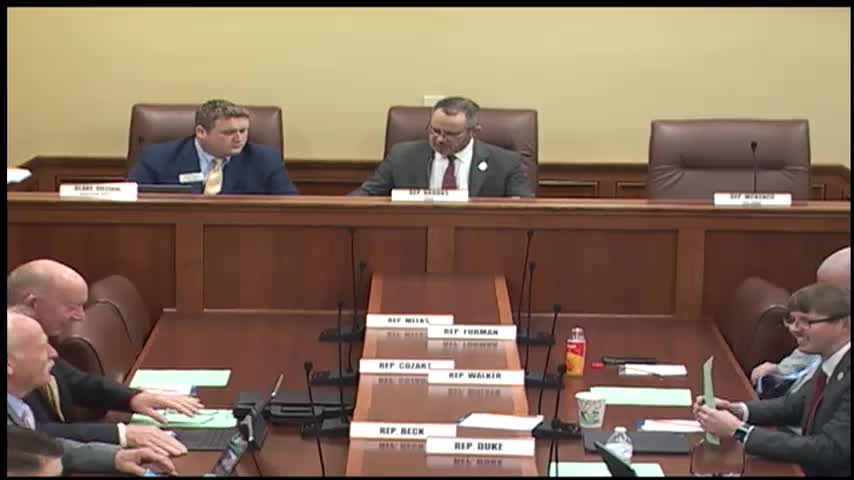
The House Education Committee on an out-of-order agenda vote adopted an amendment and approved HB 13-70 as amended on a voice vote, allowing Arkansas school districts to use three AMI (Alternative Methods of Instruction) days after districts make up the first seven emergency closure days in person.
The amendment, offered by Representative Vaughn and adopted without recorded roll-call, changes the bill so that the first seven required emergency makeup days must be made up in person; days eight, nine and ten may be conducted as AMI days at a district’s discretion. Representative Julie Mayberry, who presented the bill, said the amendment was intended to reach a compromise after member concerns.
The bill’s supporters argued AMI days let students complete assignments tied to the specific day’s instruction, reducing the need to cram makeups at the end of the year. Charlotte Vining Douglas, a former state representative who sponsored earlier AMI legislation in 2017, told members AMI instruction allowed teachers to “make up the work in real time.”
Courtney Salas Ford, chief of staff for the Arkansas Department of Education, told the committee the department’s position favors in-person instruction. “In-person instruction matters. Kids need to be in school, they need to be in front of a teacher,” Salas Ford said, adding that Arkansas’s minimum school days and students’ post‑COVID learning recovery were central concerns.
Student speakers urged passage. Eli Wolf, a junior, said AMI days would help students “add days that we can’t get back due to weather.” Gavin Goldman noted Advanced Placement exam dates and tight schedules at the end of the year, and Presley Milliken, a Sheridan High School senior, said AMI “is not a replacement for in-school days” but a tool to maintain curriculum continuity when closures occur.
Representative Mayberry moved — and the committee approved by voice vote — a motion for “do pass as amended.” Several members spoke against the measure, saying they prefer all days be in person and expressing concern about uneven access to internet and supervision for younger students. Representative Barker and Representative Andrews each stated they would vote no. Members who supported the measure framed it as limited (three AMI days) and a local‑option decision for districts and school boards.
The committee’s approval was by voice vote; no roll-call tally was recorded in the transcript. The measure as amended now moves forward in the legislative process.
Why it matters: AMI days let districts design alternative, immediate makeup instruction for weather or emergencies instead of tacking makeups onto the end of the year; opponents say it risks instructional time for younger or technology‑limited students and weakens in-person learning that the Department of Education emphasizes.
The committee record shows discussion and public testimony focused on striking a balance between local flexibility and classroom seat time. The transcript indicates the LEARNS Act previously removed AMI language; Douglas said the bill restored a tool districts had used since 2017.