Get Full Government Meeting Transcripts, Videos, & Alerts Forever!
Get email alerts on the Pregnancy Help Organization Tax Credit topic
No spam. Unsubscribe anytime.
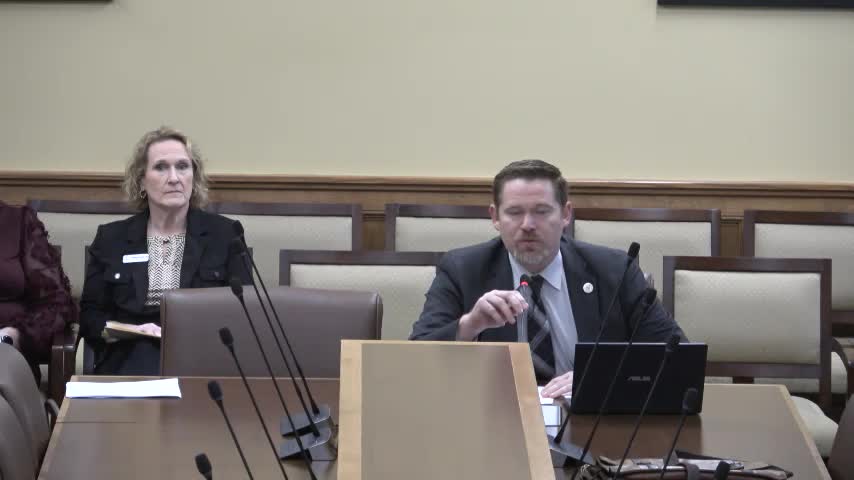
Committee hears bill to create 50% tax credit for donations to pregnancy help organizations; no vote taken
Summary
Representative Cameron Cooper introduced House Bill 14‑04, which would create a nonrefundable income tax credit equal to 50% of contributions to qualifying pregnancy health organizations.
House Bill 14‑04, introduced by Representative Cameron Cooper, would create a nonrefundable individual income tax credit equal to 50% of contributions to qualifying "pregnancy health organizations," as defined in state code used for existing grants.
Cooper told the House Revenue & Taxation Committee the credit would cover half of a taxpayer’s contribution to an eligible organization; for example, a $2,000 donation would yield a $1,000 credit against state income tax liability. The bill includes an estimated administrative cost of about $8,000 to update tax forms and systems, Cooper said, and the sponsor said he would accept an amendment to clarify that donors could not claim both a tax deduction and the proposed credit for the same contribution.
Paul Gearing of the Department of Finance and Administration (DFA) told the committee that producing a reliable fiscal estimate for a new tax credit is difficult; DFA staff considered census and demographic data and experience with similar programs in other states. DFA’s fiscal statement cited an illustrative estimate of $10,000,000 but Gearing said that number is uncertain and actual cost would depend on tax returns claiming the credit.
Three pregnancy‑support organizations and network leaders testified in favor of the bill. Donna Ezell, executive director of Caring Hearts Pregnancy Center, said Caring Hearts provided about $400,000 in free medical services in 2024 and described the organizations’ reliance on donors (she said Caring Hearts’ donor base is roughly 75% individuals, 13% churches, 2% businesses and 10% grants). Vicky Parker of Options Pregnancy Center and the Arkansas Pregnancy Network described centers’ statewide services and estimated there are 45–60 pregnancy centers across Arkansas, with full‑service centers providing roughly $650,000–$700,000 in free services annually. Christy Renfro of the Arkansas Pregnancy Network said demand for services has increased and cited an increase in abortions via online pill ordering; she said clinics are seeing higher demand and that tax credits in other states have increased charitable giving.
Committee members asked technical and policy questions about eligibility (the bill currently requires organizations to have existed as of Jan. 1, 2023), whether corporate donations would qualify (sponsor said the bill targets individual taxpayers), and whether the credit would replace or supplement existing state grants (sponsor said the bill uses the existing statutory definition that applies to grant programs and is intended to be consistent with current definitions). Representative Cooper said he is willing to work with members on amendments and that timing for any vote will depend on the overall budget picture.
Because the measure carries fiscal effects, the chair said the committee was not taking motions to vote on bills with fiscal impact at that time; no committee vote on HB14‑04 was recorded in the transcript.
The bill would create a new state tax credit and requires further work on rulemaking and fiscal modeling before the committee acts.