Get Full Government Meeting Transcripts, Videos, & Alerts Forever!
Get email alerts on the Ballot Initiatives Document Validity topic
No spam. Unsubscribe anytime.
Senate rejects bill that would have created secretary of state's document-validity unit after hours of public concern
Summary
Senators declined to advance a bill that would have created a "document validity" division in the secretary of state's office with investigatory powers and authority to declare certain filings void by a preponderance-of-evidence standard after extensive public testimony raised due-process and cost concerns.
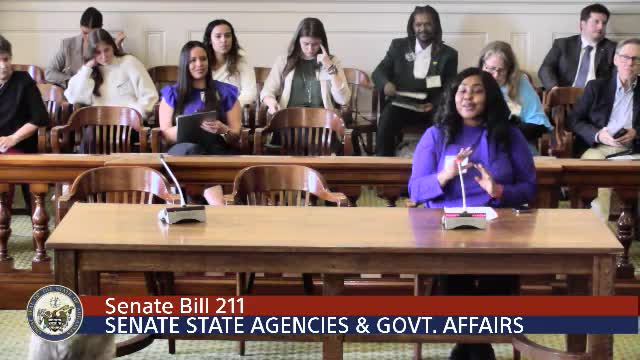
Senators voted down Senate Bill 212 on a voice vote after roughly three hours of public testimony and committee questions, leaving in place the current system for handling alleged petition and filing irregularities.
Supporters said the bill would give the secretary of state's office tools to investigate suspected fraud in petitions and filings and to refer possible crimes to prosecutors; opponents said it created an unaccountable law-enforcement-like unit that could strip signatures without adequate due process.
Senator Larry Hammer, who carried the measure, told the committee the bill was narrowly tailored to let the secretary of state's office conduct fact-finding about alleged falsity in documents and to refer possible crimes to prosecutors. "We're just asking give them the ability to investigate so they can bring the evidence, turn it over, and then let the legal process work," Hammer said.
Nathan Lee, chief counsel for the secretary of state, said the proposed document validity division would act as a fact-finding unit and that any criminal prosecutions would still require referral to the attorney general or a local prosecutor. "You'd have to get two concurring opinions before charges and prosecution was brought," Lee said, describing the division as a means to centralize complaints and evidence gathering.
Multiple members of the public and petition-circulator groups urged rejection. Jimmy Kevin, who testified as a private citizen, argued the bill would permit the secretary of state to declare a signature invalid by a "preponderance of evidence" without giving the signer the opportunity to present a defense, calling that approach "a power I'm not willing to give anybody." Joey McCutcheon and Davis Hendricks also warned the measure would chill the petition process and amount to an expansion of government authority over citizens exercising the right to petition.
Other witnesses raised cost and implementation questions. Blake Hudson and lottery office witnesses stressed the training and certification burdens that accompany law-enforcement designations, and several speakers flagged the Commission on Law Enforcement Standards and Training (CLEST) requirements that apply to recognized law-enforcement agencies.
Senators also expressed competing concerns. Senator Payton said he supported vigorous investigation of wrongdoing but opposed expanding policing powers to every state agency. Senator Clark noted the bill would allow unilateral removal of petition signatures by the secretary of state's office and asked where an aggrieved signer could appeal.
After debate and public comment, the committee voted on the motion to pass; the chair announced the bill failed on the voice vote.
The committee did not record a roll-call tally in the transcript for the final vote. The secretary of state's office and committee staff indicated later in the hearing that some language changes had been made earlier in response to feedback from prosecutors and the attorney general, but opponents said the core due-process and oversight concerns remained.
With SB212 defeated, the existing procedures for handling petition complaints remain unchanged; persons and groups who testified said they expected litigation and further legislative proposals on petition integrity and initiative procedures.
Ending: The committee left the issue unresolved; sponsors and opponents indicated continued interest in addressing petition integrity, but the measure as written did not advance out of committee.