Get Full Government Meeting Transcripts, Videos, & Alerts Forever!
Get email alerts on the Rare Disease Council topic
No spam. Unsubscribe anytime.
Rare-disease advocates urge advisory council; sponsor pulls bill for further study
Summary
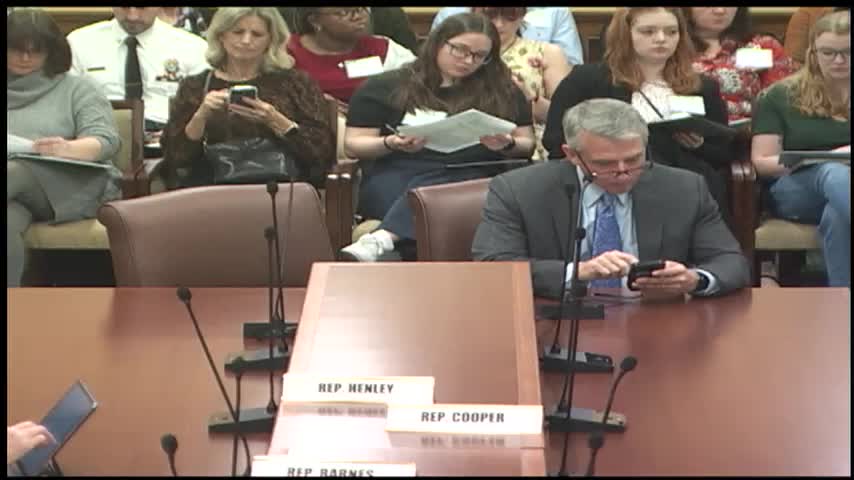
Representatives heard testimony from the National Organization for Rare Disorders and supporters about creating a Rare Disease Advisory Council (RDAC). Questions about funding and scope led the sponsor to withdraw the bill for further work and possible interim study.
Lindsey Viscara, state policy manager for the National Organization for Rare Disorders (NORD), told the committee that House Bill 1532 would create a Rare Disease Advisory Council to give patients and families a state-level voice on diagnosis, treatment access and drug affordability.
"A rare disease is defined federally as any disease that affects fewer than 200,000 people," Viscara said, adding that rare diseases affect roughly 1 in 10 Americans as a category. She said RDACs in other states help produce landscape surveys, advise Medicaid and prescription drug affordability boards, and inform policy on prior authorization and cost sharing.
Committee members focused on funding and whether the council would require an appropriation. Representative Ballen asked specifically about funding for meetings; Viscara said no funding source was identified in the bill and that many RDACs operate without a specific appropriation. Committee members also asked for examples of RDAC successes; Viscara pointed to Minnesota, where the RDAC helped pass a 2023 network-access law to allow patients access to out-of-network specialists for rare disease care.
Representative Lee Johnson, sponsor of the bill, acknowledged the value of better coordination but said he would "pull it down for the moment" and work with members individually and in the interim to refine the proposal and discuss funding. The transcript records the sponsor withdrawing the bill for further consideration rather than proceeding to a committee vote.
The bill was not advanced; the sponsor requested follow-up work to address funding and operational questions raised by committee members.