Get Full Government Meeting Transcripts, Videos, & Alerts Forever!
Get email alerts on the Conscience Rights Medical topic
No spam. Unsubscribe anytime.
Senate committee advances Medical Ethics Defense Act after hours of contested testimony
Summary
House Bill 59 would expand conscience protections for health-care workers, institutions and payers. The Senate Health and Welfare Committee voted to send the bill to the floor with a due-pass recommendation after testimony both for and against the measure, which generated debate over patient access, emergency exceptions and legal remedies.
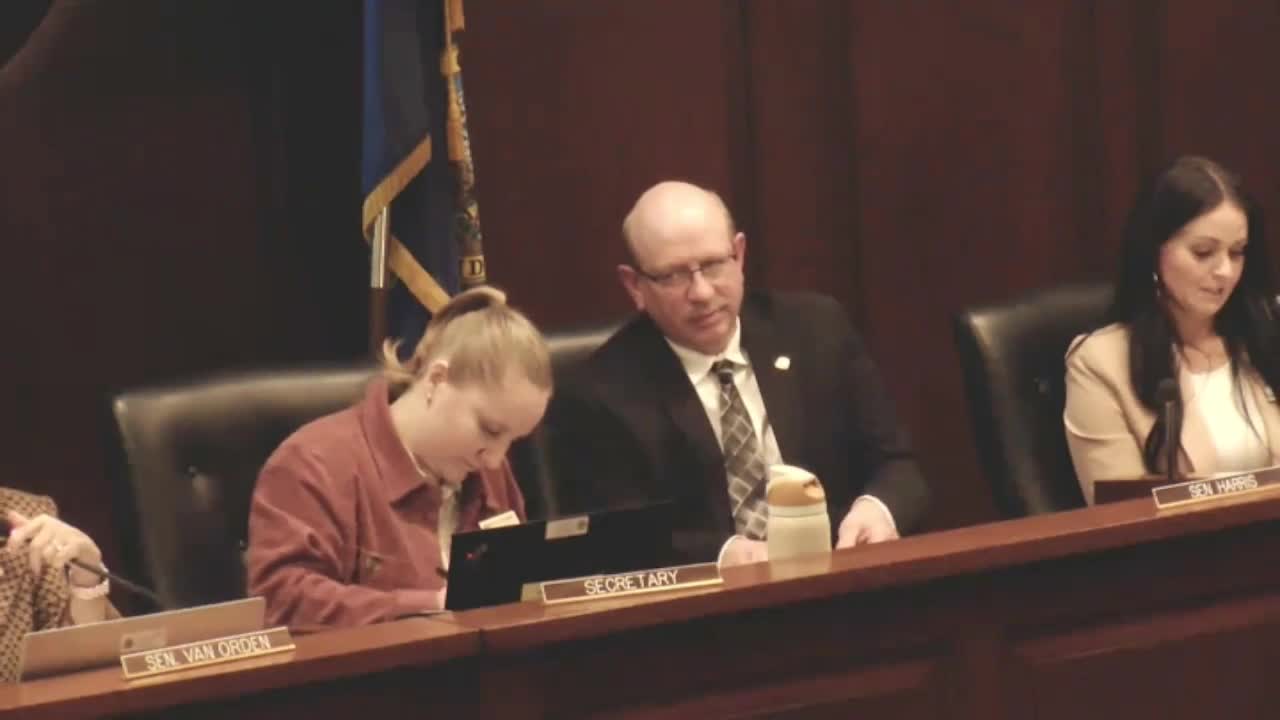
The Senate Health and Welfare Committee voted to send House Bill 59 — labeled the Medical Ethics Defense Act — to the full Senate with a due-pass recommendation after two hours of testimony from physicians, nurses, counselors, patient advocates and legal counsel for the bill.
Sponsor Senator Carl Bierke told the committee the bill would expand conscience protections beyond existing Idaho law (which the sponsor said covers certain end-of-life and counseling protections) to a broader set of health-care professionals, institutions and payers. The sponsor and the bill’s attorney said the measure would allow health-care workers to decline to participate in procedures that violate their religious, moral or ethical beliefs while preserving federal emergency-care obligations, including EMTALA (the federal Emergency Medical Treatment and Labor Act).
Greg Chafwin, an attorney with Alliance Defending Freedom who testified for the bill, said the law is procedure-based: it protects refusal to participate in particular procedures, not refusal to treat patients based on who they are. Chafwin said the bill includes an emergency-care exception and notice provisions and that similar laws in other states have not produced widespread disruption.
Supporters who testified said the bill would protect clinicians’ free-speech and conscience rights and encourage health-care professionals to remain in practice, arguing that disciplinary actions and licensing threats during recent public-health controversies prompted some clinicians to leave the field. Testifiers included physicians and clinicians who described losing colleagues or facing professional pressure during the COVID pandemic; several witnesses urged the committee to adopt the bill to retain and recruit clinicians to rural Idaho.
Opponents, including Planned Parenthood Advocates and health-care practitioners, said the bill is too broad and could allow front-desk staff, pharmacists or insurers to deny services or information on the basis of asserted moral objections. Planned Parenthood’s witness said the bill does not impose a clear patient-notice requirement and argued it could block patients from receiving evidence-based care or even basic diagnostic information. Other opponents said the bill’s private-cause-of-action provisions and immunity language could restrict patients’ remedies if a provider refused care.
Committee members asked about scope and limits. Attorney Greg Chafwin and the sponsor said malpractice law would still apply and that the bill’s protections are not intended to cover emergency care required by federal law; Chafwin also said institutions may require notice of objection so accommodations can be arranged. Several senators said they understood the intent but wanted narrower language or clarifying amendments; the sponsor indicated he planned to work on a small number of amendments if the bill moves forward.
After debate the committee approved the motion to send the bill to the floor with a due-pass recommendation by voice vote. A substitute motion to send the bill to the fourteenth order for possible amendments did not receive a second and failed. Committee discussion and testimony reflected a strong division among medical professionals and advocacy groups in the hearing room and online.
-- Votes at a glance: House Bill 59 — Motion: “Send House Bill 59 to the floor with a due pass recommendation.” Mover: Senator Keiser; Second: Senator Ziderfeld. Outcome: approved by committee (voice vote).