Get Full Government Meeting Transcripts, Videos, & Alerts Forever!
Get email alerts on the Local Government Annexation topic
No spam. Unsubscribe anytime.
House debate over repeal of municipal extraterritorial jurisdiction spotlights property and infrastructure concerns; recorded vote 50‑25‑12
Summary
The Arkansas House on Thursday debated House Bill 15 10, which would repeal a municipality’s authority to exercise territorial jurisdiction over unincorporated county areas, and the clerk recorded a roll‑call tally of 50 yeas, 25 nays and 12 present.
The Arkansas House on Thursday debated House Bill 15 10, a proposal by Representative Gonzales to repeal a municipality’s authority to exercise territorial jurisdiction over unincorporated areas of a county.
Sponsor’s case: Representative Gonzales said the bill addresses what she described as "regulation without representation," arguing that municipalities can plan and enforce ordinances outside city limits without notifying affected county property owners or providing municipal services. Gonzales said that residents living in those areas may not receive city services such as trash or fire protection yet are subject to city regulations.
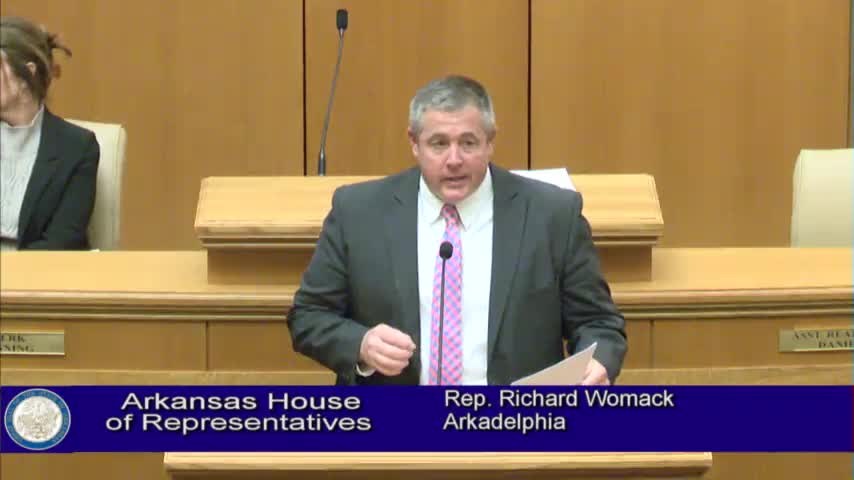
Extended questioning: Multiple members asked detailed questions about practical consequences. Representative Crawford described a local case where residents opposed a proposed cell tower and used the city’s extraterritorial process to stop it; he asked whether that outcome could be considered positive. Representative Gonzales responded that effects depend on who benefits. Representative Hawk, Representative Barnett and others asked about easements, water and sewer infrastructure that extend outside city limits and whether existing agreements or pre‑annexation contracts would be affected. Gonzales said she had committed to work with the Arkansas Municipal League to preserve pre‑annexation agreements and that existing easements and service contracts in place would remain in force.
Sponsor and municipal-league engagement: Gonzales said she would work with the Municipal League to codify annexation agreements so cities could continue to provide services when an annexation plan exists. She said the bill was not intended to eliminate negotiated pre‑annexation agreements.
Recorded vote and procedural note: The clerk recorded a roll‑call tally of 50 yeas, 25 nays and 12 present on the question of passage. Immediately after the count the speaker briefly said, "The bill is passed," and then, "Oh, bill has failed. I thought there was 51," indicating confusion on the floor about the final ruling recorded in the transcript. The transcript record provides the numeric tally (50‑25‑12) but shows the chamber’s announcement was unclear in the minutes provided.
Why it matters: Supporters framed the bill as protecting county property owners from unannounced municipal planning actions that can affect property value and use; opponents raised potential consequences for service provision, infrastructure and sites where joint planning with cities and counties has protected military bases or expanded utilities. The sponsor told members she had received letters from property owners who said future city road plans had prevented sales and reduced property value.
No statutory text or effective date is recorded in the transcript excerpt provided. The bill’s sponsor and several members agreed to follow up with stakeholders, and Representative Gonzales said she would work with the Municipal League on implementation details.