Get Full Government Meeting Transcripts, Videos, & Alerts Forever!
Get email alerts on the Marijuana Regulation topic
No spam. Unsubscribe anytime.
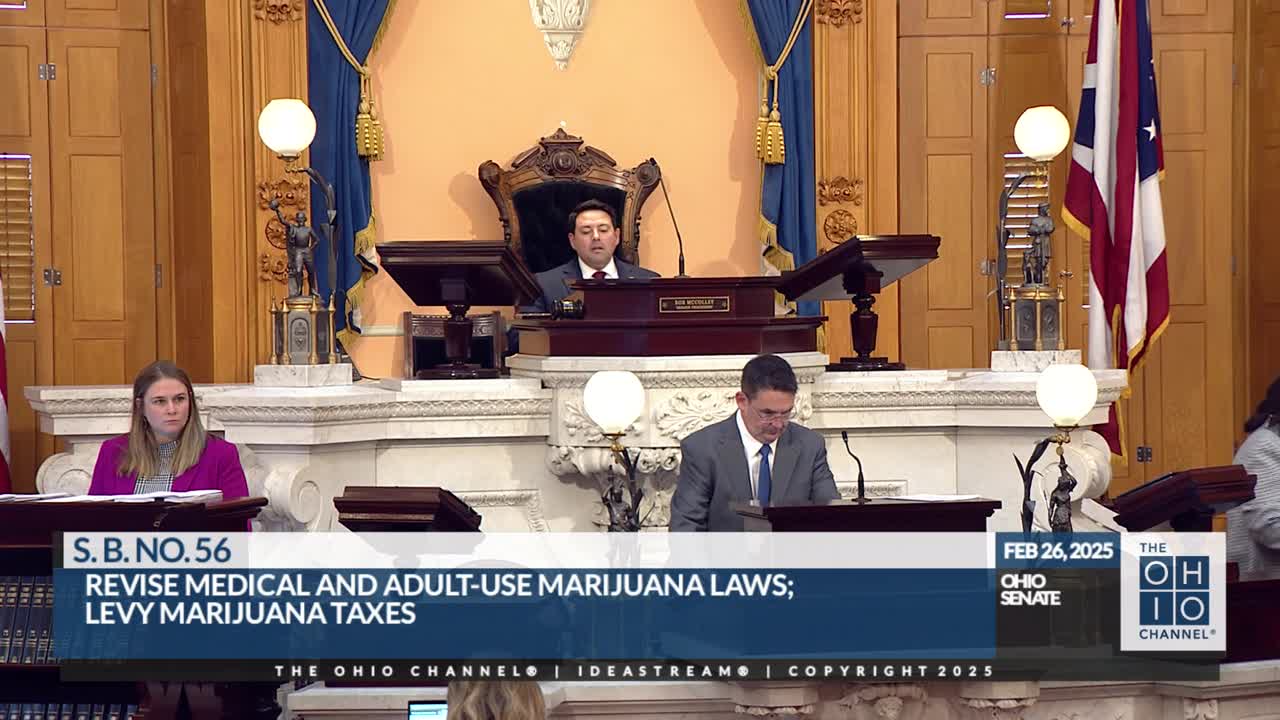
Senate passes bill to consolidate marijuana programs, sets consumer and advertising limits; 23-9
Summary
The Ohio Senate passed Substitute Senate Bill 56 to consolidate administration of medical and adult-use marijuana, set THC and edible limits, restrict public smoking and advertising near schools, and change home-grow and licensing rules. The measure passed 23-9 after extended floor debate.
The Ohio Senate on Feb. 25 passed Substitute Senate Bill 56, a comprehensive bill to consolidate administration of medical and adult-use marijuana programs and to revise several elements of the state’s new adult-use framework. The measure passed on a roll call of 23 yays and 9 nays.
Senator Huffman, the bill sponsor, described the measure as “reasonable” and aimed at protecting children while cutting down the illicit market. He said the bill merges medical and adult licensing under a single division, sets THC caps, limits edible potency, and keeps a possession limit consistent with the voter-approved measure while reducing home-grow allowances.
Key provisions described on the floor include a 35% THC cap for plant material and 70% for extracts (with the latter adjustable by rule), a 10-milligram-per-serving and 10-milligram-per-package limit for edibles, a six-plant-per-household home-grow limit, a prohibition on public smoking except in private residences (with exemptions prohibited for residences used as child care), a prohibition on dispensary advertising within 500 feet of certain locations (schools, churches, public libraries, playgrounds, parks and certain arcades), and a limit on dispensary density by rule that codifies a one-mile spacing request from regulators.
Opponents said the bill departs from what voters approved in Issue 2, reduces THC limits, eliminates craft grow (level 3) licenses, and adds a $50 fee for expungement filings. Supporters emphasized child-protection measures and consumer safety. Several senators urged that tax and funding allocations first be handled in the budget process.
Senator Roegner, chair of the General Government Committee, urged passage and said the bill “protects Ohio’s children” through packaging and advertising limits. Opponents including Senator DeMora and Senator Blackshear argued the bill would shrink business opportunities, reduce access, and move funding matters away from the implementation language voters supported.
On the roll call the bill passed 23-9; Senate leaders recorded the vote and the bill was entitled. The statute-level changes will take effect according to the bill’s effective-date provisions and subsequent rulemaking by the Division of Cannabis Control.