Get Full Government Meeting Transcripts, Videos, & Alerts Forever!
Get email alerts on the Research Ethics topic
No spam. Unsubscribe anytime.
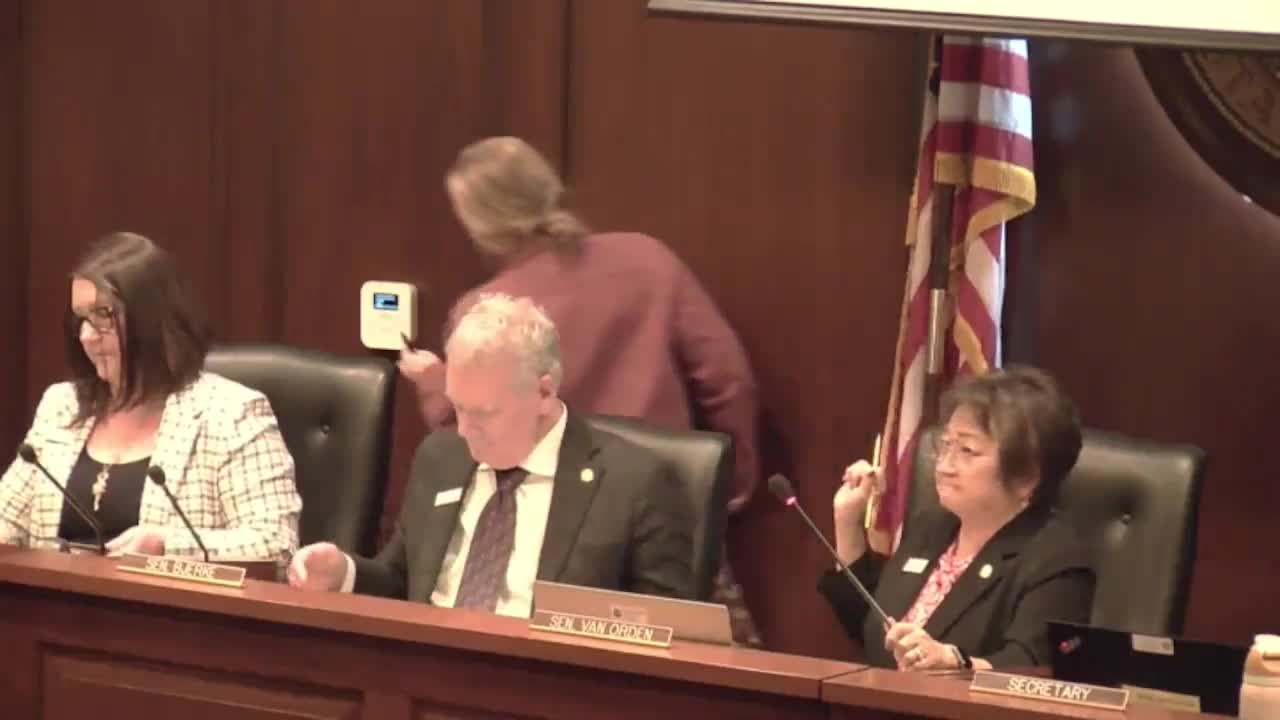
Senate Health and Welfare committee rejects SCR 104 to reaffirm Nuremberg Code
Summary
The Idaho Senate Health and Welfare Committee voted 3–6 to reject Senate Concurrent Resolution 104, a nonbinding measure from Sen. Tammy Nichols that would have reaffirmed the Nuremberg Code as a foundation for ethical research. Debate focused on references to international declarations and whether the resolution is necessary given existing laws.
The Senate Health and Welfare Committee on an apparent 3–6 roll call vote rejected Senate Concurrent Resolution 104, an advisory resolution from Sen. Tammy Nichols that would have reaffirmed the Nuremberg Code as the foundation for ethical medical and scientific research in Idaho.
Nichols opened the hearing by saying the resolution “reaffirms Idaho's commitment to ethical medical and scientific research by recognizing the Nuremberg Code as the foundation for protecting human rights.” She told the committee the Nuremberg Code, written after World War II, established 10 principles including voluntary consent and avoidance of unnecessary harms and that later documents such as the Belmont Report and declarations from UNESCO have “built upon these principles.” Nichols described the resolution as advisory and said it had “no fiscal impact.”
The nut graf: supporters said the resolution was a preventative reaffirmation of longstanding research ethics; opponents said it inappropriately referenced international declarations and was unnecessary because state and federal law already govern medical research. Several senators pressed Nichols for concrete examples of state-level gaps the resolution would fill and for clarification about how the resolution would interact with existing Idaho law and federal protections.
During discussion, Sen. Blaylock asked for examples of laws or policies that would need strengthening; Nichols said she had none specific at the moment and described the resolution as “preventative” language for future technologies such as AI and nanotechnology. Nichols cited historical abuses — the Tuskegee syphilis study, the Willowbrook hepatitis experiments and experiments in Guatemala — to illustrate why ethical guardrails matter. She also said the measure was prompted in part by concerns raised during the COVID-19 era about public trust in medicine and science.
Several members questioned the inclusion of international instruments. Sen. Wintrow said the chamber has “been pretty clear about rejecting world organizations outside of Idaho,” and asked why the committee would reference foreign declarations rather than U.S. standards. Nichols responded that the resolution did not adopt those instruments but recognized “complimentary contributions” they made toward strengthening the Nuremberg foundation. Sen. Shippey said he was uncomfortable citing UNESCO because of past UNESCO positions; Nichols replied she was pointing only to portions of UNESCO’s bioethics work that reinforce human dignity and fundamental freedoms.
A motion to send SCR 104 to the floor with a due-pass recommendation was made (mover: Sen. Keiser; seconder: Senator name recorded in the transcript as the second). After debate the committee took a roll call vote and the motion failed. Clerk minutes recorded the final tally as 3 ayes and 6 nays; the committee chair declared the motion failed.
The resolution was described repeatedly as advisory and nonbinding; Nichols and supporters framed it as a statement of principle rather than a change in regulatory authority.
Votes at a glance: Motion to send SCR 104 to the floor with a due-pass recommendation — failed (tally: yes 3, no 6).
What happens next: Because SCR 104 is advisory, the committee’s rejection ends its immediate legislative progress from this committee; the resolution may be refiled or considered by other members but no statutory changes were proposed during the hearing.
Documentation: The sponsor cited the Nuremberg Code and referenced the Belmont Report and UNESCO declarations as complementary documents; the hearing record states there was “no fiscal impact.”