Get Full Government Meeting Transcripts, Videos, & Alerts Forever!
Get email alerts on the Safe Haven Adoption topic
No spam. Unsubscribe anytime.
Senate committee advances changes to Safe Haven law to speed placement of surrendered infants with licensed adoption agencies
Summary
The Senate Health and Welfare Committee advanced Senate Bill 1058 after sponsor Senator Tammy Nichols said the measure would speed placement of infants surrendered under Idaho’s Safe Haven law and clarify coordination with the Indian Child Welfare Act.
The Senate Health and Welfare Committee voted to send Senate Bill 1058 to the floor with a due‑pass recommendation after sponsor Senator Tammy Nichols said the bill would streamline placement of newborns surrendered under Idaho’s Safe Haven law and better coordinate with the Indian Child Welfare Act (ICWA).
Senator Tammy Nichols, presenting SB 1058, said the bill would require the Department of Health and Welfare to maintain a list of licensed adoption agencies to facilitate faster placement of surrendered infants and would direct that custody be transferred to a selected adoption agency within 24 hours unless medical care or other conditions require a longer stay. "The goal of this bill is clear: to place abandoned children quickly with families who are ready and waiting," Nichols said.
Supporters included licensed adoption agencies and tribal representatives. Kara Walsh, a licensed social worker representing New Beginning Adoption Agency, told the committee the bill would reduce unnecessary transitions and promote early bonding: "By making this change we reduce unnecessary transitions." Tyrell Stevenson, legislative director for the Coeur d'Alene Tribe, and Blake Hude, representing the Shoshone‑Bannock Tribes, both said the bill clarifies interaction with ICWA and tribal notification requirements. Stevenson explained that ICWA’s purpose is to "keep families together" and said the bill helps align state practice with federal requirements.
Not all testimony was uniformly supportive. Whitney Wunderlich, who adopted a child surrendered under the existing Safe Haven process, urged caution. She said foster parents receive training for possible medical and behavioral issues and that faster placement with adoptive agencies could place children with families who lack similar preparation. "I don't think it's in the best interest of the potential adoptive child to be placed with the adoption agencies to parents with less required training and experience," she said, and suggested an alternative: expedite adoptions within the foster care system rather than bypassing it.
Terry Marcroft of Unplanned Good said the bill does not remove foster care involvement in all cases and noted the Department of Health and Welfare had expressed support for decreasing the time to agency placement. He said the bill "does not change any of the milestones in the process itself" but shortens the time to place a baby with an adoptive family that an agency has already approved.
Senator Wintrow spoke against the bill in committee, saying she feared Safe Haven placements and baby boxes could be normalized rather than expanding social supports that would encourage parents to seek services. She said she struggled with the policy on moral and practical grounds and indicated she would vote no.
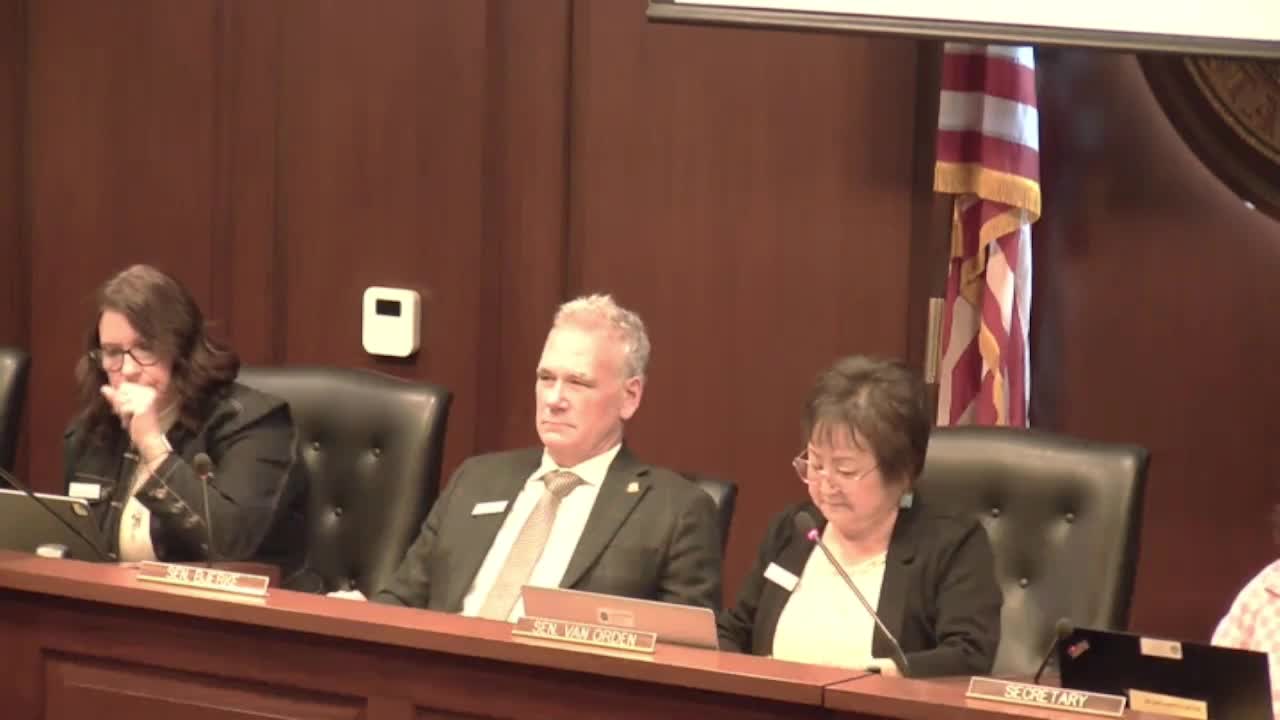
Senator Keiser moved and Senator Beierke seconded the motion to send SB 1058 to the floor with a due‑pass recommendation. The committee approved the motion by voice vote; the transcript records at least one senator (Wintrow) expressing opposition during debate but no formal recorded roll call tally appears in the record.
Key statutory references in testimony included Idaho Code section 39‑8202 and section 39‑8204 (Safe Haven provisions as quoted in committee discussion) and the Indian Child Welfare Act; witnesses also referenced Bureau of Indian Affairs guidance on ICWA procedures. The bill requires ICWA notices to be issued within 10 days when a child might be an Indian child and specifies procedures for medical care and shelter hearings if an adoptive placement is not found within 48 hours in certain cases.
The committee advanced the bill to the full Senate, with proponents citing faster placement and stronger coordination with tribal authorities and opponents urging caution and proposing alternatives such as expediting foster‑to‑adopt timelines for Safe Haven infants.