Get Full Government Meeting Transcripts, Videos, & Alerts Forever!
Get email alerts on the Aging Services topic
No spam. Unsubscribe anytime.
Commission on Aging presents needs assessment and 2024–2028 state plan priorities
Summary
The Idaho Commission on Aging reported results of a statewide needs assessment of older Idahoans to the Senate Health and Welfare Committee and outlined priorities in the accepted 2024–2028 state plan, including caregiver support, nutrition, technology access, and loneliness reduction initiatives.
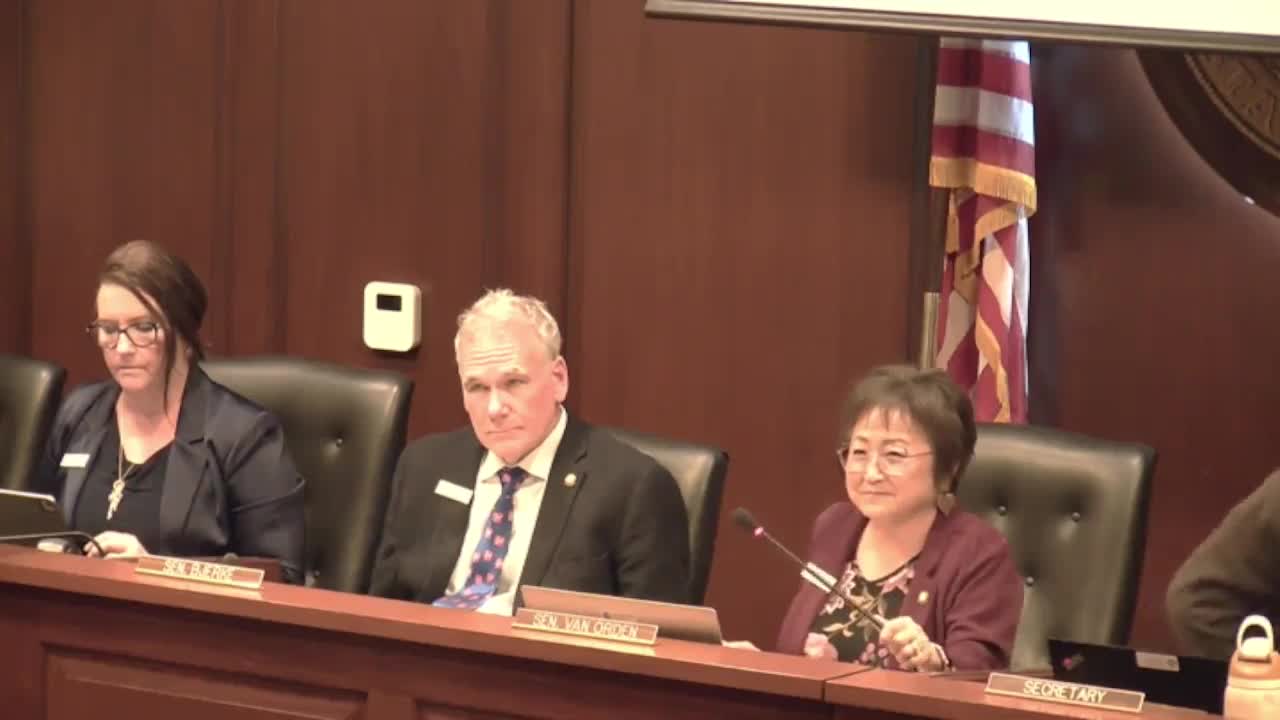
The Idaho Commission on Aging told the Senate Health and Welfare Committee that a statewide needs assessment and the resulting 2024–2028 state plan will guide services and funding priorities for older Idahoans.
“Again, my name is Judy Taylor, and I'm here to speak with you about what we know about the needs, worries, and quality of life of Idaho's elders,” said Judy Taylor, director of the Idaho Commission on Aging. Taylor said the needs assessment is mandated by federal and state law and was conducted through in-person meetings and a survey that produced 1,109 unique respondents from 37 of Idaho’s 44 counties.
Taylor described how the commission analyzed responses overall, for a high-risk cohort (respondents reporting fair, poor or very poor quality of life), and by urban and rural cohorts. She said 66 percent of the high-risk cohort were urban residents and that caregivers were disproportionately represented among high-risk respondents: “33 percent of our high risk respondents said they cannot care for another individual without hurting their health, and they're not getting the help they need.” Taylor highlighted gaps in technology use and social engagement among high-risk respondents and said the commission prioritized case management, benefits counseling, nutrition, assisted-technology projects, and loneliness-reduction activities in its state plan.
The commission reported that its 2024–2028 state plan was accepted by federal funders in October with no edits requested. Taylor said local area agencies on aging will adapt state goals to local plans, report progress quarterly to the commission, and be subject to evaluation visits and data reviews.
Committee members asked about delayed payments to meal providers and program funding rules. Vicki Anzick, project manager at the Commission on Aging, told the committee there had been payment delays tied to one local area agency on aging and to the launch of the LUMA payment system; Anzick said those issues had been resolved “as of today or as of this timeframe.” A commission financial or program staff member explained federal Older Americans Act limits (a 10% cap on administrative costs) and the ICOA requirement that at least 50% of funding go directly to contracted client services. The staff member told the committee the commission allows only one full-time staff position to be charged to a program’s direct costs in the meal program, with remaining funds required to go to local meal providers.
On Alzheimer’s disease and related dementias, Taylor said the commission has an ADRD high-risk caregiver support program that has moved from demonstration to full launch; she said referrals come from diagnoses of dementia or adult protective services and that preparing for a projected rise in dementia cases requires prevention, caregiver support and interagency planning.
Numbers and program details cited in the hearing
- Needs assessment respondents: 1,109 unique respondents; respondents from 37 of 44 counties. - High-risk cohort: defined as respondents reporting fair, poor, or very poor quality of life; 66% of that cohort were urban. - Meal sites: 62 across the state. - Commission objective highlights: implement case management and benefits counseling, prioritize nutrition, require each area agency on aging to run at least two assisted-technology projects, hold two multiaspect events per area agency each year, and ask senior centers to participate in annual loneliness-reduction campaigns.
The commission provided a condensed needs-assessment booklet to the committee and said full data are available on request. Director Taylor closed by saying she was energized to continue collaboration with legislative partners.