Get Full Government Meeting Transcripts, Videos, & Alerts Forever!
Get email alerts on the Able Accounts topic
No spam. Unsubscribe anytime.
Senate panel backs bill letting Idaho join multistate ABLE consortium to offer state ABLE accounts
Summary
The Senate Health and Welfare Committee voted to send House Bill 26 to the floor with a due‑pass recommendation after State Treasurer Julie Ellsworth said the bill would allow Idaho to join a multistate ABLE consortium and lower costs for Idaho account holders.
The Senate Health and Welfare Committee voted to send House Bill 26 to the floor with a due‑pass recommendation after State Treasurer Julie Ellsworth told the committee the bill would allow Idaho to join a multistate consortium to operate ABLE accounts for Idahoans with disabilities.
Ellsworth, the State Treasurer, told the committee that Idaho law already recognizes ABLE accounts but the state has not run its own program because the overhead was previously too expensive. She said joining a consortium would spread administrative and investment costs across states and reduce fees for account holders. "By joining a consortium ... it will take it down to 19 to 33% basis points," she said, and she asked the committee for a due‑pass recommendation.
ABLE accounts allow people with disabilities to save for disability‑related expenses while maintaining eligibility for needs‑based programs. Lisa Anderson, advocacy director for AARP Idaho, told the committee AARP supports the bill, saying ABLE accounts "permit Idahoans with disabilities to save and manage their money without worrying about losing the critical benefits they need." Rochelle Tierney of the Idaho Council on Developmental Disabilities testified the program would keep fees down for Idaho account holders and provide "greater oversight and protection for Idaho account holders."
Account holders who testified described practical barriers to using out‑of‑state accounts. Tara Rowe, who said she holds an ABLE account through the Tennessee State Treasurer, described the logistical burden of obtaining funds and the risk that transferring funds into a regular bank account could push her past Medicaid's asset limit: "If Medicaid wanted to look at my bank account and see that I was over that asset cap, then I would automatically lose benefits." Others described how ABLE savings helped pay for assistive devices, travel and housing while preserving benefits.
Ellsworth told senators the bill carries no fiscal impact to the state's general fund as written. She also described provisions for an advisory council and said council members would "serve without honorarium compensation or expense reimbursement of any kind." On questions about program recovery provisions (so‑called clawbacks), Ellsworth said the bill includes a clawback provision by which remaining funds in an ABLE account at a person's death may be claimed by the state under some circumstances; she said some states do not include that provision and Idaho's inclusion was intended to align oversight and protect Idahoans.
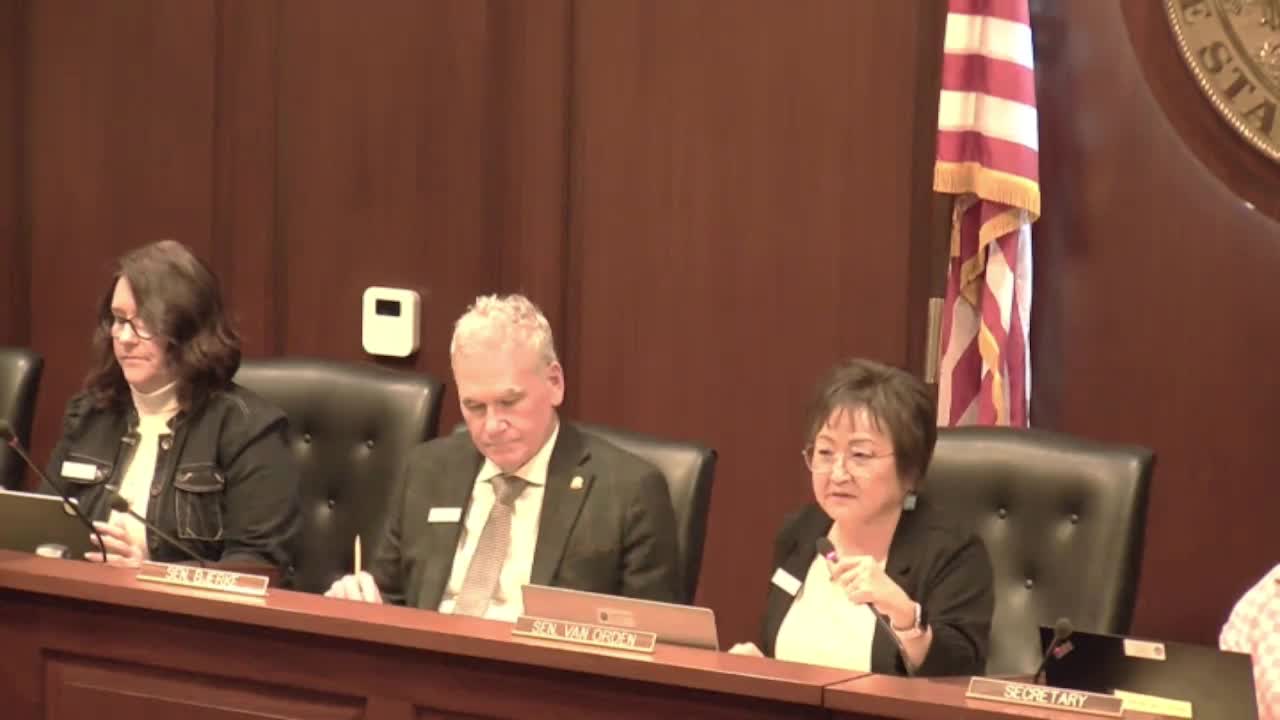
Senator Shippey moved and Senator Wintrow seconded the motion to send House Bill 26 to the Senate floor with a due‑pass recommendation. The committee approved the motion by voice vote; no roll call tally was recorded in the transcript.
Supporters asked the committee to adopt the bill so Idahoans could get lower account fees and so the state could use a portion of those fees to support outreach and financial literacy for people with disabilities. The Treasurer said the effective fee reduction would depend on the consortium contract and that exact fee schedules were not in the record.
The committee did not take additional amendments on the floor and advanced the bill to the full Senate.