Get Full Government Meeting Transcripts, Videos, & Alerts Forever!
Get email alerts on the Higher Education Enrollment topic
No spam. Unsubscribe anytime.
College of Southern Idaho says 20% enrollment surge has strained capacity; requests $475,700 EWA
Summary
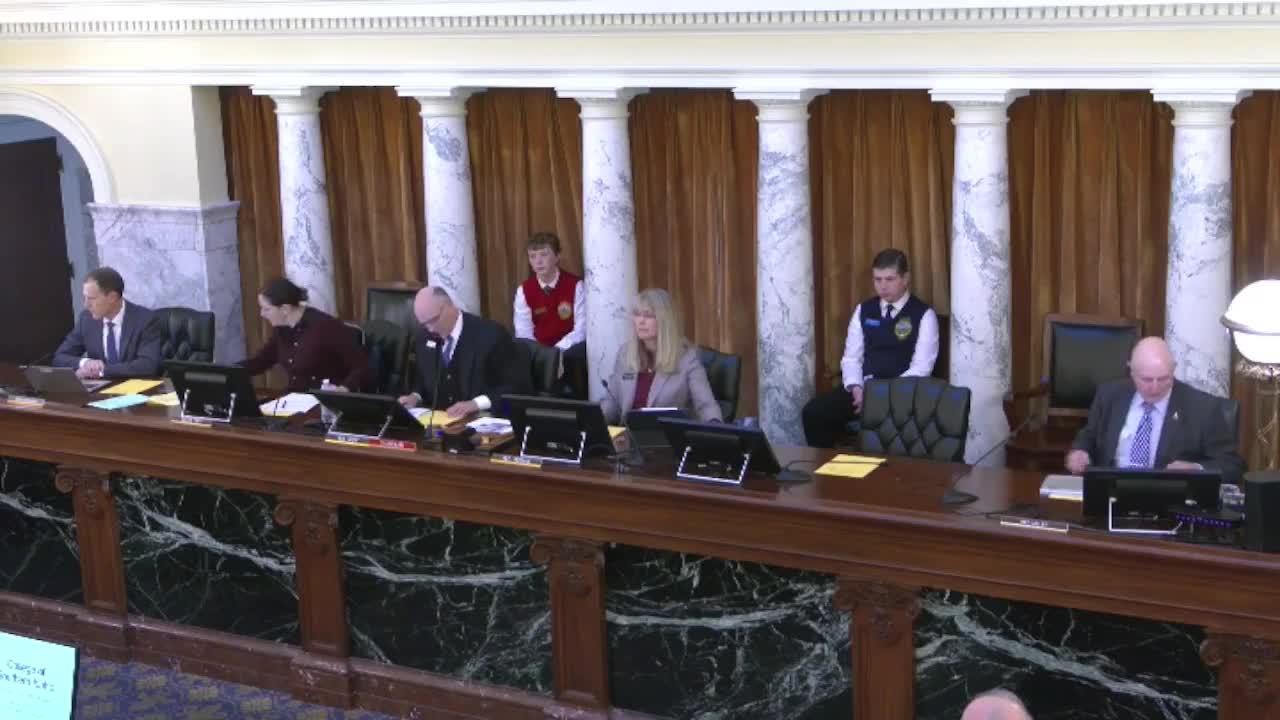
College of Southern Idaho President Dr. Aldine Fisher told the Joint Finance-Appropriations Committee that the college saw a roughly 20% enrollment increase in fall 2024 and is seeking an enrollment workload adjustment of $475,700 in its FY2026 request to hire five instructors and ease wait lists.
College of Southern Idaho President Dr. Aldine Fisher told the Joint Finance-Appropriations Committee that the college saw a roughly 20% enrollment increase in fall 2024 and is seeking an enrollment workload adjustment of $475,700 in its FY2026 request to hire five instructors and ease wait lists.
The request and the college’s broader capacity needs were presented to JFAC analyst Kevin Campbell of the Legislative Services Office, who opened the presentation with an overview of the college’s base budget and noted the FY2026 request is listed in the legislative budget book. "This morning, I'm presenting you with an overview of the base budget for the College of Southern Idaho, including their FY 20 26 budget request," Campbell said.
Why it matters: CSI officials said the recent enrollment surge — which President Fisher attributed in part to the Idaho Launch program — has stretched instructional capacity, clinical placements and specialized learning spaces. With continuing growth the college warned it risks being unable to sustain class offerings or reduce long program wait lists without new faculty, staff and one-time infrastructure funding.
Most important facts
- Enrollment growth and demand: President Fisher said CSI experienced "a 20% growth" in fall 2024 (outside of dual credit) and has added about 3,800 students since fall 2021. Fisher also said the college enrolled 16,586 unique students in credit-bearing courses in the 2023–24 academic year and ran about 7,000 workforce engagements and 561 apprenticeships in that year.
- EWA request and intended use: CSI’s FY2026 request to JFAC includes an enrollment workload adjustment of $475,700. Fisher told the committee the college intends to use that EWA funding to hire five general-education instructors (not CTE specialists) to reduce class sizes and wait lists; he estimated each new faculty member reaches roughly 150 students per year and that five hires could serve about 750 additional students.
- Program-specific bottlenecks: Fisher gave examples of program capacity constraints. The radiologic technology program admits a cohort of 15 students annually but, he said, currently has a waiting list of 84. Nursing and other health-care clinical placements and faculty are also limiting program expansion.
- Pay and retention: Fisher told committee members CSI lags regional community-college peers by about 12% on faculty and staff pay, and that roughly $400,000 in ongoing funding would be needed to address faculty pay parity with K–12 pay ladders in the region. He also highlighted student-support work: CSI reported an 85% fall-to-spring retention rate and said its Bridge to Success program has scaled from 40 to 500 students after earlier legislative investments.
- One-time infrastructure need: Fisher recommended the committee support the governor’s proposed capacity-building funds, including a $15 million one-time allocation for learning spaces and specialized trade facilities, to pair with ongoing faculty funding.
Committee questions and context
- Senator Janie Ward Engelking asked about Idaho Launch’s effect; Vice President for Student Affairs John Lord and Fisher credited Idaho Launch with sending substantial numbers of new students, and Fisher said the students "are already there." Representative Miller and other members probed faculty-pay comparisons and staffing shortfalls.
- Senator Cook and others asked how the governor’s set-aside of $25 million for capacity (a combined proposal noted by members) would be used. Fisher said the college needs both faculty and facilities for CTE growth and clinical placement coordination.
Discussion, direction, outcome
This presentation was informational: JFAC members asked questions but took no formal votes during the session. Fisher urged support for the governor’s capacity-building proposals and CSI’s requested EWA funding; committee members flagged the EWA formula, pay parity and how one-time versus ongoing funds would be used.
Ending
College leaders told the committee that without additional instructor hires and targeted infrastructure support, CSI faces limits to sustaining recent growth and reducing program wait lists. Fisher thanked the committee and asked for continued legislative support to address faculty pay, instructional capacity and specialized learning spaces.