Get Full Government Meeting Transcripts, Videos, & Alerts Forever!
Get email alerts on the Early Learning Development Dd topic
No spam. Unsubscribe anytime.
Committee reviews early learning and developmental‑disability budget, child‑care funding and SWITC updates
Summary
Legislative analysts and department officials presented requests that include Idaho Child Care Program funding, STAR certification work at SWITC and a one‑time recommendation of $15 million per year for three years from available federal Child Care and Development Block Grant funds.
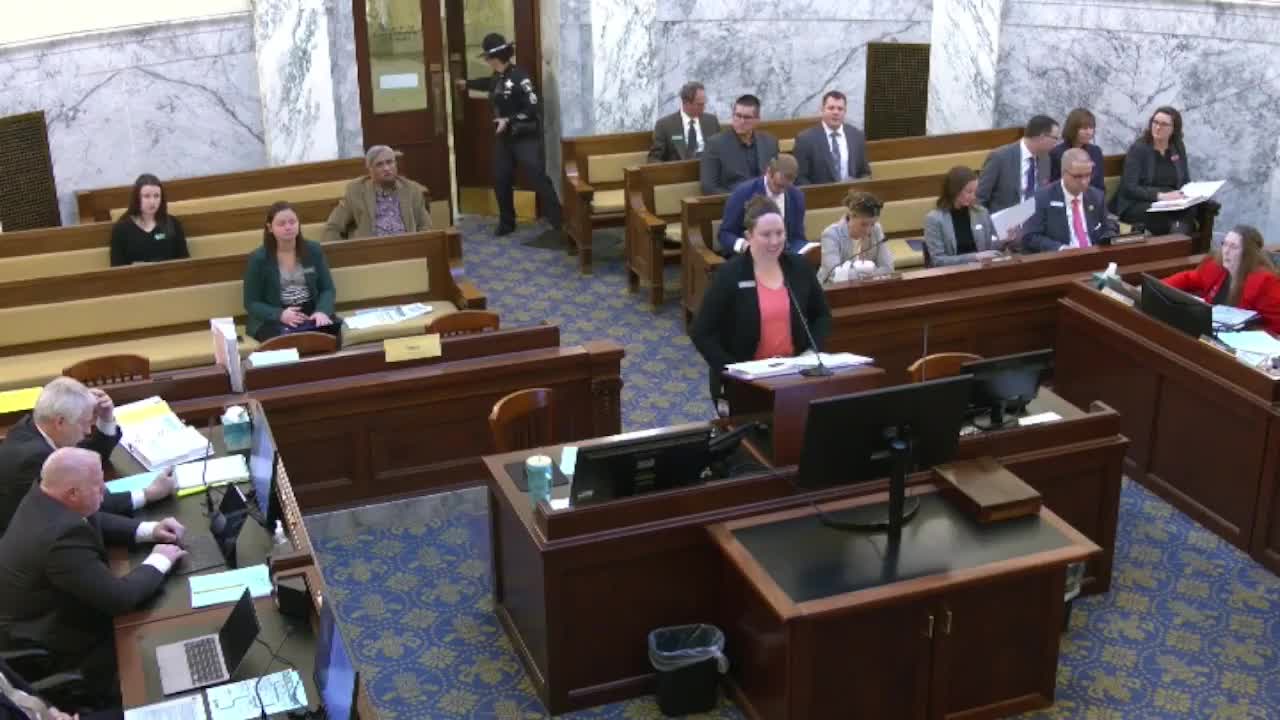
The Joint Finance and Appropriations Committee on Feb. 20 heard a presentation on services for the developmentally disabled (to be retitled Early Learning and Development under a departmental reorganization), including updates on the Southwest Idaho Treatment Center, child‑care funding and STAR certification work.
Legislative analyst Alex Williamson said the division is authorized about 306.71 FTP with 38.71 vacancies (as of the date cited); nine vacancies were posted and seven were in interview. She noted the reorganization places many developmental disability (DD) services under Medicaid and moves the Idaho Child Care Program (ICCP) under Early Learning and Development.
Williamson told the committee the governor recommended a one‑time $15 million installment for the ICCP (part of approximately $45 million in one‑time federal Child Care and Development Block Grant funds available over three years) and the agency requested an additional $4.2 million ongoing for ICCP. She also described a STAR certification request that would be year three of four with a one‑time request of $249,200; the agency will provide a progress report on the STAR work later this summer per the presentation.
Committee members asked about specific facility‑level items and program history. Senator Cook questioned a nearly $1 million expenditure for modifications at the Southwest Idaho Treatment Center (SWITC) and the need for a walk‑in cooler; Lisonbee Tate, division administrator, said the cooler supports bulk food purchasing to reduce operating costs across facilities and will help State Hospital West by allowing bulk preparation and distribution.
Director Adams and division staff described SWITC as a facility that treats the most severely impaired clients who have no other placement options because of behavioral or medical needs. Adams said the facility had received state funds for safety and security repairs and that nonprofit partners also contributed equipment. Allison Tate (division administrator referenced later in the hearing) reported progress on the STAR model at SWITC: teams using START have recently increased enrollments and the department will include updated implementation data in an upcoming report.
Senator Wintrow asked about the federal funding picture for Medicaid and DD services; Adams stated he was not currently forecasting abrupt federal funding losses and said the department has exit strategies for non‑entitlement programs.
On the Idaho Child Care Program, Adams described actions the department took last year after demand threatened to outpace the budget. He said the department had paused enrollment to align spending with the legislature's appropriation and that the pause was lifted in January after corrective measures; he described the program as non‑entitlement and noted that without budget alignment enrollment would have been halted for April–June. Adams characterized the $15 million one‑time recommendation and the $4.2 million ongoing request as steps to stabilize childcare funding and expand access.
No committee votes on these items were recorded in the transcript excerpt; the presentations generated questions and requests for follow‑up reports and data.
Ending: the committee moved on to other budgets and the department said it will provide required reports on STAR certification progress and additional follow‑up on childcare program operations and rule changes.