Get Full Government Meeting Transcripts, Videos, & Alerts Forever!
Get email alerts on the Child Welfare Budget topic
No spam. Unsubscribe anytime.
Committee reviews major child welfare staffing, funding requests aimed at reducing costly congregate care
Summary
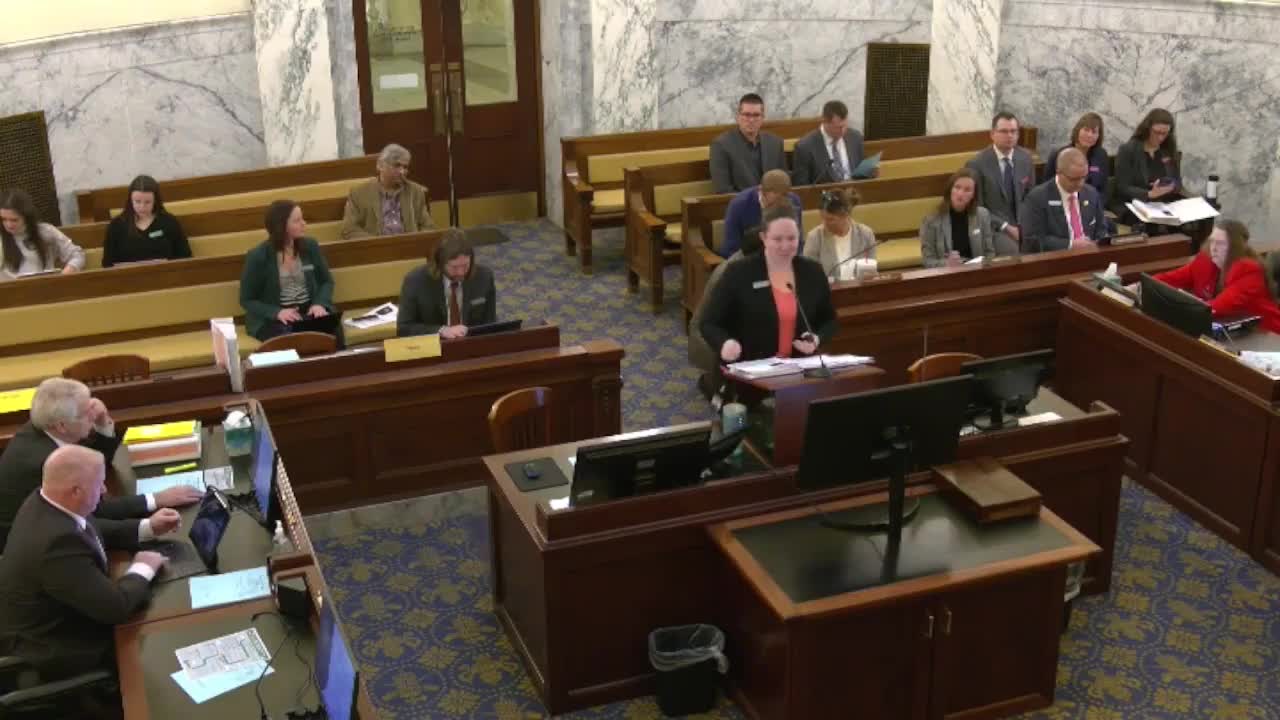
The Joint Finance and Appropriations Committee on Feb. 20 heard Department of Health and Welfare officials outline requests to add staff, increase foster maintenance rates and authorize transfers to address rising congregate care costs and a shortage of foster parents.
The Joint Finance and Appropriations Committee on Feb. 20 heard Department of Health and Welfare Director Alex Adams and Legislative Services analyst Alex Williamson outline a package of staff increases and funding requests intended to shift children from high-cost congregate settings into prevention and foster care.
The proposal centers on hiring prevention specialists and clinical and licensing staff, raising foster maintenance rates, and seeking a $14.1 million supplemental for foster care population forecast adjustments to address rising congregate-care costs driven by higher behavioral health and substance-use needs among youth.
Alex Williamson, budget and policy analyst with Legislative Services, told the committee the division formerly called Child Welfare (now retitled Youth Safety and Permanency) is authorized 434.8 FTP and, as of Feb. 10, had 45.8 vacancies; about 25 vacancies were in interview and nine were posted. She reported fiscal year 2024 expenditures for the division totaled $117.8 million, with foster care and assistance payments making up about 60% of that total and personnel (clinicians and caseworkers) about 40%.
Williamson said recent ongoing enhancements included a boost to the monthly maintenance rate for foster families and addition of 24 in‑home caseworkers; those actions together added roughly $8.9 million ongoing in prior years. She also described nondiscretionary population forecast adjustments and said the 2026 request includes a supplemental of $14.1 million to cover foster care population forecast adjustments.
Director Adams told the committee that the drivers behind higher costs include rising mental‑health and substance‑use needs among youth, a shortage of community‑based placement options and a lack of foster parents willing and able to care for children with complex needs. "We need fewer kids in congregate care and the path to fewer kids in congregate care is more foster beds and more prevention cases," Adams said. He gave cost examples the department uses: about $1.80 per day for prevention cases, $16 per day for foster care placements and about $380 per day for congregate care settings.
Key enhancement requests outlined by the agency and noted by the governor's recommendation include: - A prevention specialist team (36 FTP) intended to expand family‑focused services so more children can safely remain at home; Williamson said the division currently has 14 prevention specialists statewide and that adding 36 would bring the total to about 50 specialists. - Additional youth safety and permanency staff (agency requested 12 FTP; governor recommended 9) including clinicians for needs assessment and placement work, plus a family‑find tool (agency request $1.2 million; governor recommended $922,000, both include $120,000 for the family‑find tool). - Foster program clinical staff (agency requested 15 FTP; governor recommended 10) to support foster families caring for children with high emotional, behavioral and mental‑health needs, plus a proposed monthly maintenance rate increase averaging about 5%. - Foster program licensing staff (agency requested 14 FTP; governor recommended 3) to speed licensing and kinship placements; the agency reported licensing currently averages about 80 days from application to completion and had 19 licensing staff with average caseloads of 59 foster families. - Case management support (agency requested 14 FTP; governor recommended 3) intended to reduce average caseloads from about 32 youth per caseworker toward a target of 26.
Adams described steady improvement in the state's placement capacity: the ratio of foster beds to kids coming into the system rose from about 74 beds per 100 kids to about 94 per 100 during his tenure, which he said removed children from short‑term rentals and Airbnbs. He said the department has used faith‑based outreach and reciprocity for foster parents from other states among other strategies to recruit families.
Committee members asked for clarifications about specific requests and facility plans. On the Payette Assessment Care Center—an assessment and care facility the agency sought to purchase last year—Williamson and Adams said the governor's office and the agency revised the request to lease and operate the facility rather than purchase it immediately; operating costs while leased were presented as $2.7 million ongoing. Adams said the agency used state funds to make safety and security modifications to the leased facility and that private partners also provided equipment.
No formal votes or committee actions were recorded on these budget requests during the session segment covered by the transcript; the presentation generated questions and discussion but not a committee motion or final action.
The discussion distinguished between programmatic options (prevention, foster care, congregate care), budget requests (ongoing and one‑time positions and dollars), and the agency's operational directions (recruit more foster parents; expand prevention work). Committee members repeatedly noted the supplemental nature of much of the requested funding and the entitlement dynamics that require the state to pay for placements committed by the courts.
Outlook: the department asked the committee for authority and funding to hire staff and to use transfer authority aligned with Idaho Code 67‑35‑11 to reclassify personnel and trustee/benefit payments where needed. Committee members and the director emphasized the goal of using up‑front investments to reduce expensive congregate placements and, over time, lower the need for supplemental appropriations.
Ending: department and analyst materials (including a legislative heat map and slide decks) were made available to committee members in SharePoint; Director Adams and staff indicated follow‑up items and reports would be provided, and committee discussion moved on to other budget areas without formal votes recorded on the child welfare requests.