Get Full Government Meeting Transcripts, Videos, & Alerts Forever!
Get email alerts on the Education Budget Special Education Assessments topic
No spam. Unsubscribe anytime.
Idaho budget hearing spotlights spike in special‑education disputes, new assessment and drivers‑ed funding requests
Summary
At a Joint Finance Preparation Committee hearing, analysts and State Department of Education officials described rising special‑education complaints and multiple budget requests including funding for a new statewide assessment contract, increased drivers‑education reimbursements and the Career Ready Students program.
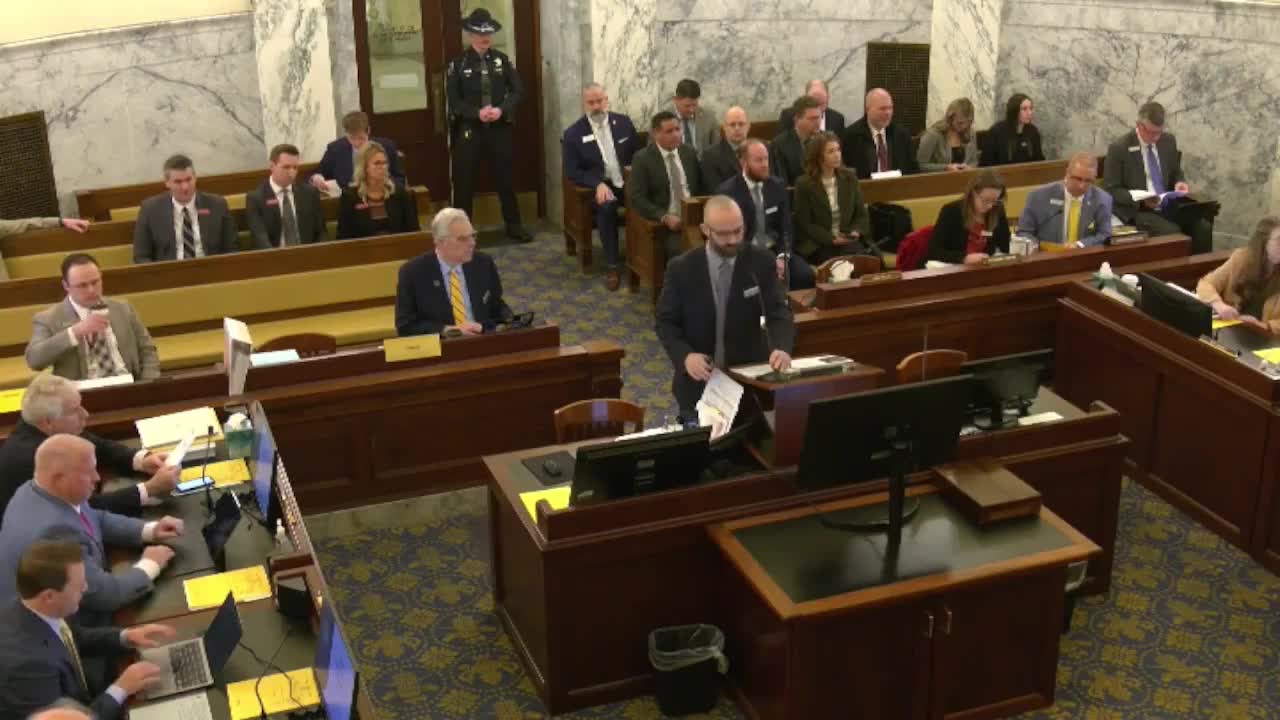
Jared Tetro, deputy division manager with the Legislative Services Office Budget and Policy Analysis Division, told the Joint Finance Preparation Committee on Oct. 12 that the State Department of Education’s budget request includes multiple personnel and program enhancements and several one‑time spending authorities.
The hearing focused on increases in special‑education workload, a request for $2.7 million in one‑time federal authority to transition to a new statewide student assessment platform, a proposal to raise drivers‑education reimbursement to $300 per student, and questions about how large federal grants and ARPA funds have been obligated and spent.
Tetro opened the presentation with a budget overview and said the department’s staff handle assessments, accountability, nutrition programs, federal programs, special education and other services. He noted the department was authorized for 126.5 full‑time equivalent positions in the current year with roughly 9.5 vacancies at the time of the budget submission and that personnel costs averaged about $13.5 million in recent years.
The hearing turned to special education after senators and representatives pressed Superintendent Debbie Critchfield about large year‑over‑year increases in complaints, mediations and due‑process hearings. Critchfield told the committee: “We have an increase in parents that are, asking for their students to be tested, to see if they're eligible for services.” She said the department has one statewide dispute‑resolution coordinator and asked for an additional FTE, telling the committee the coordinator’s role is “not to go in and say someone was right and someone was wrong, but it's to go in and say was, were the federal laws followed?”
Critchfield and other witnesses described multiple drivers behind the surge: higher requests for assessments at the local level, longer local waiting lists for testing, and increased parental use of formal dispute processes when local discussions do not resolve disagreements. She also told lawmakers the department earlier estimated a gap between federal special‑education funding and local district costs of about $40 million, and more recently that gap is closer to $80 million.
On assessments, the department seeks $2.7 million in one‑time federal spending authority to “pilot a new platform” as it transitions from its existing Smarter Balanced contract for the ISAT. Gideon Tolman, chief financial officer for the Department of Education, told cochair Representative Horman: “The 2,700,000.0 would be a 1 time federal fund spending authority to help transition to a new platform.” Tolman said he would clarify whether that amount covers the full cost of a new vendor contract or only transition and piloting costs.
Lawmakers questioned the department about the drivers‑education reimbursement account, which Tetro said grew from about $3.8 million in 2022 to an estimated $7.4 million in 2026. The department asked to double the per‑student reimbursement from $150 to $300; Critchfield said the increase would use funds already in the dedicated driver training account to offset higher local program costs. Tolman explained the committee would be asked for additional spending authority to draw down existing fund balances.
Members also raised the department’s handling of CARES and ARPA awards and the Career Ready Students program. Tetro and Critchfield said many large ARPA and career‑technical education appropriations were obligated to districts by contract or reappropriation and thus do not appear as free fund balance. Critchfield said 72 of 152 career‑ready grant applications were awarded and approximately $62.7 million has been obligated; she said roughly $16 million had been reimbursed to districts as of materials provided to the committee and that reimbursements occur upon submitted receipts.
Other items discussed included a school bus camera fund supplemental and ongoing request, $3 million from the Millennium Fund for youth substance‑use prevention, a $350,000 youth well‑being assessment under consideration by the Millennium Fund Committee, and a four‑year $746,300 Child Nutrition Technology Grant to support MyIdahoCNP software for school meal program compliance.
Committee members asked for follow‑up materials on several counts, including a school‑level report of private‑school COVID support payments, a district‑level accounting of ESSER and ARPA uses, and a breakdown of distributions from the public charter school authorizer fund. The department agreed to provide those reports.
The hearing was informational; no formal votes were taken during the session.
The department said additional personnel requests include a dispute‑resolution specialist, a charter‑school special‑education specialist, and a second Indian education coordinator to support tribal relations and travel. The department also listed four ongoing enhancements already approved for the current year including a regional director for North Idaho and a new auditor position to verify student counts that drive funding formula units.
The committee moved next to other agency presentations after the department concluded. Lawmakers signaled multiple follow‑ups and data requests to reconcile obligated but unreimbursed grants and to clarify whether assessment transition funds would pay for a new vendor or only cover pilot and transition work.