Get Full Government Meeting Transcripts, Videos, & Alerts Forever!
Get email alerts on the Compensation And Benefits topic
No spam. Unsubscribe anytime.
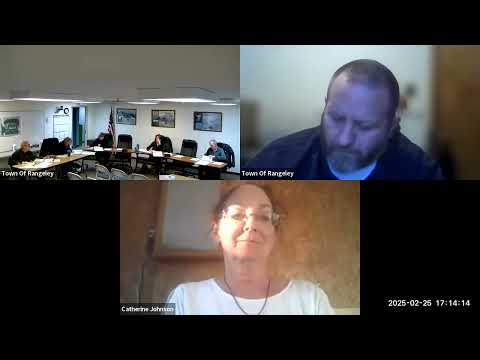
Rangeley budget committee debates CPIW-based COLA, retention and benefits changes
Summary
Committee reviewed manager’s recommendation to use CPIW for cost-of-living adjustments, discussed market adjustments for individual jobs, retention bonuses, Maine PERS costs and short-term income‑protection benefits; no final policy changes were adopted at the meeting.
The Rangeley Budget Committee discussed manager Joe's recommendation to use the Consumer Price Index for Urban Wage Earners and Clerical Workers (CPIW) as the basis for cost-of-living adjustments for nonunion staff.
That recommendation, which reflects a 3.5% CPIW for the region, was presented by Joe, the town manager, who told the committee: “CPIW is what I, would recommend using for, COLA increases.” Committee members debated whether to apply CPIW broadly or instead provide individual market adjustments for positions that are already being increased based on a salary survey.
The discussion centered on two practices the manager described: either give employees a COLA tied to CPIW or give selected employees market adjustments based on the town’s salary survey. Joe said positions that already received market adjustments this year were not proposed to also receive the 3.5% COLA.
Why it matters: Committee members said the town must balance competitiveness in recruiting and retaining staff with the pressure of overall budget increases. Several members pressed for clearer documentation tying market adjustments and COLA recommendations to the salary survey and to comparable towns.
During the discussion, members raised several related benefits and retention issues. Members reviewed retention-bonus history (the committee had recommended reducing retention bonuses last year, but the governing body approved a larger payment). Committee members asked for clearer policy language on the timing and eligibility for retention payments: one example discussed was a two-part retention payout (an initial payment and a second payment after reaching a 10-year service milestone).
The committee also reviewed Maine PERS, the state retirement program. Joe explained that employer contributions are set by the state and that the town’s budget line reflects the employees who are already participating; the committee asked the manager to provide details on the specific payroll lines and the basis for the 2025 and projected 2026 amounts.
Separately, the committee discussed short-term income protection insurance (IPP) for nonunion employees. A proposal to match the union level of short‑term protection (70% of salary) for nonunion staff was presented; the manager said bringing the entire salary group up to parity would raise the town’s cost by a modest amount (he cited a roughly $2,500 annual increase for the town as presented). Committee members asked for a more detailed cost estimate broken down by department.
Nut graf: The meeting left open multiple follow-ups: documentation showing which positions received market adjustments, a clear accounting of how COLA and market adjustments will be applied (either/or vs. both), a line‑by‑line accounting of Maine PERS employer costs, and a detailed cost estimate for expanding income-protection benefits. No final budget votes on these compensation policy items were taken at the meeting.
Supporting details: Committee members asked for historic comparative reports and for the manager to provide the latest custom budget report from the prior year so members could reconcile the figures used in the warrant. Several members reiterated that the salary survey is a single tool and requested clearer ranges and a published methodology for applying survey results to individual positions.
Next steps and context: The manager agreed to prepare an itemized list of salaries that received mid‑year or market adjustments and to provide proposed line‑by‑line comparisons (budgeted vs. actual vs. proposed) for discussion at the next meeting. Members also asked staff to document the town’s practice for retention payouts, the timing rule for PERS opt‑ins or grace periods, and the exact projected cost of matching short‑term disability benefits to union levels.
Ending: The committee did not adopt a new compensation policy at this meeting; it instructed staff to produce the requested documentation and to return with precise numbers to support final decisions in subsequent sessions.