Get Full Government Meeting Transcripts, Videos, & Alerts Forever!
Get email alerts on the Specialty License Plates topic
No spam. Unsubscribe anytime.
House narrows specialty plate revenues, caps and sets endowment for Utah Historical Society
Summary
The House passed fourth substitute H.B. 324 (special group license plate amendments), directing a capped share of revenues from the popular black license plate to the Utah Historical Society, creating a $10 million endowment and allowing corporate specialty plates if revenue is used for charitable purposes; the bill passed 66-3.
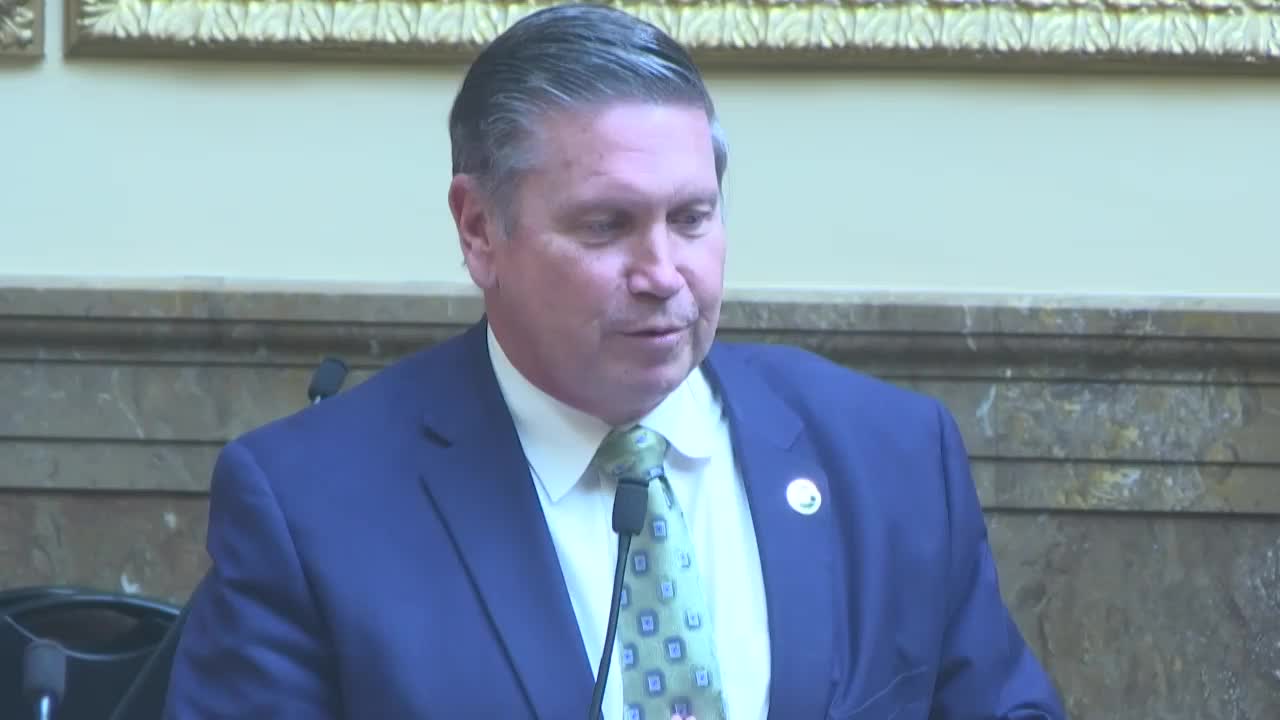
Representative Peterson presented fourth substitute H.B. 3 24, describing the measure as a fiduciary clarification for specialty license-plate revenues after rapid growth in proceeds from the popular black plate. Peterson said the bill directs $2 per plate to the historical society with a $500,000 cap and authorizes a $3.5 million appropriation to create a $10 million endowment intended to produce about $500,000 annually for the society.
"The black plate, has been an amazing success. It's it's gone viral if you will," Peterson said, noting that the plate generated roughly $3.7 million last year and that the bill clarifies how those funds will be allocated between the historical society and the state transportation fund.
The bill also adds a provision that allows corporate-sponsored specialty plates but, after floor discussion and a representative motion, the House inserted a requirement that corporate-plate revenues be used for a charitable purpose. Representative Thurston moved the amendment to require the word "charitable" be added to line 306; the House adopted that amendment on a voice vote.
The fourth substitute passed the House 66-3 and will be transmitted to the Senate. Supporters said the changes provide transparency and ensure that specialty-plate revenues are used for intended purposes; some members sought and received additional guardrails on corporate plate revenue use.
Why it matters: Specialty license-plate programs generate recurring revenue streams that members can direct to designated causes. This bill changes how one high-volume plate's proceeds are allocated and authorizes corporate specialty plates subject to charitable-use restrictions.
Votes at a glance: Fourth substitute H.B. 3 24 — passed by the House, 66 yes, 3 no; transmitted to the Senate.