Get Full Government Meeting Transcripts, Videos, & Alerts Forever!
Get email alerts on the Wildlife Management topic
No spam. Unsubscribe anytime.
Committee advances bill to codify landowner permit programs and create limited transferable vouchers for landowners
Summary
House Bill 202 (fourth substitute) would codify landowner association permit allocations, allow certain private landowners to petition for up to two bull elk vouchers, and create a 5% private‑land permit pool for limited‑entry units; the committee favorably recommended the fourth substitute by roll call 4–1 on Feb. 27.
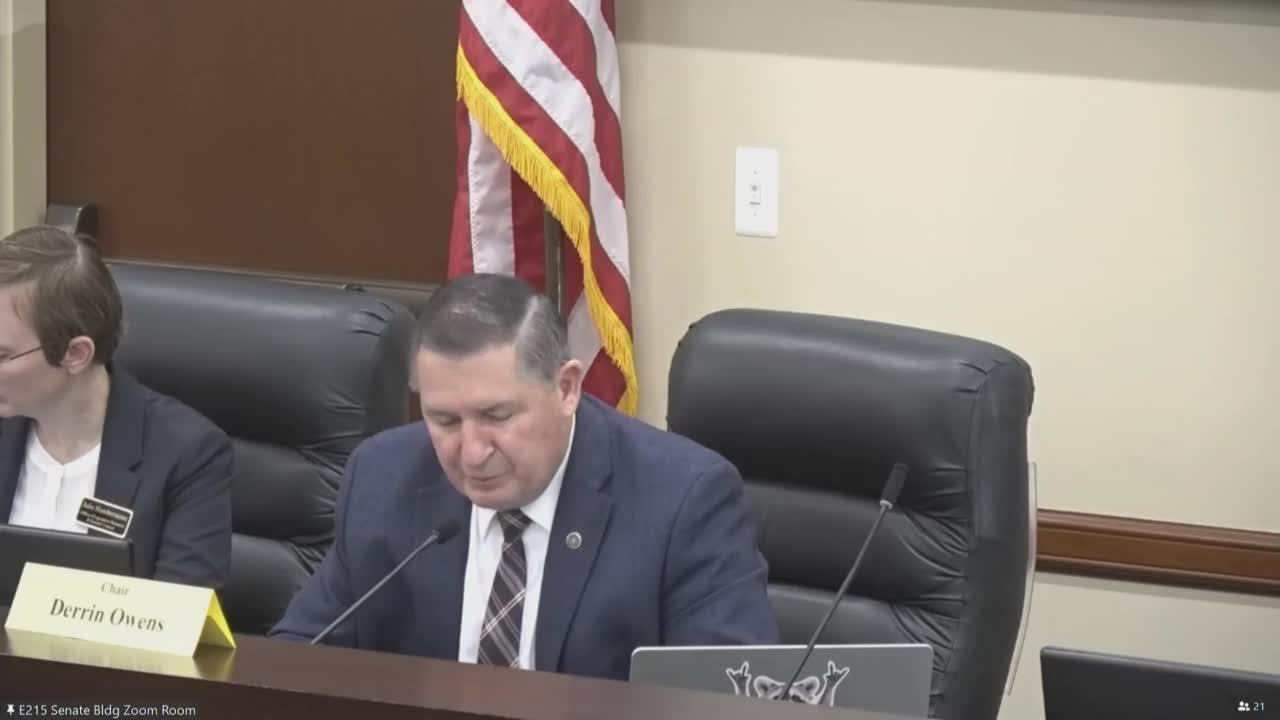
On Feb. 27 the Senate Natural Resources, Agriculture and Environment Committee favorably recommended House Bill 202 (fourth substitute) by roll call, 4–1. The bill would codify aspects of the landowner-association (LOA) program and the private landowner permit process, allow owners of qualifying parcels to petition the Division of Wildlife Resources for up to two bull‑elk vouchers for their property, and create an allocation equal to 5% of limited‑entry permits for landowners with a section (640 acres) or more within a unit.
Sponsor testimony said the measure is intended to give smaller private landowners in southern counties — who cannot reach the 9,000‑acre threshold for CWMU (Cooperative Wildlife Management Units) status — a way to participate in wildlife management and receive an incentive to tolerate elk on their properties. The bill converts certain on‑property permits into vouchers that may be sold, creating a financial incentive for private‑land wildlife stewardship, while codifying the LOA allocation formula that ties permit shares to contributed habitat acreage.
Justin Shannon, assistant director at the Division of Wildlife Resources, described the bill as the product of negotiation among landowner associations, sportsmen and DWR: “...every time there's a bill written or a rule written... private property rights... and the idea that wildlife belongs to all the citizens of Utah... sometimes feel like they're on a head on collision. And as we've negotiated this bill... we found a pretty good landing spot for for all parties involved,” he told the committee.
Opposition testimony included Caitlin Curry of Backcountry Hunters & Anglers, who said transferable permits raise equity concerns and may reduce public hunting opportunity: “Transferable permits are a very delicate thing. With the privilege of a transferable permit that allows our public wildlife to be monetized... comes a heightened responsibility back to the public,” she said. Curry and other witnesses urged broader stakeholder involvement and pointed to CWMU and LOA programs as models developed through lengthy, cross‑stakeholder negotiation.
Committee members asked about depredation remedies and penalties for baiting; staff said baiting remains prohibited and the baiting statute is a class B misdemeanor, with possible elevation of related offenses up to a third‑degree felony in aggravated circumstances. The sponsor and supporters said the program aims to increase private‑land tolerance for wildlife, reduce depredation payments and yield more stable populations and permit numbers over time.
After discussion the committee voted by roll call to give the fourth substitute a favorable recommendation, 4–1. The bill will advance for further floor consideration.