Get Full Government Meeting Transcripts, Videos, & Alerts Forever!
Get email alerts on the Water Policy topic
No spam. Unsubscribe anytime.
Committee approves broader authorities for state water agent amid public concern about secrecy and Colorado River implications
Summary
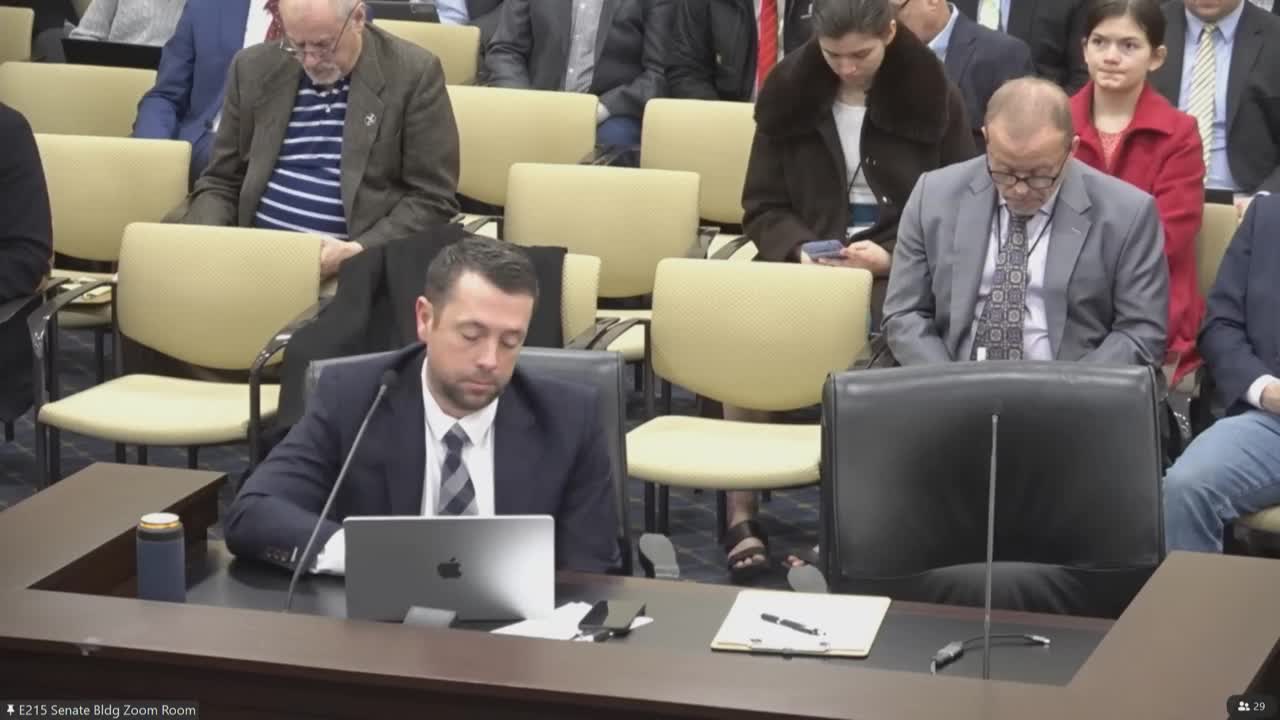
The Senate Natural Resources, Agriculture and Environment Committee on Feb. 27 favorably recommended House Bill 311 (first substitute) by roll call, 4–1, advancing changes that clarify authorities for the state water agent to address water-loss and negotiate willing‑buyer/willing‑seller resolutions.
The Senate Natural Resources, Agriculture and Environment Standing Committee on Feb. 27 voted 4–1 to favorably recommend House Bill 311 (first substitute), which clarifies authorities for the state water agent to address water-loss issues and to negotiate with willing parties to resolve certain disputes, the committee recorded.
Sponsor testimony said the substitute narrows the original draft and focuses on working with stakeholders in willing-buyer/willing-seller arrangements rather than imposing regulatory mandates. The sponsor told the committee the bill is intended to address projects where water is being lost to leakage or similar problems and to give the state water agent specific authorities to engage in those situations.
Zachary Frankel, executive director of the Utah Rivers Council, testified in opposition and urged greater transparency. “Utility planning should not be a secretive endeavor,” Frankel said, adding concerns about negotiation authority in the Colorado River Basin and possible impacts on agricultural users and ratepayers if large transfers or cuts occur. Frankel warned committee members that “when we have water projects like this, which are murky and shadowy...we cannot tell what the impacts are to agricultural water users, to rate payers, and to the environment.”
Committee debate included questions about whether the bill would enable large projects such as the Bear River development; the sponsor replied the bill was unrelated to the Bear River project and described it as targeted to distinct, smaller matters. After discussion the committee made a roll call vote: four senators voted aye and one opposed; the committee recorded the rule as passing 4–1.
The bill now moves forward with a favorable recommendation to the full Legislature.