Get Full Government Meeting Transcripts, Videos, & Alerts Forever!
Get email alerts on the Water Management topic
No spam. Unsubscribe anytime.
Committee backs tweaks to agricultural water-optimization program to expand sensor and monitoring use
Summary
The Senate Natural Resources, Agriculture and Environment Committee on Feb. 27 gave a favorable recommendation to House Bill 243, amending an existing agricultural water optimization program to promote sensors, valves and remote monitoring for better irrigation efficiency.
The Senate Natural Resources, Agriculture and Environment Standing Committee on Feb. 27 favorably recommended House Bill 243, an amendment to Utah’s agricultural water-optimization program that encourages use of sensors, valves and remote monitoring, the committee recorded. Senator Hankins moved the favorable recommendation; the committee passed the motion unanimously.
The bill keeps an existing water-optimization program in place but adds “a couple tweaks,” the bill sponsor said during an initial presentation, describing the measure as a data-driven effort to let producers implement new irrigation practices and collect information to evaluate water savings. The sponsor described the bill as focused on “agricultural water optimization using sensors, valves, remote monitoring to use best practices” and said the measure is intended to promote and monitor those practices.
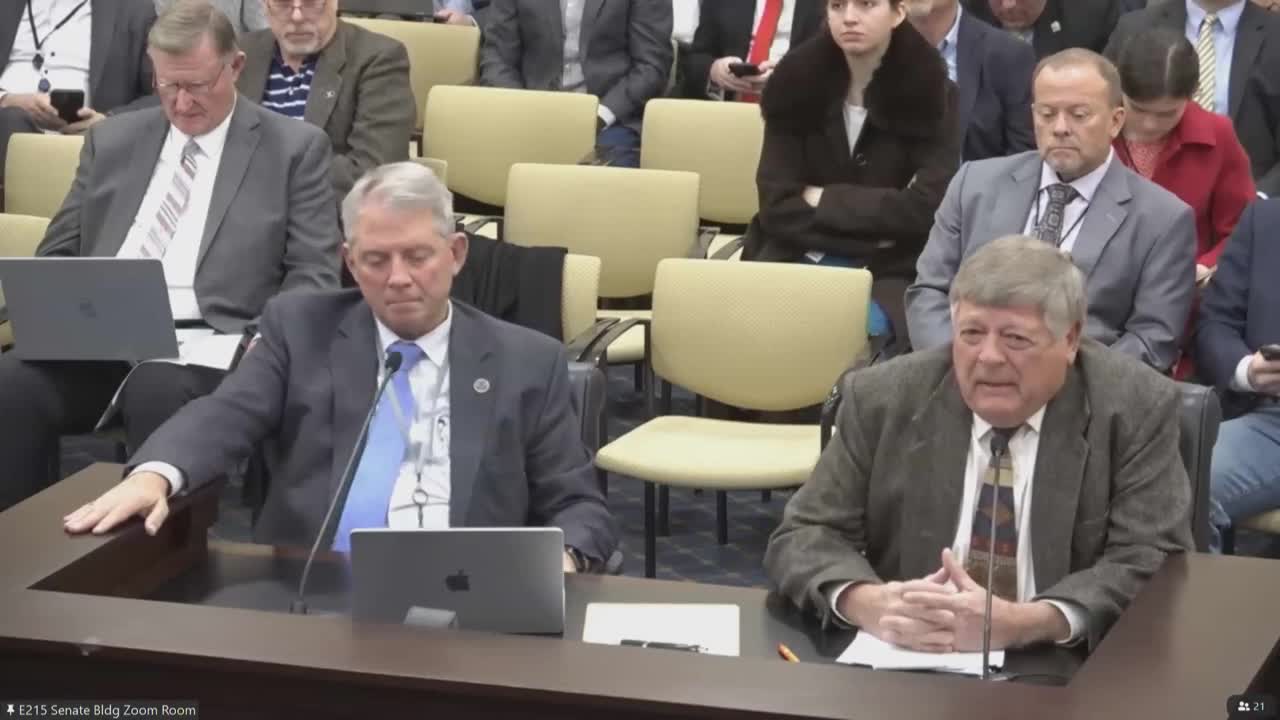
Jim Bokett, director of the Conservation Division at the Utah Department of Agriculture and Food, testified in favor. “This bill has been discussed in-depth with the ag water optimization committee and, we feel like it's very useful,” Bokett told the committee, adding that the bill would let producers implement innovative practices while continuing research into how agriculture will meet state needs.
Brandon Yardley, Beaver County commissioner and member of the Water Optimization Board, also spoke in support. Yardley said the bill would increase funding for meters and data collection so producers and the board can validate conservation practices with hard data: “As a farmer, we're really good at growing things and making things work, but we don't always have the data to back that up. And this bill will allow us to put a little more funding towards receiving that data so that we can validate what we think we're doing,” he said.
Committee members asked no substantive follow-up questions beyond praise for keeping the program under review. Senator Hankins moved the recommendation; the committee indicated its support by voice vote and the motion passed.
The bill now moves forward with a favorable committee recommendation for further consideration by the Legislature.