Get Full Government Meeting Transcripts, Videos, & Alerts Forever!
Get email alerts on the Health Insurance Ai topic
No spam. Unsubscribe anytime.
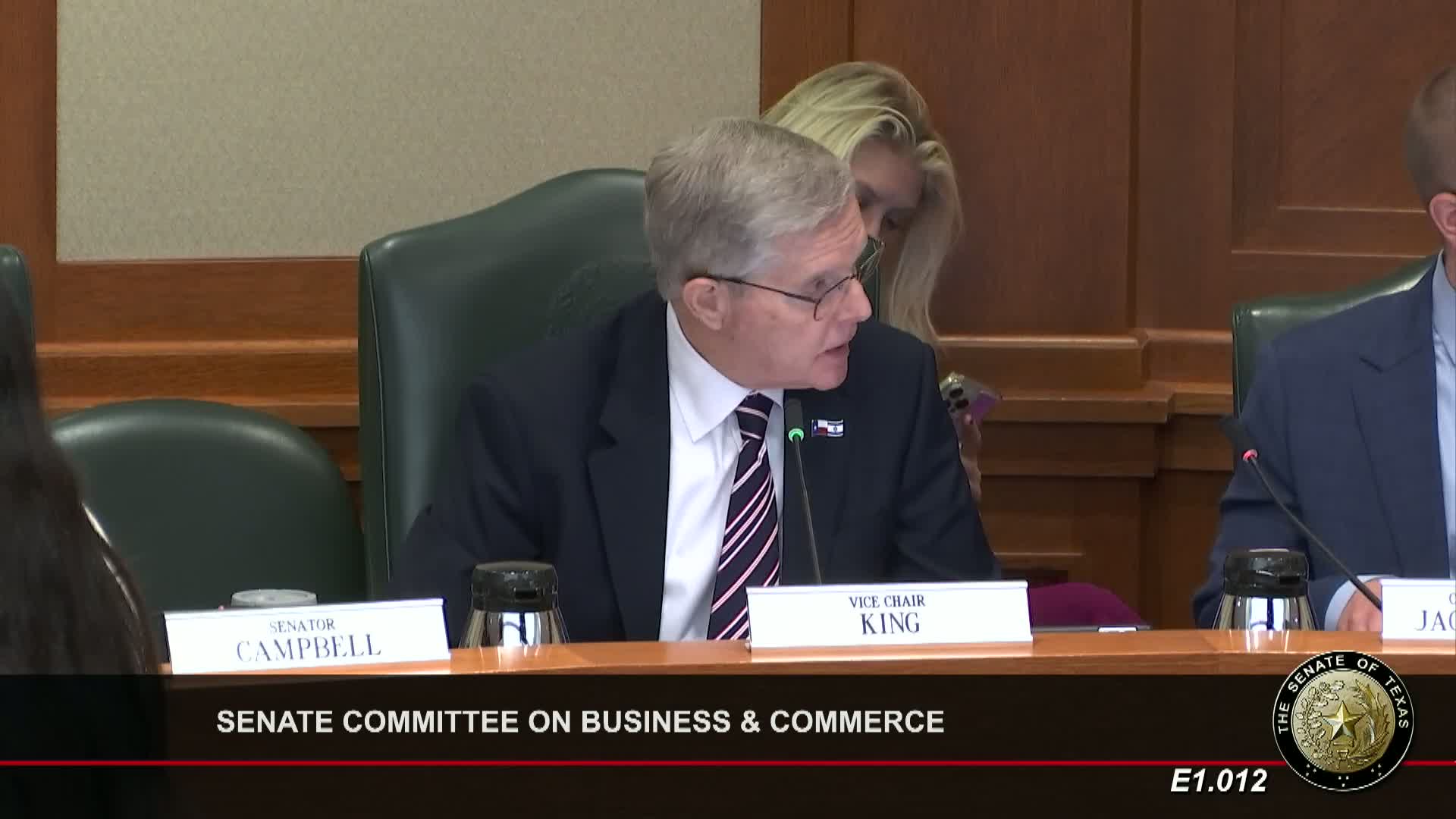
Senate panel debates bill to limit use of AI in insurer coverage denials; sponsors, providers and plans disagree on scope
Summary
A Senate committee debated a substitute to Senate Bill 815 that would bar insurers from using AI as the sole basis to deny, delay or modify covered health-care services and would require disclosure when AI is used.
A heated debate unfolded in the Senate Business & Commerce Committee over Senate Bill 815, a substitute that would prohibit insurers from using artificial intelligence algorithms as the sole basis to deny, delay or modify health-care services and would require disclosure when an insurer uses AI in claims decisions.
Senator Charles Schwartner, the bill's sponsor, opened the discussion by saying: "Insurers are deploying artificial intelligence that's focused on their bottom line, in my opinion, over patients' well-being." The substitute expands the statutory definition of "adverse determination" to include downcoding and requires a human reviewer for medical necessity decisions.
Why it matters: The substitute targets the role of algorithmic tools in utilization review, prior authorization and claims processing. Providers, patient advocates and physicians argued the measure is needed because modern AI can accelerate denials and downcoding in ways that reduce access to care; health-plan representatives countered that existing law already requires licensed clinicians to review denials and that conflating claims-payment disputes with coverage denials would impede fraud detection and routine claims adjudication.
Key testimony - For patients and physicians: Dr. Zeke Silva of the Texas Medical Association said the bill protects medical decision-making and patient safety: "We've had laws as mentioned protecting patients from these particular, actions for many, many decades." Catherine McClain of the Texas Coalition for Patients said transparency about AI use is essential because reports suggest AI is increasingly used to delay or deny claims.
- For plans and insurers: Jamie Dudensing, CEO of the Texas Association of Health Plans, said the association was neutral on the introduced bill but opposed the committee substitute because it "changes the definition of adverse determination" and would move billing disputes (for example, coding disagreements and downcoding) into a coverage appeals framework. Dudensing told the committee that "state law requires Texas licensed health care professionals to review claims denials" and asserted that outlawing certain automated tools would hamper fraud, waste and abuse detection.
Policy tradeoffs and fiscal concerns: Committee members debated whether the substitute would force a fundamental rewrite of existing Medicaid managed care organization (MCO) contracts or the state's approach to adjudicating billing disputes. Senator Schwartner and supporters said the measure protects patients from automated, large-scale denials; committee members with Medicaid oversight responsibilities warned the fiscal implications could be sizable and requested more time to evaluate whether the substitute would require rebidding or renegotiation of MCO contracts.
Committee action: After several hours of testimony and cross-examination, the panel closed public testimony on SB 815 and left the bill pending for further review and drafting.