Get Full Government Meeting Transcripts, Videos, & Alerts Forever!
Get email alerts on the Lottery Regulation topic
No spam. Unsubscribe anytime.
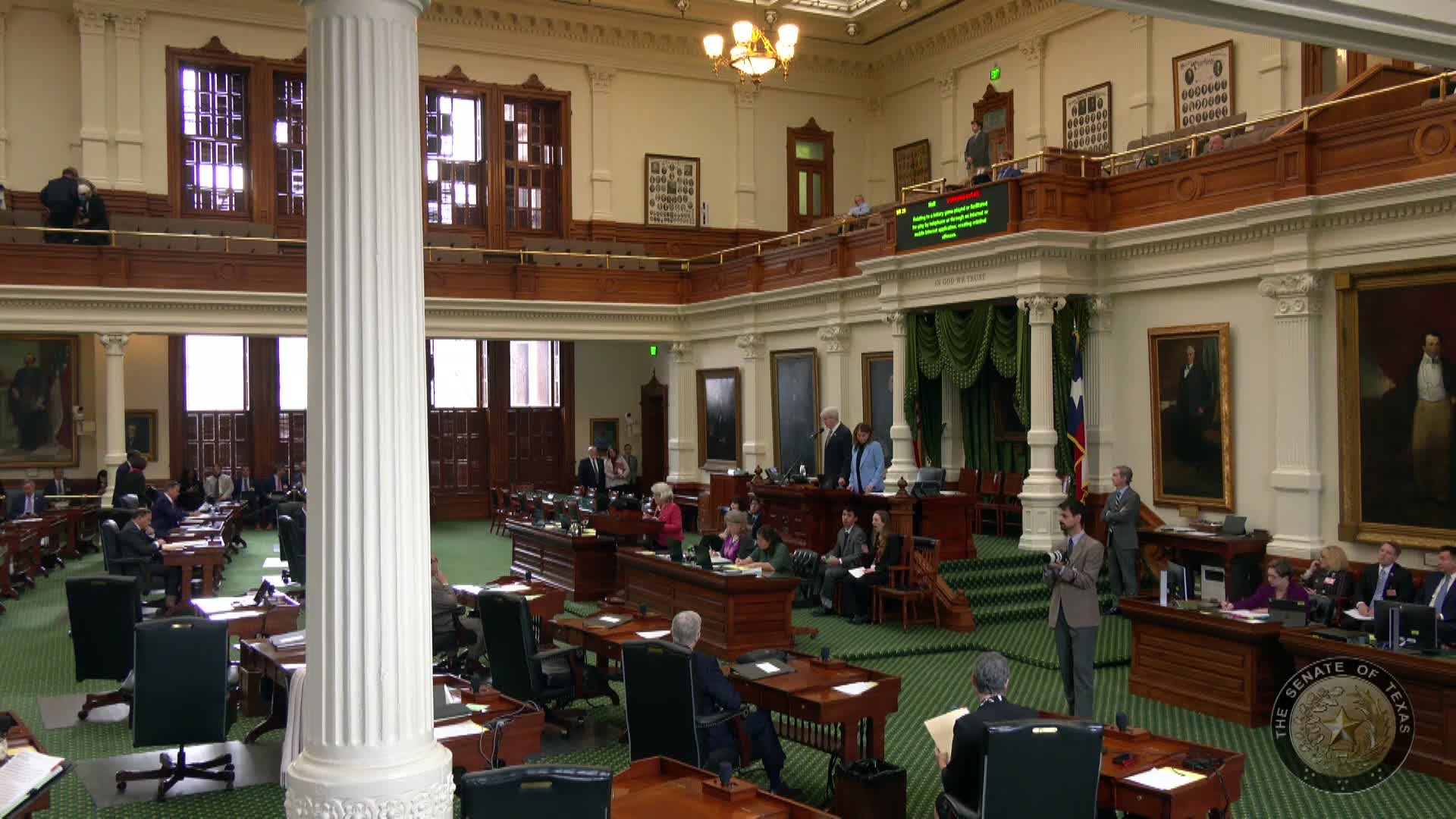
Senate passes bill to ban phone- and internet-facilitated lottery play after floor probe
Summary
The Texas Senate passed SB 28 unanimously after senators debated allegations that lottery couriers and agency rule changes allowed organized fraud; an amendment to exempt online scratch‑off apps failed.
The Texas Senate on final passage approved SB 28, a bill that creates criminal offenses for lottery games played or facilitated by telephone or through an internet or mobile application, after a floor debate prompted by allegations that courier operations and agency rule changes enabled widespread fraud.
Senator Brian Hall, sponsor of SB 28, told colleagues the bill responds to years of what he described as the Texas Lottery Commission’s failure to enforce statutory guardrails. “The illegal organized crime lottery operation we now have is not the result of some smart people outside of the government figuring out how to beat the lottery system,” Hall said on the floor, arguing that commission staff and commissioners created loopholes that allowed courier services to operate in ways the legislature never intended.
The Senate rejected an amendment by Senator José Menéndez Gutierrez that would have narrowed SB 28 to exclude online scratch‑off ticket sales that fund veterans’ programs. The amendment failed on a roll call, 11 yes to 20 no. Senator Gutierrez said his change aimed to preserve revenue that supports veterans programs; he noted the veterans fund has received “$262,000,000” from scratch‑off ticket sales since the lottery’s inception.
After the failed amendment, senators voted to engross the bill and to suspend the constitutional three‑day rule for third reading. On final passage the Senate recorded 31 ayes and no nays; the clerk reported the tally as “31 ayes and no nays.” Senator Hall moved final passage.
Hall summarized several specific allegations on the floor: he said the commission adopted rules that he called “counter or inconsistent with the guardrails the legislature had carefully crafted,” allowed group and telephone purchases, and permitted underage gambling. He described evidence that courier operations purchased massive combinations of tickets—“26,000,000 in 72 hours,” he said—and recounted a 1994 contested prize claim to illustrate past enforcement controversies.
The bill’s floor debate referenced earlier state law enacted in 1991 (HB 54) that Hall said established limits on lottery operations; Hall said SB 28 would restore the lottery to the limited operations the legislature originally intended. He told senators that he believes only abolishing the Texas Lottery Commission would fully restore integrity, but the drafted bill targets courier operations and related practices.
What happened on the floor
- Amendment (Gutierrez) to exempt online scratch‑off sales: failed, 11 yes, 20 no. The Senate clerk read the roll call for the amendment and announced the result. - Motion to engross and suspend three‑day rule: adopted (31 ayes, 0 nays reported). - Final passage of SB 28: passed, 31 ayes, 0 nays reported.
Authorities and references cited on the floor included the original 1991 statute establishing the state lottery (HB 54), repeated references to the Texas Lottery Commission’s rules and practices, the Sunset review process, and requests for an attorney general opinion about the commission’s authority. On the floor Hall said the commission had issued a press release acknowledging multiple rule violations.
Next steps
SB 28, having passed the Senate, will proceed according to the legislative process; the Senate record shows final passage but does not record action by the House or the governor in this transcript. If approved by the remaining steps of the legislative process, the bill would create criminal prohibitions on facilitating play via telephone or internet and constrain courier operations as described in the bill’s caption.
Ending
Senator Hall concluded his remarks by urging colleagues to support the measure to “clean up fraud in the lottery,” while others on the floor expressed concern for protecting veterans’ program revenue and emphasized narrowly tailoring the bill to address courier operations rather than removing longstanding funding sources for veterans.