Get Full Government Meeting Transcripts, Videos, & Alerts Forever!
Get email alerts on the K 12 Education topic
No spam. Unsubscribe anytime.
House approves major K‑12 funding package, rejects micro‑school measure and narrower nomination changes
Summary
House of Representatives members approved a multi‑bill set of K‑12 measures Friday that raise the state’s school funding formula, add one‑time program dollars and create an education savings account; lawmakers rejected a separate micro‑school authorization.
House of Representatives members approved a multi‑bill set of K‑12 education measures Friday that together raise the state’s school funding formula, add one‑time funding for programs and approve an education savings account plan, while rejecting a proposal to authorize micro‑schools and several party nominating reforms.
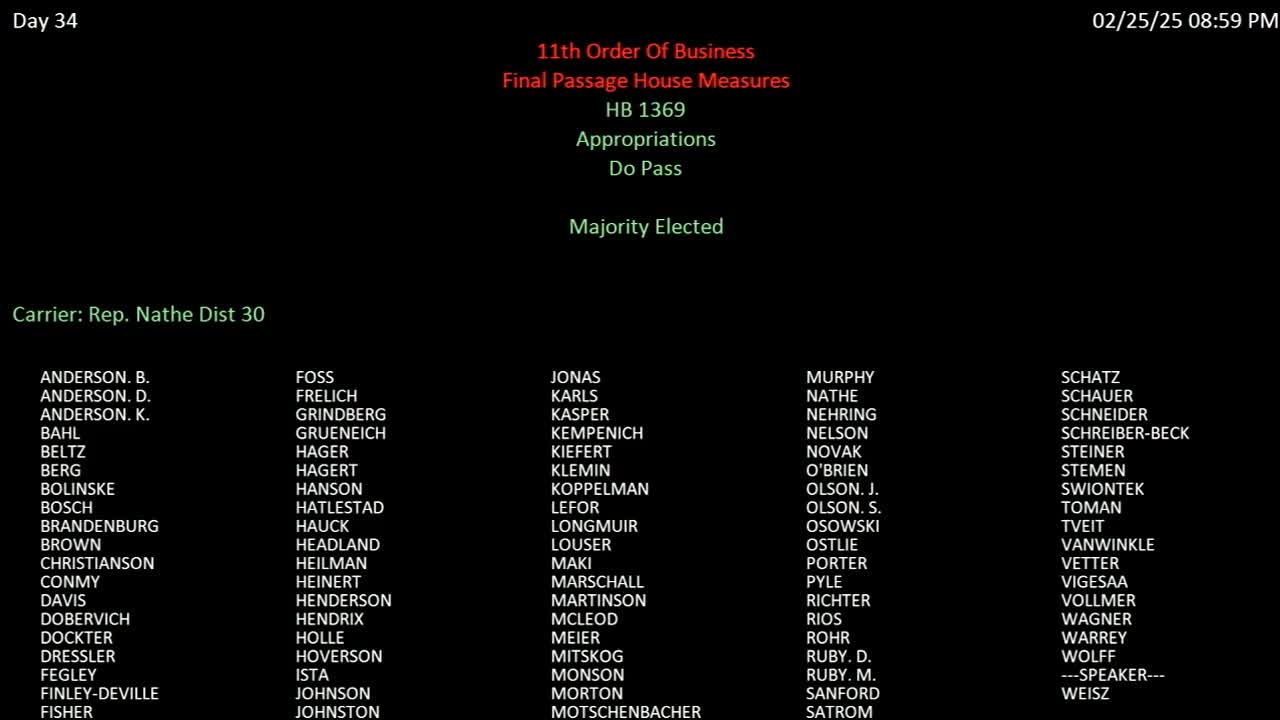
The package includes the K‑12 formula bill (House Bill 13‑69), the K‑12 budget in House Bill 10‑13, an amendment lowering the share of central assessed property included in the in‑lieu formula (House Bill 13‑81), and an education savings account program (House Bill 15‑40). The House passed the main formula bill 78‑12 and the K‑12 budget and related appropriations moved forward on final passage. A separate micro‑school bill (House Bill 14‑72) failed 41‑49.
Why it matters: The measures change how state aid is calculated and shift hundreds of millions in funding sources to support public school operations, construction assistance and program grants. Lawmakers debated funding sources, the pace of increases and the risks to smaller districts if enrollment shifts; the votes set the budget direction for the next two biennia.
Lawmakers amended the funding formula in House Bill 13‑69 to provide two scheduled 2% increases in per‑pupil payments during the next biennium and created options for districts to use a three‑year rolling average for enrollment counting to soften funding shocks. Representative Nathie, the bill sponsor, told colleagues the adjustments were intended to stabilize districts facing enrollment declines and to fund prioritized items including construction and a revolving loan fund for school building projects.
Representative Nathie, Education Committee (first reference at 03:03:30): “On page 11 and 12 is where the 2 and 2 kicks in… $11,293 per student, then $11,519 per student the next year.” He described an amended construction assistance pool reduced from $100 million to $75 million from the foundation aid stabilization fund for the biennium.
House Bill 10‑13, the K‑12 budget, passed separately. Representative Richter, presenting the budget, outlined operating and program increases inside the Department of Public Instruction: new one‑time grants (including science‑of‑reading grants), continued funding for free meal changes, and a large increase in the integrated funding formula. Richter said the total DPI package included roughly $3.1 billion in total funds, with $1.7 billion from the general fund — an increase of about $570 million for the biennium.
Representative Richter, Appropriations (first reference at 03:08:44): “So what I’m going to do is, we’ll start out with the DPI budget… the integrated funding formula includes the change and includes funding for the in‑lieu items we just voted on.”
Education savings account measure. House Bill 15‑40 established an education savings account for eligible nonpublic school students and sets an estimated per‑student payment around $4,000. Supporters, including Representative Koppelman, argued the program gives parents choice and eases local public‑school capacity pressures; opponents said it diverts public dollars to families already paying private tuition and would reduce funds available to public districts. HB 15‑40 passed 51‑39.
Representative Koppelman, proponent (first reference at 02:46:30): “Providing about $4,000 a student for those that attend private school… at this level it predominantly would just go toward tuition expenses.”
Micro‑school proposal fails. House Bill 14‑72 would have authorized micro‑schools — small, parent‑organized schools serving up to 50 students with exemptions from many state education rules and local zoning restrictions. The bill’s supporters described micro‑schools as a family‑friendly option for students who do not thrive in larger classrooms. Opponents, including several Education Committee members, said the bill lacked necessary safety, credentialing and building code safeguards. The House rejected HB 14‑72 41‑49.
Representative Heiner, Education Committee (first reference at 02:29:55): “Micro schools are good, but I think there's some bad things in this bill… exemptions from criminal history checks, building codes, fire codes and food service regulations bothered me.”
Central assessed property adjustment. Lawmakers passed House Bill 13‑81 to change the percentage of central assessed property counted in the in‑lieu formula from 75% to 65%, returning funds to local school districts; the bill passed 64‑26. Sponsors said the change restores money to districts that had seen in‑lieu reductions; opponents noted the state pays for the change from the general fund.
Process and outlook. Several members said pension and special education cost pressures remain, and districts with falling enrollment received protections allowing a temporary three‑year average count. Committee leaders and appropriators said they intentionally used multiple state funding sources — Common Schools Trust Fund, Foundation Aid Stabilization Fund and strategic investment funds — to reduce reliance on the general fund while still increasing district aid.
What’s next. The measures now move to the Senate for consideration. If the Senate and House agree on final language, the package will be incorporated into enacted appropriations and the formula changes will take effect in the dates specified in the bills.
Votes at a glance: House Bill 13‑69 (K‑12 formula) — Passed 78‑12; House Bill 10‑13 (K‑12 appropriations) — Passed 72‑17; House Bill 13‑81 (central assessed in‑lieu change) — Passed 64‑26; House Bill 15‑40 (education savings account) — Passed 51‑39; House Bill 14‑72 (micro‑schools) — Failed 41‑49.
Ending: The session's education votes reflect a mix of expanded state aid to public schools, new program funding and a narrowly approved school choice account; a proposal to expand small, parent‑run micro‑schools was rejected amid safety and oversight concerns. Lawmakers in both chambers will next negotiate details during the remainder of the legislative session.