Get Full Government Meeting Transcripts, Videos, & Alerts Forever!
Get email alerts on the Battery Energy Storage Bylaw topic
No spam. Unsubscribe anytime.
Hampden planning board reviews draft battery energy storage bylaw; adds protections, testing and emergency access requirements
Summary
The Town of Hampden Planning Board reviewed an updated battery energy storage systems (BESS) bylaw draft Feb. 26 and directed staff to add protections for the aquifer and drinking water, tighten O&M/testing language, include a Knox Box requirement for fire access, and substantiate setback requirements before sending the draft to town counsel.
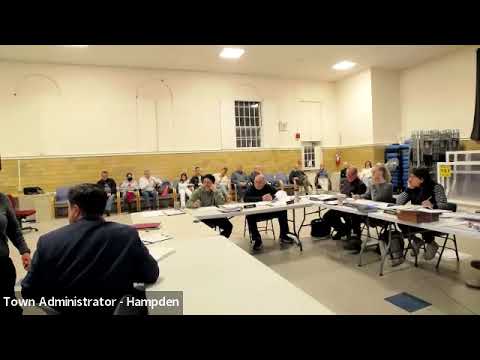
The Town of Hampden Planning Board reviewed a revised draft bylaw for battery energy storage systems (BESS) during its Feb. 26 meeting and made several substantive edits and drafting decisions to refine safety, environmental and operational requirements.
Board members and staff said the revised purpose statement now explicitly cites protection of the town aquifer and public and private drinking‑water supplies, and adds protection of endangered species to the bylaw’s stated objectives. The draft retains technical references such as BioMap mapping for ecological review and the Massachusetts Stormwater standards where applicable.
The draft’s operations and maintenance (O&M) requirements were expanded. The board instructed staff to require an O&M manual that includes: testing scope (annual testing was discussed), documentation and records retention, and compliance with relevant national standards (applicants referenced UL 9540 and NFPA guidance). The O&M section will list required maintenance tasks, inspection checklists and reporting templates that the owner/operator must complete and make available to the town and fire department as requested.
Noise and post‑construction monitoring language (separate noise‑study sections and monitoring templates provided by a consultant, Gina) were added and incorporated into the draft; the board asked staff to reformat the document so the submission requirements are clear and the design and safety standards are easy to find.
Board members agreed to add a Knox Box requirement in the emergency operations section so the fire department can access site keys and equipment; the draft will require the applicant to install a Knox Box at an entrance location designated by the Hampden Fire Department and to notify the fire department of any lock/key changes. The board also revised decommissioning language and corrected a typographical reference to the decommissioning fund. The draft requires a decommissioning plan and an appropriate financial assurance mechanism for removal.
Zoning table and district allowances were discussed at length. The board clarified which BESS tiers (small co‑located systems vs. larger stand‑alone facilities) are allowed by right, allowed by site‑plan review, or allowed only by special permit in particular zoning districts; members asked staff to correct the table formatting and verify that the rules align with town zoning conventions and state law.
Setback distances and buffers prompted the most extended debate. Board members noted that other Massachusetts towns impose rear/side setbacks of up to 200 feet (and that some examples exceed that), and asked staff to justify proposed setbacks in Hampden. Members asked staff to gather comparative examples and rationale to document the public‑safety, environmental and agricultural reasons for any large setbacks before the bylaw is finalized.
The board asked planning staff to make the formatting changes, incorporate feedback from the fire chief and the town’s consultant, and forward the redlined draft to town counsel for legal review. No final adoption vote was taken; the board agreed to proceed toward a formal warrant article but to resolve outstanding setback, formatting and legal‑language issues first.
Why it matters: battery energy storage systems have raised policy questions nationwide about public safety, fire response, siting near drinking‑water resources and long‑term decommissioning. Hampden’s draft targets those concerns — adding technical testing, emergency access, ecology review and financial assurance — before presenting the bylaw as a warrant article.
Next steps: staff will revise the draft to reflect the board’s edits, reformat subparts for clarity, provide comparative setback rationales, add a Knox Box requirement, correct the decommissioning fund language, and submit the package to town counsel for legal review and for inclusion in a future public‑hearing/warrant schedule.