Get Full Government Meeting Transcripts, Videos, & Alerts Forever!
Get email alerts on the Budget topic
No spam. Unsubscribe anytime.
Bridgewater–Raynham budget standoff leaves district facing multimillion-dollar shortfall; towns and committee discuss override and cuts
Summary
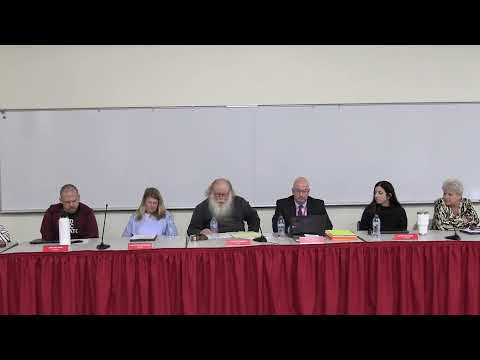
Bridgewater–Raynham Regional School Committee and the budget subcommittee discussed a preliminary FY26 budget they said could require roughly $109 million in revenue and, under one scenario, leave the district with a multimillion-dollar shortfall.
Bridgewater–Raynham Regional School Committee and its budget subcommittee spent much of the Feb. 26 meeting focused on narrowing a preliminary FY26 budget that staff said would require roughly $109 million in revenue and, under one scenario, could leave the district with a multimillion-dollar deficit.
The discussion centered on a budget Superintendent Powers presented to the committee and on a series of follow-up meetings the budget subcommittee has held with town officials. "As of right now, the budget that Mr. Powers presented was $109,000,000, which is approximately a 21% increase to the tax," Budget Subcommittee member Miss Kim said during her report. Town officials present said they could not support a tax increase of that magnitude.
Why it matters: school leaders said the district cannot absorb repeated staffing cuts without affecting instruction and services. Committee members and parents said the community must decide whether to pursue an override or accept additional reductions. The committee has already cut positions in prior years; speakers warned further reductions would force program eliminations and larger class sizes.
What the committee heard and did - The budget subcommittee reported repeated meetings with both towns’ officials, the Bridgewater Town Council and Raynham selectmen and finance committees, to seek guidance on bridging the gap ahead of the March 12 public hearing. - The subcommittee described multiple budget scenarios. Under one scenario discussed during the meeting, committee members estimated a shortfall of roughly $5.1 million to maintain level services. Town officials repeatedly said they did not have capacity to absorb a 21% tax increase and asked the district to explore other options. - Members discussed the possibility of an override vote; several committee members and members of the public urged the committee to put an override question to voters sooner rather than later.
Numbers and limits discussed - Preliminary FY26 budget presented to the committee: $109,000,000 (described in the meeting as representing roughly a 21% tax increase if fully funded by the two towns). This figure was stated during the budget subcommittee report. - One deficit scenario discussed during public remarks and committee discussion was described as "roughly about a $5,100,000 deficit." The committee characterized that estimate as scenario-dependent and subject to change as negotiations with town officials continue. - The committee noted it eliminated 24 positions in the previous budget cycle; members warned additional position reductions could be required if revenues are not increased.
Community reaction Parents and residents spoke sharply during the public-comment period and at multiple points in the meeting. Ashley Mallard, a parent and resident, said school staffing losses are already affecting families and urged stronger action: "We cannot do this," Mallard said, adding she would support paying more in taxes if that preserved programs. Elizabeth Sharp, also a resident, told the committee she "strongly feel[s] it's time for the community to vote for an override" rather than delay a decision to the next fiscal year.
Next steps The committee and subcommittee said they will continue conversations with town leaders, refine budget scenarios, and hold a public hearing on March 12. Committee members asked staff to prepare clearer, one-page materials describing the concrete impacts of different funding levels (for example, estimated class-size increases, program eliminations and numbers of positions affected) to help the public and town officials make an informed decision.
Reporting note: Committee figures and shortfall scenarios were discussed in the meeting and described by committee members and staff. Where the meeting transcript did not attach an individual name to a number or scenario, the article attributes the figure to committee or subcommittee discussion rather than to a single speaker.