Get Full Government Meeting Transcripts, Videos, & Alerts Forever!
Get email alerts on the School Safety topic
No spam. Unsubscribe anytime.
Soledad council adopts Salinas Valley Safe Routes to School plan
Summary
Soledad City Council unanimously adopted the Salinas Valley Safe Routes to School plan (Resolution No. 6196), a multi‑jurisdictional effort to improve walking and biking safety around local schools and to prioritize projects for future funding.
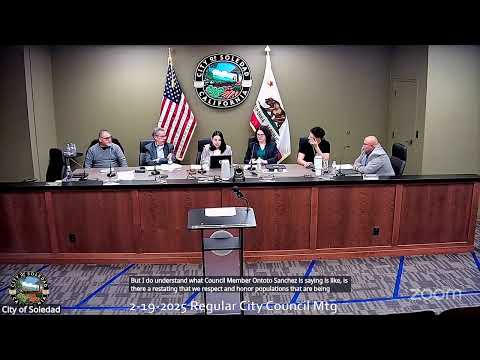
The Soledad City Council voted unanimously Feb. 19 to adopt the final Salinas Valley Safe Routes to School plan, approving Resolution No. 6196 to accept a plan developed with county and school partners and funded in part by a Caltrans grant and Measure X.
The plan lays out engineering and programmatic recommendations to improve safety for students who walk or bike, reduce congestion around school arrival and dismissal, and support future grant applications for infrastructure and education. City staff said the plan was the product of walking audits, parent and student surveys and steering‑committee review across participating jurisdictions.
Alex Ramos, public‑works assistant engineer, told the council the plan’s four primary goals are to improve safety for people walking and biking, reduce traffic congestion, promote healthier routes to school and support future grant applications. “This project consisted of … parent outreach back in fall 2022, walking audits and surveys that resulted in a list of prioritized recommendations and a pilot project,” Ramos said.
The plan includes corridor recommendations beyond individual school sites and lists lower‑cost “quick‑build” options such as painted curb extensions and buffered bike lanes. Ramos highlighted a pilot installation of delineators (“armadillos”) and a buffered bike lane at a railroad underpass that drew positive feedback during the pilot.
Council members discussed enforcement and speed controls during the debate. Council member Caldera asked whether the plan contemplates speed bumps; staff replied the plan evaluates several speed‑control measures but typically recommends police enforcement or roadway design changes (road diets, chokers) before physical speed humps.
Council members also noted the plan’s outreach metrics: more than 200 parent responses, more than 800 student responses, responses to a pilot‑project survey and nearly 250 community votes on proposed measures. Staff said the plan will help the city prioritize candidates for inclusion in next year’s capital improvement program and in competitive grant applications.
The council voted to adopt the plan by voice vote. City staff will return with implementation steps and opportunities to seek grant funding for higher‑cost projects.
Ending: The Safe Routes plan now becomes the city’s framework for school‑area safety projects and grant seeking; small items such as crosswalk restriping may be implemented as part of routine maintenance while larger projects will be pursued through future capital programming and external grant applications.