Get Full Government Meeting Transcripts, Videos, & Alerts Forever!
Get email alerts on the Meeting Procedure topic
No spam. Unsubscribe anytime.
Training reviews Rosenberg’s rules, local meeting order, limits on explaining votes and public-comment management
Summary
Presenters walked council and commission members through Rosenberg’s rules for motions, common meeting flow, the municipal-code restriction on explaining votes during roll call, and practical limits on public-comment timing.
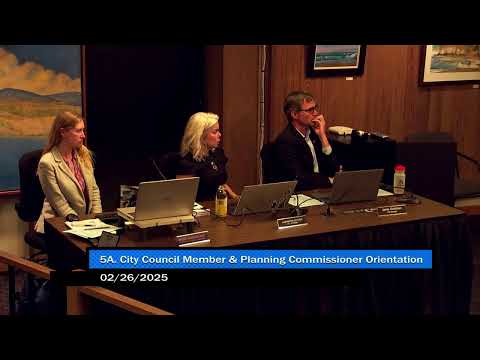
City legal staff and meeting clerks reviewed Rosenberg’s Rules and local meeting procedures for the Capitola City Council and Planning Commission, demonstrating common motions, amendment practice and how public comment and votes should be handled.
Sam used a benign example to illustrate motion types: ‘‘I move that council host a carnival in April’’ as the base motion, a motion to amend to change the month and a substitute motion as a complete replacement. Trainers explained that the chair takes motions in reverse order (the most recent motion is considered first) and that friendly amendments are common practice when the maker and seconder accept the change.
Presenters also reiterated a municipal-code rule about roll-call votes: members should not explain or condition their votes while the roll is called, and a member may not change a vote after the result is announced. Staff said that if a member believes a vote must be reconsidered, Rosenberg’s rules allow a motion for reconsideration but that it must be made by a member of the prevailing side in the same meeting and under specific conditions.
Public-comment practice and timing were discussed in detail. The city typically permits three minutes per speaker for oral communications and public-hearing items, but the chair may shorten the allotment at the start of the comment period when a large number of speakers is expected, provided the limit is announced and applied uniformly. Staff explained that comments should be directed to the body as a whole rather than to individual commissioners or staff, and that chairs usually close public comment before responding or asking staff to answer clarifying questions.
The training also covered agenda management: how items get placed on agendas (by council members during meeting comments, by city staff, or by the city clerk/manager), the difference between consent items and general-government items, and emergency agenda additions under the Brown Act’s emergency provisions.
Ending: Trainers urged members to follow the outlined procedures to promote clarity, preserve finality of council action, and reduce the risk of procedural challenges.