Get Full Government Meeting Transcripts, Videos, & Alerts Forever!
Get email alerts on the Open Meetings Brown Act topic
No spam. Unsubscribe anytime.
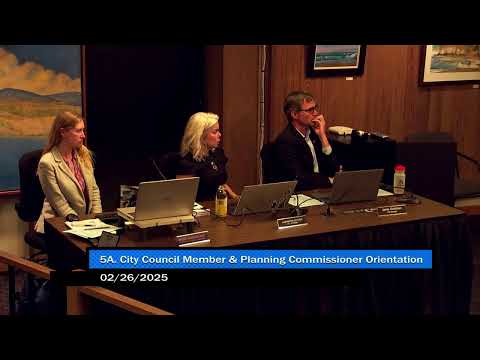
City attorney outlines Brown Act limits on discussion, removal for disruption and online disorder
Summary
City legal staff reviewed open-meeting rules under the Brown Act, scope of public comment, when officials may stop meetings or remove disruptive attendees, and how courts have treated removals and expressive conduct.
City Attorney Sam told members of the Capitola City Council and Planning Commission that state open-meetings law protects broad public comment but limits removal to conduct that is actually disruptive. Sam said the Brown Act allows members of the public to speak on any item within the body’s subject-matter jurisdiction and that ‘‘you can only remove someone if they’re being actually disruptive.’’
Sam said examples of impermissible removals have reached the courts. He cited litigation following a Santa Cruz meeting in which a speaker performed a Nazi salute and another case in which a school-board meeting included protesters placing trash in the chamber; courts have reached different conclusions depending on whether the person’s conduct actually blocked the legislative body from doing its business.
Why it matters: The guidance clarifies when a Capitola legislative body may curtail speech, close a meeting or direct law enforcement to remove attendees — decisions that can themselves become legal disputes. Officials and staff must balance the public’s right to speak with the council’s duty to conduct its business.
Sam summarized operational points discussed during the training: members may ask people speaking at the dais to identify themselves, but a city cannot impose blanket barriers to public participation; clapping or applause alone is not generally a basis for removal; and members should apply the same standard to all speakers. On remote disruptions such as ‘‘Zoom bombing,’’ Sam said the response depends on whether the conduct relates to an agenda item and whether it is disruptive enough to prevent the meeting from proceeding.
Several commissioners asked procedural questions about handling anticipated disruptions and about how advance coordination with the mayor or chair can reduce risks during a meeting. Sam said it is routine to confer in advance with the mayor if staff anticipates disruptive public comment and that outright removals have been rare in practice.
The training repeatedly stressed that content-based exclusions are impermissible. Sam said officials should focus on conduct that prevents the legislative body from doing its business and follow established notice and warning steps before clearing a chamber or ending a meeting.
The session also touched on how to manage heated public comment: chairs may limit total time or shorten individual time allotments at the start of the public comment period when a large number of speakers is expected, but the chair should set that limit publicly and apply it uniformly.
Ending: Sam encouraged commissioners and council members to raise procedural questions early so staff can prepare guidance in advance of contentious agenda items.