Get Full Government Meeting Transcripts, Videos, & Alerts Forever!
Get email alerts on the Community Health topic
No spam. Unsubscribe anytime.
Chesterfield Health District presents CHIP, urges county action on clinics, Head Start, evictions and referrals
Summary
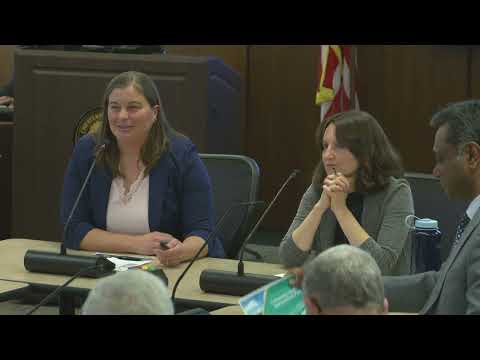
The Chesterfield Health District on Tuesday presented the Community Health Improvement Plan to the Chesterfield County Board of Supervisors, outlining four priority recommendations aimed at improving access to care, early childhood supports, housing stability and social‑needs coordination across the county.
The Chesterfield Health District on Tuesday presented the Community Health Improvement Plan to the Chesterfield County Board of Supervisors, outlining four priority recommendations aimed at improving access to care, early childhood supports, housing stability and social‑needs coordination across the county.
Dr. Alex Samuel, health director of the Chesterfield Health District at the Virginia Department of Health, opened the presentation and introduced the staff who led the plan. "I'm the health director of the Chesterfield Health District, part of the Virginia Department of Health," Samuel said as he introduced Janice Smith and Jesse Brennan, who presented the findings.
The plan, which staff said is the product of a roughly year‑long CHIP process following a 2023 community health assessment, combined public secondary data with 21 individual resident interviews, focus groups with 83 participants and more than 2,000 resident surveys. Janice Smith, Chesterfield Health District population health manager, summarized the assessment and the three themes the committee prioritized: access to care, mental health, and awareness of existing resources.
Jesse Brennan, the district's population health coordinator, presented four recommendations the CHIP committee asks county leaders to consider. "The first recommendation that the CHIP committee had was to increase the number of safety net clinics offering services to socially vulnerable and low‑income community members in Chesterfield," Brennan said. Staff identified ZIP codes 23234 and 23237 as areas of concentrated need: an estimated 9,700 uninsured adults across those ZIP codes, neighborhoods with up to 20% of adults lacking health insurance, and local census tracts with higher rates of heart disease, diabetes and stroke and lower rates of preventive care.
On early education, the committee recommended targeted expansion of Head Start in ZIP code 23237. Staff noted that about 18% of children aged 3 to 4 in that ZIP code are enrolled in preschool, compared with roughly 63% in parts of Midlothian (ZIP code 23114), and said 839 preschool‑aged children live in the ZIP code with approximately 686 not enrolled. The committee recommended bilingual outreach, clearer enrollment information and increasing Head Start seats in the identified areas.
The CHIP group also recommended housing stability measures, including mandated eviction mediation, increased emergency rental and mortgage assistance routed to the Department of Social Services, and exploring a civil right to counsel in eviction hearings. Staff cited an RVA Eviction Lab estimate that responding to eviction in Chesterfield County (health care, emergency shelter, foster care and juvenile detention) costs an estimated $20,000,000 to $53,000,000 annually.
Finally, the committee recommended standardizing social‑needs assessments and referral processes across county departments and nonprofit partners and adopting a common referral platform so agencies ask the same screening questions and share referrals.
Board members responded with support and local context. One supervisor said county leaders must consider the whole county when allocating services, particularly for areas like Midlothian and the Dale District, and another noted ongoing efforts to site additional local facilities. Board members also discussed past difficulties staffing a pre‑K program in Ettrick and the practical challenges of securing locations and capital for new facilities.
The presenters said the full CHIP report will be distributed to supervisors; staff did not present or seek any formal vote during this meeting. The presentation and recommendations represent the committee's analysis and suggestions for county action; any policy or funding changes would require separate board consideration and, where appropriate, coordination with external partners such as Head Start providers, health systems and nonprofit agencies.