Get Full Government Meeting Transcripts, Videos, & Alerts Forever!
Get email alerts on the Tax Policy Sales Tax topic
No spam. Unsubscribe anytime.
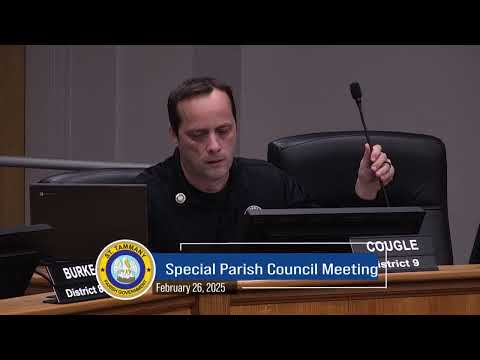
St. Tammany council holds public discussion on March ballot rededication and extension of 2¢ sales tax
Summary
Council and parish officials presented a plan to rededicate and extend an existing 2¢ sales tax on the March 29 ballot to fund infrastructure and public safety. The item was a discussion; no council vote was taken. Supporters at the meeting included the district attorney, parish president, business groups and residents.
The St. Tammany Parish Council held a public discussion of a proposed rededication and extension of the parishs existing 2¢ sales tax for the March 29 ballot, with officials saying a successful measure would provide long-term funding for roads, drainage and public safety without raising the tax rate.
Parish President Cooper and District Attorney Colin Sims were among officials who described why the rededication is before voters. Cooper said the plan would not increase the rate paid by residents and would allow the parish to bond major infrastructure projects and sustain funding for public safety agencies and the judiciary. "This is not a tax increase...If you vote yes, your taxes do not go up. If you vote no, your taxes will not go down," Cooper said.
Sims and other speakers said the rededication would protect recurring funding for the District Attorney's Office and the courts. Sims said his office and the judiciary had faced cuts late last year that required temporary reallocations; without stable, recurring funds the office may have to reduce staff and services. "This provision...is not to give the DA's office more money. The budget and money that was ultimately found...they made certain decisions," Sims said. He described the rededication as a way to preserve existing services and specialty programs that he said reduce reoffending.
Meeting presenters and public speakers emphasized three points: the measure restructures revenue already collected (a 2¢ sales tax), it is intended to fund long-term infrastructure projects that require bonding, and it would preserve funding for public safety and the judiciary. Cooper and others said the current term for the 2¢ tax would expire in about five to six years, which they said is too short to support long-term bonded projects; they described extending the term to provide multi-decade stability.
Several organizations and officials sent letters of support, according to meeting remarks, including Lieutenant Governor Billy Nungesser, RPEC (Regional Planning and Economic Council), the St. Tammany Parish Chamber of Commerce and PAC, the Northshore Business Council, and the St. Tammany Parish Economic Development Corporation. Public speakers at the meeting who voiced support included Terry King of the CCST investigative committee, Donna McDonald, Suzanne Fox and the parish economic development chief executive (Mr. Massengill). A short informational video shown at the meeting reiterated that the proposal is not a new tax.
Council members clarified that, if the rededication passes, allocations to agencies such as the District Attorneys office would still come to the council for annual budget approval. One council member noted statute or local rules permit up to 17% to be allocated to the DA and judiciary as part of the rededication structure discussed; the DA and judges still must justify annual appropriations to the council.
There was no formal council vote on the rededication at the meeting; the item was placed on the agenda for discussion and public comment and will proceed through the election process, with early voting noted at the meeting as March 1520 (except Sunday) and election day on March 29.
Supporters at the meeting framed the measure as a vote for infrastructure, public safety and the parishs long-term economic health; opponents were not recorded speaking at the meeting. Council members thanked speakers and closed the public comment period before adjourning the special meeting.