Get Full Government Meeting Transcripts, Videos, & Alerts Forever!
Get email alerts on the Drainage topic
No spam. Unsubscribe anytime.
Parish readies final phase of comprehensive drainage plan after statewide watershed models released
Summary
St. Tammany Parish officials said the parish is finishing hydraulic modeling and vetting proposed flood-reduction projects, using state-funded watershed models to compress time and cost for a parishwide drainage capital improvement plan.
At an agenda review meeting, the St. Tammany Parish Council heard an update on the parish’s comprehensive drainage plan and next steps for a capital improvement plan.
Daniel Hill, Director of Engineering for St. Tammany Parish, said the parish has completed hydraulic modeling and is now vetting proposed projects that will be prioritized for grant applications and a parishwide capital improvement plan. "We could not accomplish the comprehensive drainage plan as a parish without leveraging the watershed initiative models," Hill said, adding that the state-funded effort totaled about $145,000,000 across Louisiana.
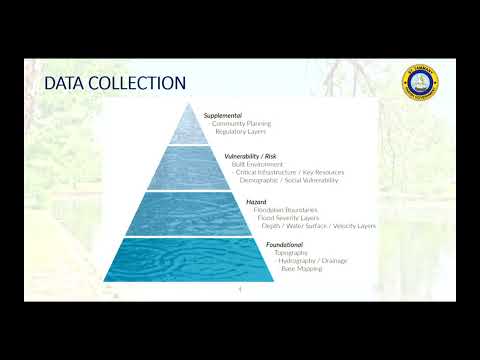
Justin, a consultant with Michael Baker International, told the council the effort began with a large data-gathering phase (Phase 1a) and moved into a modeling phase (Phase 1b). "Phase 1b, which is going to be concluding in July, is the modeling portion," Justin said. He said the team built a GIS portal that let residents mark drainage problem locations and that the modeling incorporated FEMA historical flooded-structure data and parish-collected information.
Hill and the consultant said the parish relied on larger state watershed models that were released late in 2024. According to Justin, those watershed models were repeatedly delayed from late 2023 and were finally released in August 2024; using those calibrated, validated state models allowed the parish team to break the watershed work into smaller, local models and complete modeling in several months instead of a multi-year, multimillion-dollar process. Hill estimated that modeling the entire parish independently could have cost roughly $6,000,000.
Councilman Blake Law asked whether work on a separate Slidell levee project would force major changes to the parish modeling. Hill said the levee work is largely coastal and the parish’s work focuses on riverine flooding; he said there may be some modifications but not wholesale changes.
Officials said the next steps are finalizing the project list, developing the capital improvement plan and pursuing grant funding, followed by final community outreach for comment. No formal vote or policy adoption on the drainage plan occurred during this meeting.
The presentation credited Michael Baker International as the consultant and noted use of the state watershed initiative models and FEMA data in the modeling and project prioritization.