Get Full Government Meeting Transcripts, Videos, & Alerts Forever!
Get email alerts on the Consumer Protection Construction topic
No spam. Unsubscribe anytime.
Senate committee lays over bill requiring contractors to include 10-year warranties for major residential systems
Summary
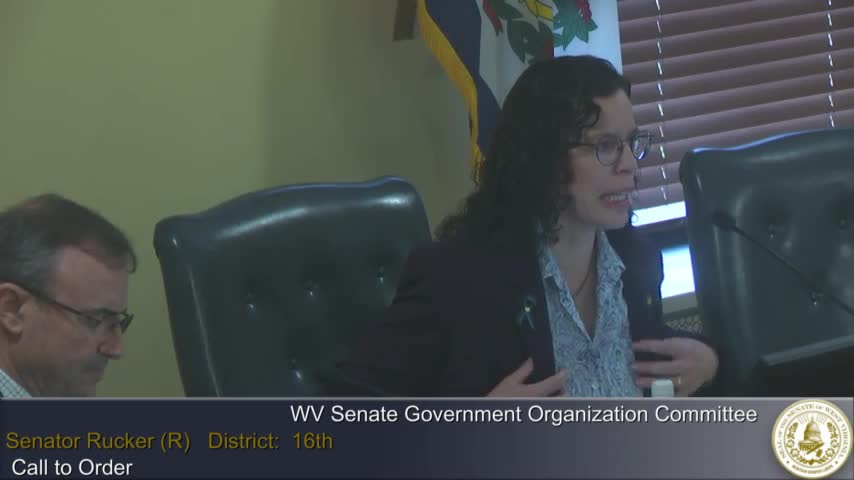
The Senate Government Organization Committee considered Senate Bill 569, which would require residential construction contracts to include specified warranty and disclosure language and make failure to comply subject to disciplinary action by the Contractor Licensing Board.
The Senate Government Organization Committee considered Senate Bill 569, which would require residential construction contracts to include specified warranty and disclosure language and make failure to comply subject to disciplinary action by the Contractor Licensing Board. The committee voted to lay the bill over to a future meeting.
The bill would create a new article in Chapter 21 of the state code and amend a section in Chapter 30 to require that a contract for residential improvements include contractor representations that work complies with applicable building practices and codes; that required inspections have been performed; that materials and appliances are new and without defect; and that work meets applicable zoning and health-department regulations. The bill specifies warranty lengths: 10 years for major systems (for example, roof, basement and foundation) and 2 years for certain minor components (for example, windows, doors, plumbing fixtures and cabinets). Contractors would be required to repair or remediate defects that occur during the warranty period. The bill also states that the contractual warranty is cumulative with any other warranties available to the owner.
Counsel told the committee the bill “makes failure to comply with the obligations of the article subject for disciplinary action by the Contractor Licensing Board.” The bill permits arbitration clauses but requires that arbitration proceedings be held within 50 miles of the residence and that the arbitration clause be prominently displayed in the contract (all caps and bold, as described by counsel).
Sponsors and several senators described the bill as a response to homeowner complaints in the Eastern Panhandle about subdivision builders and alleged inspection or construction failures. Counsel said some homeowners have faced litigation and repair costs “out $50,000 to $100,000” after discovering defective septic systems or foundation problems that inspections did not catch.
During committee discussion senators raised concerns and requested clarifications. One senator asked whether the bill applied to commercial construction; counsel replied it was “strictly residential.” Senators debated whether terms such as “basement” and “foundation” are sufficiently defined in the bill; counsel acknowledged “there's not a definition of basement” in the bill. A senator asked whether homeowner-supplied materials would be covered; counsel replied the contractor is responsible for his workmanship even if the homeowner supplies materials. Another senator warned the law could impose costs or market changes on small or short-lived contractors; counsel and the sponsor countered that most contractors already offer warranties and that the bill seeks to codify expected practices.
The sponsor told the committee that fraudulent or cursory inspections have occurred, saying, “we have folks who are literally just, copying somebody's signature instead of actually doing the work.” Committee members discussed potential market responses such as increased use of geotechnical investigations (a market-driven step, counsel said) and the option of amending the bill to remove “basement” if that term proves problematic.
The committee voted by voice to lay the bill over to a future meeting; the motion to lay the bill over carried. The bill has a second reference to the Judiciary Committee.
Votes at a glance: The committee adopted a motion to lay over Senate Bill 569 by voice vote; no recorded roll-call tally was provided.