Get Full Government Meeting Transcripts, Videos, & Alerts Forever!
Get email alerts on the Public Art Senate Bust topic
No spam. Unsubscribe anytime.
Senate Art Committee revives to select first female bust for Senate Chamber
Summary
The newly revived Senate Art Committee held its inaugural meeting to establish rules, review more than 300 public nominations and set a fast timeline to recommend a woman to be commemorated with the first female bust in the Massachusetts Senate Chamber.
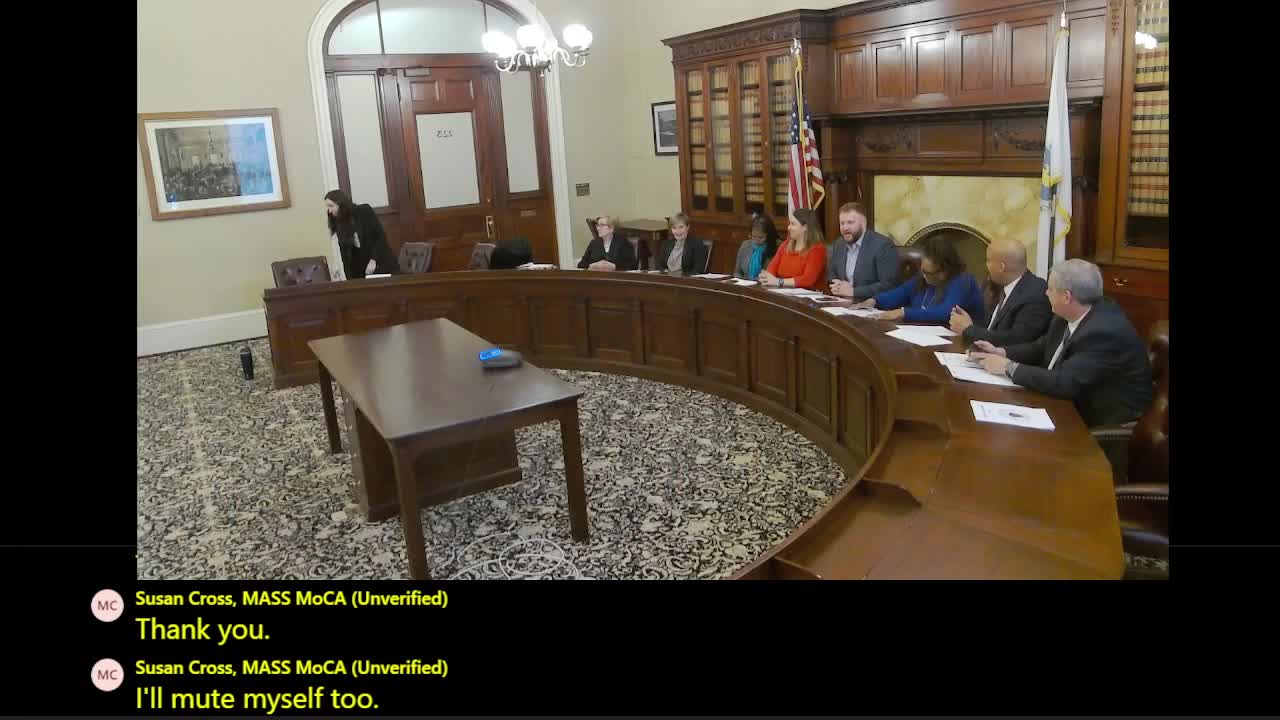
The Senate Art Committee met in its inaugural session to begin selecting a woman to be honored with the first female bust in the Massachusetts Senate Chamber and to set rules and a timeline for the commission process.
The committee’s charge, revived after renovations to the Senate chamber, is to review public nominations, recommend a single honoree by March and oversee commissioning and installation of a sculpture. "This committee was formed to take a look at all of the nominations," Senate President Karen Spilka said, adding the effort grew out of the statehouse renovation and a goal to make the chamber more representative.
The work will proceed in two phases: selecting the honoree and then commissioning the sculpture. "Once chosen this bust will be the first to depict a woman in the senate chamber," the committee chair, Senator Julian Cyr, said, describing the sculptural and procurement steps the committee will oversee — selecting a sculptor, refining design concepts, choosing materials and managing installation. The committee aims to make a formal recommendation by the end of March and said it would seek to unveil the finished work within about a year if feasible.
Members said the public nomination list includes more than 300 names spanning early American figures through contemporary leaders and professionals in fields from literature and science to social reform and public service. "It includes early figures in American history to contemporary politics," Cyr said while summarizing the breadth of the nominations. Committee members were invited to add names that may be missing from the public submissions.
Committee discussion focused on selection criteria, including whether nominees should have a demonstrable connection to Massachusetts and whether living people should be eligible. Several members urged a transparent, research-based approach and suggested narrowing the list by asking each member to submit a ranked short list for cross-referencing. "I think having an agreed upon set of criteria will help us in making the final decision so that we at least agree on the criteria by which we're gonna make our ultimate decision," Senator Bruce Tarr said.
After debate the committee adopted two initial eligibility rules by voice vote: the committee will not consider living people for the bust and will prioritize nominees with a clear, substantive connection to Massachusetts rather than only a tangential link. The motion was made by Senator Bruce Tarr and seconded by Senator Lydia Edwards; the voice vote was recorded as in favor and no recorded opposition was recorded on the transcript. The committee clerks noted the statute establishing the Senate Art Committee (1972) and Joint Rule 29A govern public access, posting and records for the commission's work.
Committee staff described next steps and deadlines: members were asked to submit proposed edits to the selection criteria and to provide up to 20 names (a ceiling, not a requirement) by end of day Friday, March 7, to allow staff to compile materials before two planned March meetings (tentatively March 12 at 1 p.m. and March 20). Staff also said the committee must file an annual report in December under the establishing statute, and that meetings and materials will be posted publicly under the joint rules.
Nonlegislative members attending — including curators and museum directors — and staff were asked to help with vetting and artist-selection expertise once the honoree is chosen. "Commissions of living people are notoriously pretty hard to do because they have personal opinions of how they want to be represented," Susan Cross, Senior Curator at MASS MoCA (joining virtually), said in the meeting.
The committee closed with housekeeping instructions on public transparency, conflict disclosures and how members should handle email and external communications about committee work. The chair scheduled follow-up meetings and adjourned the inaugural session.