Get Full Government Meeting Transcripts, Videos, & Alerts Forever!
Get email alerts on the Water Rights topic
No spam. Unsubscribe anytime.
County hears KNRC presentation on Quivira coordination, Lesser Prairie-Chicken litigation and federal rule monitoring
Summary
Representatives of the Kansas County Coalition (KNRC) described their work monitoring federal actions affecting county property rights, urged Pratt County to consider membership at $5,000 per year, and outlined efforts on Quivira water coordination and a lawsuit over Lesser Prairie-Chicken rules.
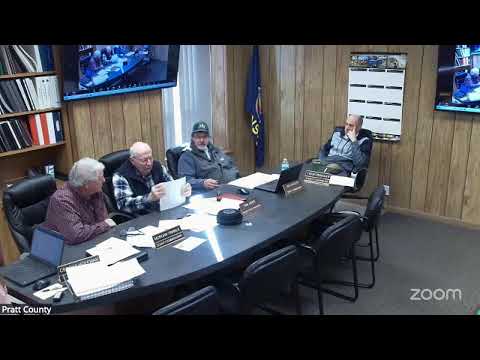
Bob Ryan, identified at the meeting as KNRC president, and Tracy Burton, identified as KNRC executive director, briefed the Pratt County Commission on the coalition’s recent work and asked counties to consider joining a multi-county coordination effort on water rights and endangered-species rules.
The KNRC presentation said the coalition is a county-funded, commissioner-driven group that monitors federal agency actions for potential impacts on property rights, land use and natural resources. KNRC representatives described three active priorities: coordinating with the U.S. Fish and Wildlife Service on Quivira-area water issues, a lawsuit over the Lesser Prairie-Chicken 4(d) rule, and federal regulatory monitoring for small meat processors and other agency proposals.
Why it matters: KNRC members told commissioners the coalition pools county resources and legal analysis so individual counties can react faster to federal agency rulemaking or actions that affect landowners and county operations. KNRC asked Pratt County to consider paying annual membership dues, which the presenters said are $5,000 per year, to join coordination on the Quivira matter and other efforts.
During discussion, commissioners and KNRC representatives pressed for specifics about how coordination would change outcomes and how member counties would be involved. KNRC said member counties participate in steering-committee decisions, can help shape questions for agency meetings, and may jointly submit technical comments. KNRC offered to arrange follow-up calls with technical or legal experts (for example, Pawnee County attorney Doug and a policy expert named Margaret Byfield of American Stewards of Liberty were cited as available contacts).
On Quivira, KNRC said the coordination group plans to request meetings with the Fish and Wildlife Service, present research and specific questions, and press for improved consultation with local governments. KNRC representatives cited the National Environmental Policy Act (NEPA) as a legal framework that requires agencies to consult with local governments during certain processes; they said they believe consultation has not occurred as required in this case.
KNRC also described litigation that challenges application of the Fish and Wildlife Service’s 4(d) rule to the Lesser Prairie-Chicken; the coalition said the case is being handled by the Pacific Legal Foundation. KNRC representatives said the 4(d) rule can impose obligations — such as grazing-plan filing and restrictions on certain structures — that affect private land use and county infrastructure.
KNRC representatives said the coalition also tracks rulemaking in other federal agencies, and noted a recent multi-state set of comments that KNRC helped assemble on proposed EPA rules affecting small meat processors. The presenters said the coalition writes detailed technical comments for the federal register and works with legislators and attorneys to influence outcomes.
Next steps: KNRC offered to set up a detailed call with Pratt County commissioners and subject-matter experts to answer specific procedural and legal questions. Commissioners said they would consult among themselves and could request more documentation before deciding on membership or funding.
Ending: The commission accepted the presentation for discussion and did not take immediate funding action during the meeting.