Get Full Government Meeting Transcripts, Videos, & Alerts Forever!
Get email alerts on the Data Centers topic
No spam. Unsubscribe anytime.
Spotsylvania supervisors direct planning commission to require special-use review for data centers
Summary
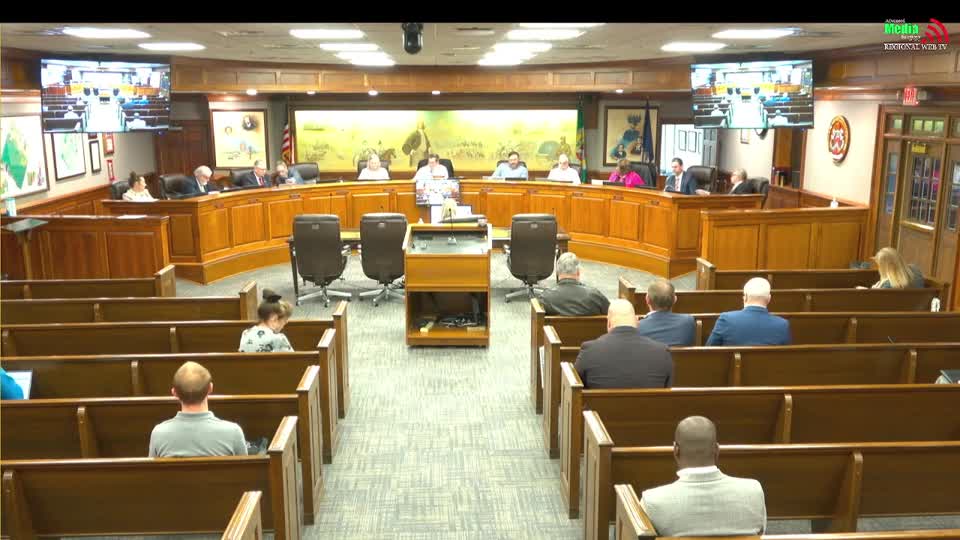
After a lengthy debate about scale, buffers and community impacts, the Board of Supervisors voted 4–3 to initiate a zoning change that would require data centers to secure a special‑use permit in nonresidential zoning districts; the ordinance will go to the Planning Commission for review and public hearings.
Spotsylvania County’s Board of Supervisors voted to initiate a change to the county zoning ordinance that would make data centers subject to a special‑use permit in nonresidential zoning districts, a move supporters said will preserve the board’s ability to judge projects case‑by‑case and opponents warned could chill investment.
Planning staff told supervisors that the county has large amounts of by‑right acreage where data centers could be built without additional review; Kimberly (Planning staff) said the county counts thousands of acres of potential by‑right industrial land, and that several large data‑center projects already have approvals or are under construction.
Staff recommended a stop‑gap ordinance to define “data center” and impose development standards — notably a 300‑foot buffer from residential property lines and a 100‑foot buffer from public or private roads with preserved vegetation or an interim eight‑foot berm and replanting. The draft presented to the board also would have allowed data centers as a permitted use in I‑1/I‑2 industrial districts but required special review in office and commercial districts.
Supervisor Lori Hayes moved an alternate approach that would make data centers a special‑use requirement across the county’s nonresidential zoning districts (office, commercial and industrial, and the A‑ and RA/RU agricultural/rural districts listed in the proposal). After extended discussion, the board approved Hayes’ motion 4–3. The supervisors recorded no votes from Mr. Childers, Mr. Marshall and Dr. Frazier; the motion passed.
Why it matters: data centers are highly capital‑intensive users that can generate large tax receipts but also raise community concerns about building scale, noise from cooling equipment and visual impacts. Board members who supported the special‑use approach said it would preserve public participation and allow site‑specific mitigation. Opponents said a special‑use requirement could deter projects and that performance standards (setbacks, landscaping) in industrial districts would balance protection and economic opportunity.
Kimberly summarized staff’s position: “Data centers have been identified as a targeted industry since 2011 for the county,” and she noted the county already has approved multi‑building projects and large rezoning applications that could develop as data centers. Supervisor Hayes told colleagues she was not opposed to attracting data centers but said, “my job on this board is to safeguard our citizens,” and argued a special‑use permit would let the board tailor mitigation to each site. Supervisor Childress urged caution about adding regulatory hurdles, saying commercial development such as data centers helps the county achieve its desired tax mix.
The board directed staff to forward the draft ordinance (the version initiated by Supervisor Hayes) to the Planning Commission for review and advertisement; staff indicated the item can meet Planning Commission advertising for the Feb. 19 meeting. The Planning Commission will hold its public hearing and return a recommendation to the Board of Supervisors; the board will need to schedule and hold its own advertised public hearing before any ordinance change becomes effective.
Next steps: planning staff will advertise the proposal, the Planning Commission will take public comment and make a recommendation, and the board will hold a public hearing before acting on any final code change.