Get Full Government Meeting Transcripts, Videos, & Alerts Forever!
Get email alerts on the Solid Waste topic
No spam. Unsubscribe anytime.
Spotsylvania staff outline major changes to convenience centers, recommend tighter decals and limits on commercial-style vehicles
Summary
Staff presented a package of operational changes for the county’s 13 convenience centers, including winter-hour closures, a temporary Marshall Park outage for equipment repair, tightened rules for commercial-style vehicles and trailers, and a recommendation to revise the decal program and consider user fees or annual stickers in FY26.
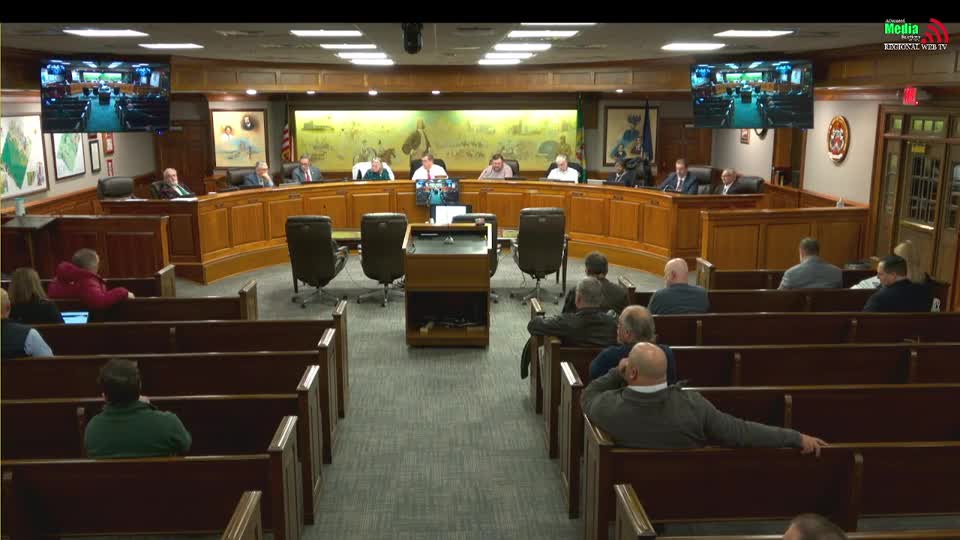
Spotsylvania County solid waste staff told the Board of Supervisors on Jan. 14 that the county’s 13 convenience centers are under growing strain from illicit commercial use and rising operating costs and outlined a package of operational and policy changes intended to preserve residential access.
The county’s convenience centers were designed for household users, staff said, not for heavy commercial equipment. Ben Loveday, a solid waste staff member, said roughly 20,000–30,000 households use the centers on a semi-regular basis and that program operating and capital costs run about $5–6 million a year, excluding landfill costs.
Staff presented several near-term operational changes and longer-term policy recommendations. Near-term steps include winter hours (8:00 a.m.–4:30 p.m.) through daylight-saving time to reduce low-visibility safety incidents and a temporary closure of Marshall Park Convenience Center while the site’s failed phase inverter is replaced (repair estimate about $28,000; staff projected restoration in early February). Staff also announced Chancellor would stop accepting brush and leaf debris effective the next day; residents may still take small loads of brush to Livingston Landfill at no charge.
Staff recommended several policy changes intended to curb commercial use that staff said is currently being enabled by the existing decal program. Among the suggestions: limit decals to two per application, require annual renewal with a change of decal color each year, require decals to be affixed to the vehicle windshield, and consider a coupon or token option for intermittent larger residential disposals. Staff said the current program (implemented May 1, 2021) has about 136,000 active decals in the system and no expiration, a level they said has enabled non‑residential use.
Staff also proposed restricting commercial-style vehicles and trailers at neighborhood centers: commercial vehicles (box trucks, cargo vans, landscape or dump trucks, tandem-axle trailers) would be redirected to Livingston Landfill (7:00 a.m.–3:00 p.m.) and weighed for tipping fees. Single-axle residential trailers would remain allowed at Livingston, Berkeley and Chancellor (Chancellor brush acceptance notwithstanding). Staff said signage, gate-attendant training, expanded outreach and a public education campaign will accompany any changes.
Loveday told the board consolidating brush-processing equipment at Livingston and moving the wood-waste program to the utilities fund could save the general fund roughly $300,000 a year and avoid approximately $3 million in cyclical capital costs by removing multiple heavy grinders and associated equipment from Chancellor.
Board members from both rural and suburban districts pressed staff on two recurring themes: (1) avoiding unintended penalties for rural residents who own larger personal trailers or stake-bed trucks and (2) protecting gate attendants, who staff report sometimes face threats when trying to enforce rules. Supervisors asked staff to craft objective, implementable definitions of “commercial-style” vehicles and to build grace and verification processes for bona fide rural residential users.
Several supervisors and staff emphasized the county will attempt to phase in changes and focus on education first. Loveday told the board he will circulate the presentation slides and that staff will bring detailed ordinance or program changes back as part of the FY26 budget process.
Taken together, staff said, the proposed changes aim to limit illicit commercial dumping at neighborhood convenience centers, preserve those centers for residential use, and shift larger, commercial-type disposal to Livingston Landfill where tipping fees and weighing are feasible.
Ending: Staff will return with draft ordinance language and public‑outreach materials for a decal revision and other policy changes as part of FY26 budget planning. The board asked staff to factor rural users and transport impacts (for example on Massey Road/Route 208 traffic toward Livingston) into any final recommendations.