Get Full Government Meeting Transcripts, Videos, & Alerts Forever!
Get email alerts on the Board Governance topic
No spam. Unsubscribe anytime.
Stafford supervisors review new investigatory process for removal of board appointees; first reading set
Summary
The board held a first reading of proposed bylaws changes to create a formal investigatory process for removing board-appointed advisory committee members. Supervisors debated notification timelines, members' rights to present evidence and whether the chair should provide a written summary of findings.
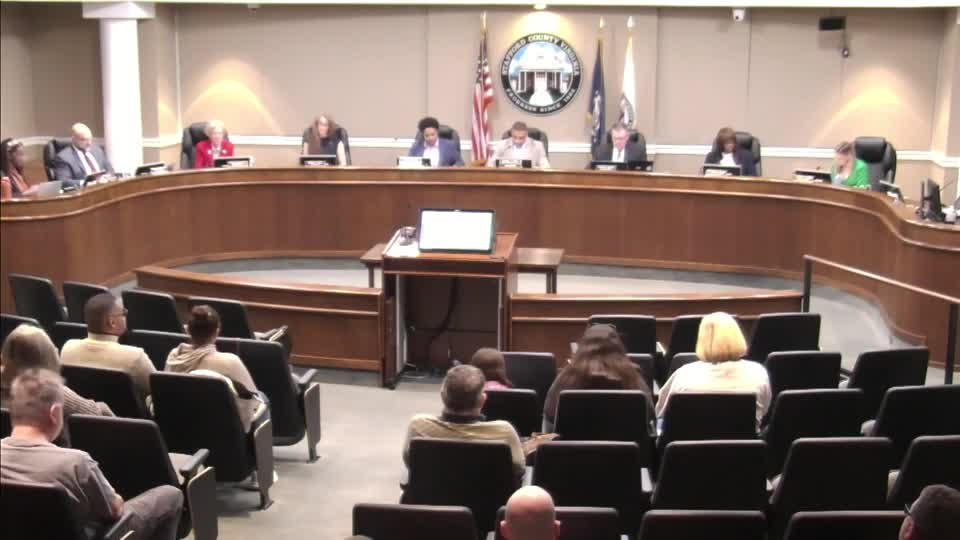
The Stafford County Board of Supervisors held a first reading Feb. 18 of proposed amendments to its bylaws that would create an investigatory process for removing members of boards, authorities, commissions and committees (BACC) appointed by the board. The board directed staff to bring the item back for final action at the March 4 meeting.
The amendments, presented by county legal staff as proposed Resolution 25-47, reorganize bylaw language into a new Article 10 and add a section establishing who the provisions apply to and the investigatory sequence for removal for cause. Under the draft, a supervisor with concerns would first raise the matter in closed session; following direction from the board, an investigation would be conducted and the subject appointee invited into closed session with at least notice from the chair. Any actual removal would occur in open session as required by law.
Why it matters: Supervisors said the changes codify procedures the board may already use and would provide greater clarity and consistency when addressing conduct concerns about appointed volunteers. The discussion followed controversies last year that several supervisors said might have been handled better with written procedures.
Board debate focused on three principal points: adequate notice for an appointee called into closed session, whether the appointee should have a formal opportunity to present documentation or witnesses and whether the chair should provide a written summary of findings and reasons after the board acts. Dr. Young (Supervisor Dr. Young) said 24 hours’ notice is not enough, and asked for five days so an appointee could gather paperwork and witnesses. Several other supervisors said they supported longer notice but ultimately agreed to a minimum 24-hour notice with board discretion to allow more time in particular cases. The board also agreed the appointee should be allowed to present relevant documentation and that the chair should provide written notice of any final action, subject to legal review to ensure compliance with open-meeting law.
County legal staff said the procedure would apply only to removals for cause and would not affect appointments made by the board at its pleasure or automatic removals triggered by criminal convictions. The county attorney reminded the board that removals themselves must be handled in open session and said staff would draft language that meets the board’s intent without causing legal exposure. The attorney referenced state open-meeting/closed-session provisions (identified in the discussion as Code 2.2-3712) while explaining which steps occur in closed session and which must be in open session.
Next steps: Staff will revise the draft to reflect the board direction (minimum 24 hours’ notice with board discretion to allow more time; explicit allowance for submitting evidence; and a mechanism for a written summary of findings to follow any open-session action) and present it for a second reading and possible adoption on March 4. If the board votes to adopt, staff said page numbers and the table of contents will be updated in the bylaws package.
Ending: Supervisors emphasized that, while procedures help, integrity and good faith among board members are also essential to prevent misuse of removal procedures.