
RSU 10 outlines expanded Extended Learning Opportunities funded by state and federal grants
Get AI-powered insights, summaries, and transcripts
Sign Up Free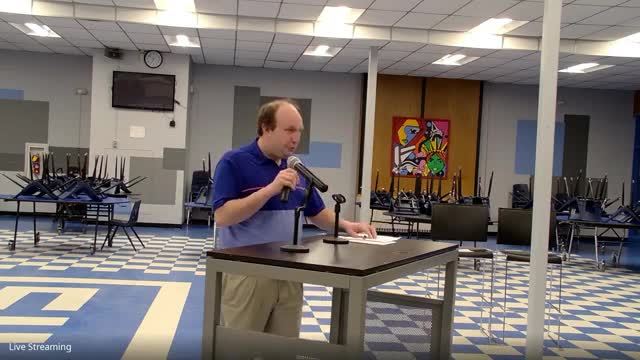
Summary
District staff described a growing Extended Learning Opportunities (ELO) program that uses federal, state and private grant funding to pay staff, support student field trips and place students in internships and work-study across the region.
Chris Brennick, the district’s Extended Learning Opportunities coordinator, told the RSU 10 School Board about a rapid expansion of out-of-classroom, credit-bearing learning experiences for high school students.
Brennick said the ELO program is funded through a mix of sources, including a U.S. Department of Labor workforce grant, a local "Sunshine c 3" grant and a U.S. Department of Education ELO expansion award. "We secured 72,000," Brennick said, adding that some grant funds pay for his position and some pay for student field trips. He also said a separate ELO expansion allocation provides "$8,000 a year for this year and $8,000 for the calendar year 2026." Brennick said participant-support money covers barriers such as tools or mileage reimbursement when students travel to placements.
The program places students with local employers and institutions for internships, work-study and apprenticeships. Brennick listed community partners and placement sites that have hosted or taken students: ND Paper (mill tours), Husson University, Central Maine Community College, Sunday River, Ross Hospital, the Ellsworth Clinic in Dixfield, Community Energy, Sissy's Day Spa and local recreation departments. He said students have participated in VR welding and crane simulations, medical lab visits and job fairs.
Brennick described three program tracks: internships tied to career-focused learning plans, work-study placements that can include state-supported wages through a manpower grant, and independent-study or industry-driven online coursework where local mentors are not available. "Participant supports are really important," he said, citing examples such as paying for tools or mileage so a student can travel to a clinical placement.
Board members asked for participation counts. Brennick said about 20 students in his immediate program participate in internships, ski patrol and mentoring; another board member reported "over 35 kids" participating in Buckfield-area ELOs. Brennick said seniors were recently able to choose visits to Husson, Central Maine Community College or Bridgton (VR) labs.
Brennick outlined next steps: continued furniture and space planning at the Mountain Valley Community School, additional sector summits connecting students and employers, and building an alumni network to support placements and mentorships.
Brennick said the program emphasizes employer-identified soft skills — attendance, teamwork and finishing shifts — and that the district is working with partners to align expectations for students. "It's not just showing up one time, it's finishing a shift," he said.
Board members asked for the slideshow Brennick referenced; he said he would share it with the board and the curriculum committee.
The board did not take a formal vote on the program during the meeting; Brennick’s presentation was received during the administrative departments reports section.