Volusia Schools choose Lightspeed and Gaggle for web filtering, classroom monitoring
Loading...
Summary
A committee of district staff and teachers recommended Lightspeed for district web filtering and classroom management and Gaggle for safety alerts; board discussion outlined implementation timing and training plans.
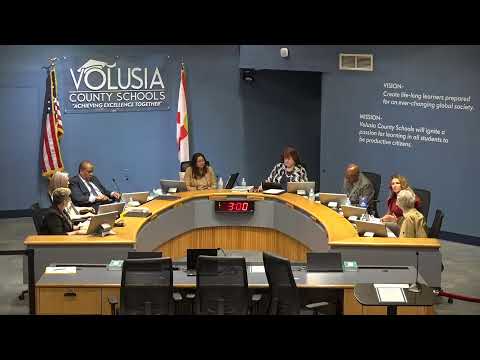
The Volusia County School Board heard committee recommendations Feb. 25 to standardize three internet‑safety functions with two vendors: Lightspeed for district web filtering and classroom management, and Gaggle for the district safety‑alert monitoring system.
The recommendations followed a multi‑phase review by a committee that included classroom teachers, instructional‑technology specialists and safety staff. "The committee began by gathering information and evaluating 16 leading vendors," said Jelena Zivko, senior instructional technology specialist and committee chair. "We compared the features of their products to our current systems and to each other."
Dr. Cooley, the district chief technology officer, summarized the three related systems and their roles: the legally required district web filter (to meet the Children’s Internet Protection Act), an internal safety‑alert system that scans student‑generated content for evidence of harm, and a classroom management tool teachers can use to monitor and control student devices in a class.
What the district chose: the committee recommended continuing Gaggle for district safety alerts and moving to Lightspeed for both the district web filter and the classroom management feature. Presenters told the board the combined solution reduces duplication, improves interoperability in the district’s Microsoft environment and comes with reference installations in other Florida districts.
Committee and staff members emphasized a tuning and implementation period. "There’s a lot of ways this gets done, but after the tuning gets done, it starts to become better and better at its job," Dr. Cooley said when board members asked about over‑ or under‑filtering. The district plans a phased implementation: Lightspeed engineers will begin web‑filter implementation the month after the meeting, with testing during spring break; classroom‑management rollout and teacher training are planned over the summer so classrooms can use the tool from day one of the next school year.
School board members praised the inclusive committee process and the presence of teachers on the review team. Several members thanked the committee for cost diligence and for including practicing teachers’ perspectives in the evaluation. Board members asked for a follow‑up review after a full year of operation; staff agreed to provide a progress update at the end of the first school year after implementation.
Why it matters: the change affects how students access online resources in classes and how staff are alerted to threats or self‑harm risks. Presenters said improved classroom controls will allow teachers to lock devices, monitor student screens, mirror student work and limit web access for secure testing, and that the safety system will continue district‑wide monitoring and escalation where needed.
Implementation notes: the district said Gaggle remains in place and will be decoupled from the current web filter during the transition. Lightspeed pricing quoted to the district is guaranteed for three years; the district reported estimated savings relative to current costs but did not publish detailed contract dollar amounts during the meeting.