Get Full Government Meeting Transcripts, Videos, & Alerts Forever!
Get email alerts on the Behavioral Health topic
No spam. Unsubscribe anytime.
Goochland‑Powhatan Community Services Board outlines demand for youth therapy, asks county to track local funding
Summary
The Goochland‑Powhatan Community Services Board presented an overview of mental health, developmental and substance‑use services it provides in Powhatan and Goochland, described growth in child and adolescent caseloads and said county funding covers roughly $400,000–$500,000 annually while billing revenue has increased to about $2.4 million.
Toby Fritz, executive director of the Goochland‑Powhatan Community Services Board, told the Powhatan County Board of Supervisors on Jan. 27 that the agency is seeing a sharp increase in children and adolescents seeking care and is expanding services to meet demand.
Fritz said the agency, which serves Goochland and Powhatan counties, has grown its staff and billing capacity and now bills roughly $2.4 million to third‑party payers. He told supervisors Powhatan County provides “between $400,000 and $500,000” in annual funding for the local services the agency delivers.
The agency’s senior director of clinical services, Lisa Edwards, described the range of programs: crisis and emergency services that coordinate with Richmond behavioral health for after‑hours coverage; outpatient therapy and medication management (the CSB employs one psychiatric nurse practitioner); school‑based clinicians in Powhatan elementary, middle and high schools; substance‑use treatment; peer recovery services and a pathways recovery center; prevention programming including Narcan distribution and medication‑disposal efforts; and early intervention and developmental‑disability supports.
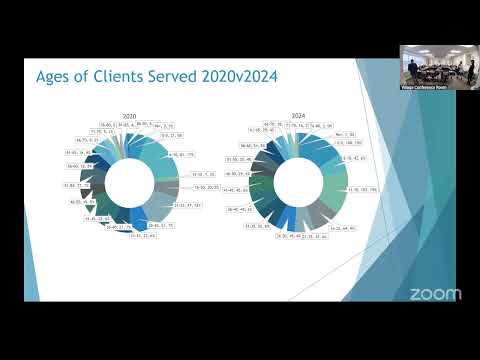
Edwards said outpatient capacity has grown (the CSB went from two clinicians to 10 in about two years) and that a “tremendous” jump in younger clients has driven demand for school‑based and pediatric behavioral health. She said Virginia law permits adolescents age 14 and older to consent to certain treatments, which has operational and insurance implications for the CSB’s work in schools.
Leticia Burrell, senior director of community support services, described the CSB’s developmental services, day programs, waiver‑based in‑home supports and transport for adults with intellectual and developmental disabilities. She and Edwards said the agency holds a Medicaid I/DD waiver support coordination contract and helps families apply for benefits and access long‑term services.
Fritz and his team identified two pressing needs: more therapists to reduce waitlists and more or reconfigured facility space for day programs and offices. They also asked for more help getting the county’s residents to understand what services are available. “People don’t always know about the services that are available,” a CSB board member told supervisors during the presentation, and officials said a new outreach coordinator — funded through a county planning grant — will aim to reduce duplication and improve referrals.
Supervisors asked about the county subsidy and requested a future breakdown showing how the local appropriation is spent in Powhatan. The CSB said some services (outpatient therapy) generate insurance revenue while others (prevention, some emergency services) rely on county and grant support.
Fritz summarized the board’s mission as a single point of entry for publicly funded mental health, developmental and substance‑use services and said the CSB is leveraging regional partnerships such as the Richmond emergency‑services arrangement to extend 24‑hour coverage.
The CSB left supervisors with data points to track: a rapid rise in youth clients over the past four years (the agency cited an increase from a low double‑digit caseload into the hundreds for a specific age bracket) and the agency’s intention to continue growing school‑based work, peer services and prevention efforts.